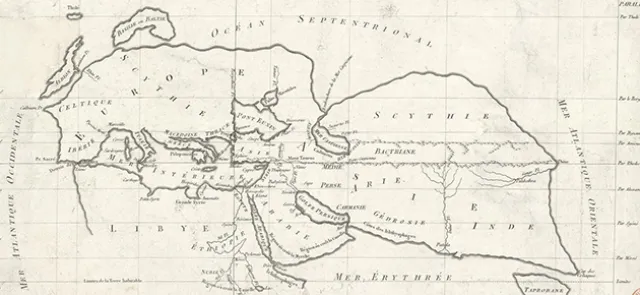



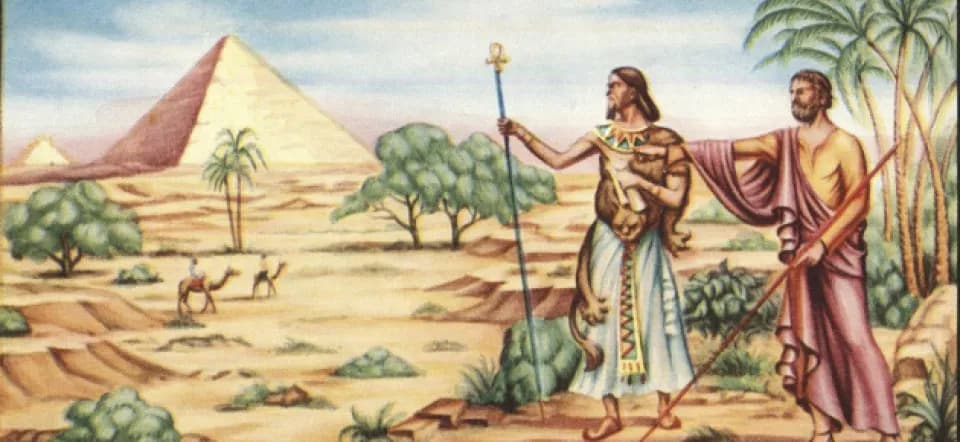
Le paradoxe de Thalès, c'est qu'il n'a laissé aucun écrit, mais que son œuvre a fait le tour du monde. A-t-il même écrit quelques-uns des résultats qu'on lui attribue ? Avait-il les éléments de logique nécessaires à l'établissement des raisonnements qu'on lui prête ? Les historiens attestent pourtant qu'il aurait rédigé un livre sur la navigation, où il décrit et utilise abondamment la constellation de la Petite Ourse, mais « on ne prête qu'aux riches » et tant de personnages importants se sont vu attribuer des résultats dans lesquels ils n'étaient pour rien ! Une chose est sûre cependant : Thalès était une figure prestigieuse de son temps, il a voyagé en Égypte et a rapporté en Grèce la science géométrique de ce pays. Quant aux résultats qu'il laisse à la postérité, mieux vaut les regarder avec circonspection.
-
Un homme de réputation

Il est difficile, concernant Thalès, de séparer la légende de l'histoire. On sait de lui qu'il naît vers 624 avant notre ère à Milet, en Asie mineure (aujourd'hui en Turquie) et qu'il meurt vers -547 dans la même ville, vraisemblablement de déshydratation en assistant à une compétition sportive. Tout à la fois commerçant enrichi, en particulier en spéculant sur le commerce des olives, conseiller militaire et ingénieur, c'est sa vie de premier philosophe grec, de savant et de mathématicien qui confère à Thalès de Milet tout son prestige.