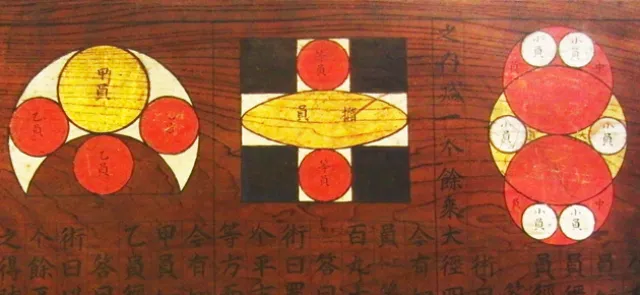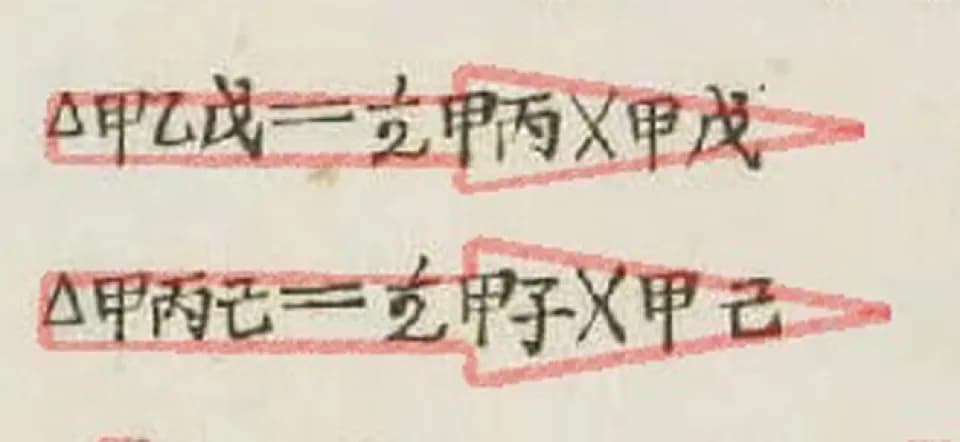
From 1868, with the advent of the Meiji era (1868–1912), Japan underwent a profound transformation. After more than 200 years of (relative) isolation, the Americans forced the Japanese to open their borders to trade. To take a strong place among the community of nations, the authorities had no choice but to commit the country to a general movement of modernization. In this context, the teaching of mathematics underwent a major upheaval. Wasan (traditional Japanese mathematics developed during the Edo period, 1603–1868, see the article "Wasan, or the mathematics of the Edo period") was abandoned in favor of Western mathematics, known as yōsan.
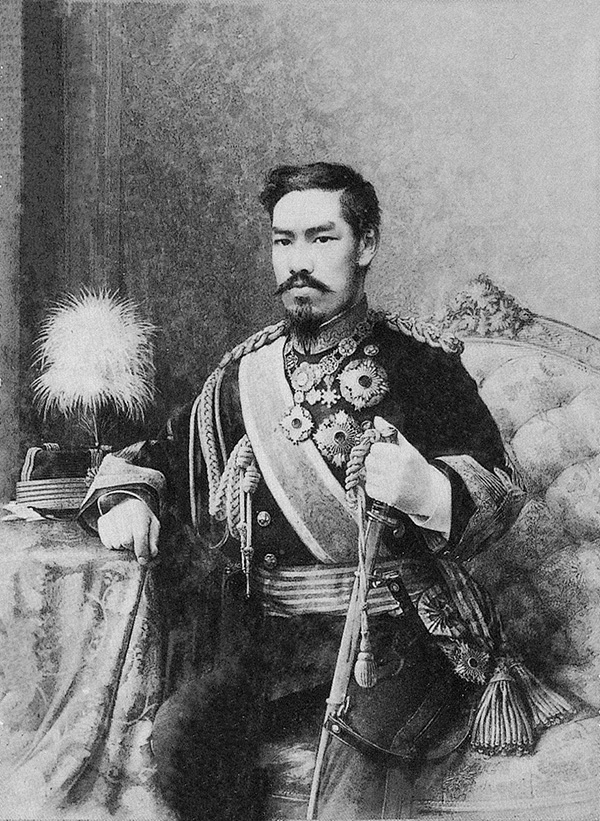
Portrait of Emperor Meiji (Meiji Tennō, reign: 1867–1912)
by Edoardo Chiossone, 1888.
But at that time, introducing new mathematical knowledge from the West was not simply a matter of translating it. Teaching had to be rethought within an educational system that was itself being reformed, and the Japanese language had to be adapted to suit the new nature of mathematical statements. The mathematicians who played a part in this transformation had to change their way of reasoning and quickly write textbooks whose form was also changing along with advances in printing techniques. It was therefore a complete revolution, at the crossroads of the history of mathematics, education, and language.