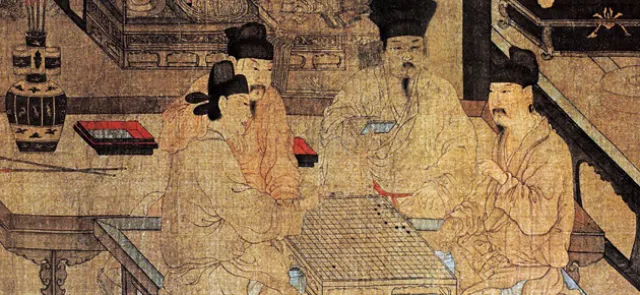
Today, East and Southeast Asian countries project the image of a highly competitive examination culture starting in secondary school, geared toward university entrance. This culture has its advantages and drawbacks, both from an educational standpoint and from that of social equity. Either way, it is worth noting that this is nothing new. Better still: it helped preserve certain traditional mathematical knowledge in pre-modern East Asia, particularly in Korea.
Administrative and scientific influences
-------------------------------------------
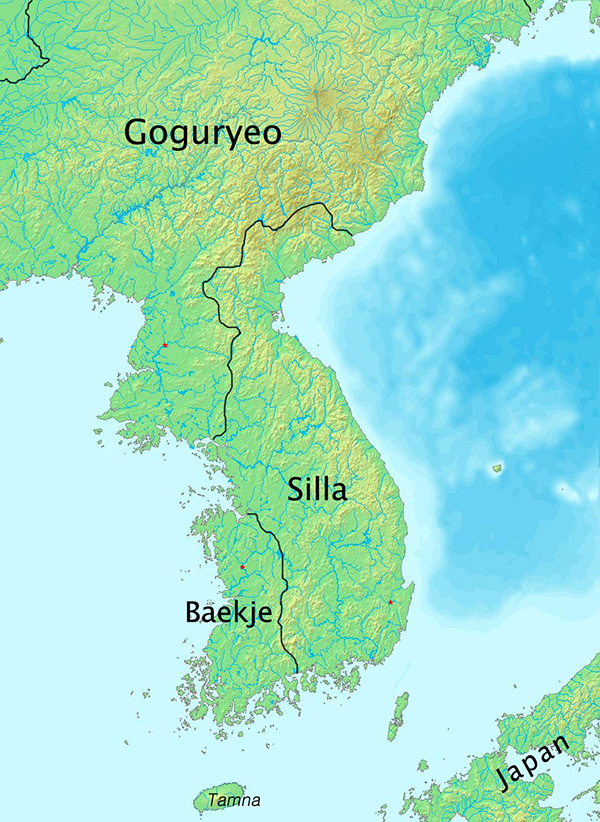
The peoples and kingdoms of the Korean peninsula, neighbors to the Chinese empires and the Japanese archipelago, were often, whether willingly or not, influenced by Chinese culture, while also serving as a relay for cultural exchange between the continent and the archipelago. One of these kingdoms, Silla (57 BCE–935 CE), actively imported the Chinese model of centralized government along with its educational system and civil examinations. It was probably in this spirit that they built the Cheomseongdae (literally, "the tower from which the stars are observed") in the 7th century, which is likely the oldest surviving astronomical observatory in East Asia. According to the ideals of Confucian philosophy, observing the heavens and drawing up the calendar fall to the sovereign. Now, establishing a calendar requires mathematics. In the 8th century, Silla founded a National Academy where, according to the records, only two departments existed: Confucian studies and mathematics. We can conclude that the inhabitants of the Korean peninsula gave mathematics an important place very early on.