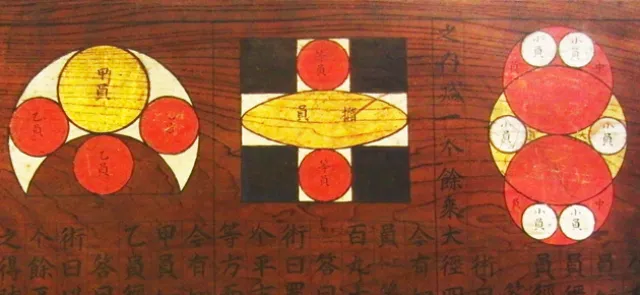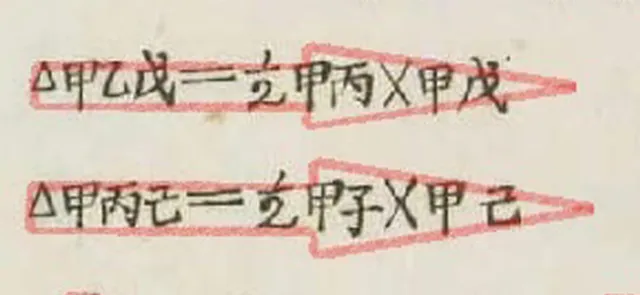
During the Edo period (1603–1867), the Japanese developed, from texts imported from China, original mathematical practices called wasan. This term, coined retrospectively around 1870, designates Japanese mathematics of the period as a whole (wa meaning "Japan" and san "mathematics"). The mathematicians of wasan proposed original methods, whether from a Chinese or a Western point of view, as we'll see with two problems dating from the beginning and the end of the Edo period. But the mathematics of this period did not develop solely within scholarly circles, for it also fed into a popular culture that was sometimes surprising: the sangaku (see the article "Sangaku: Geometry in Temples").
Concrete situations
-------------------
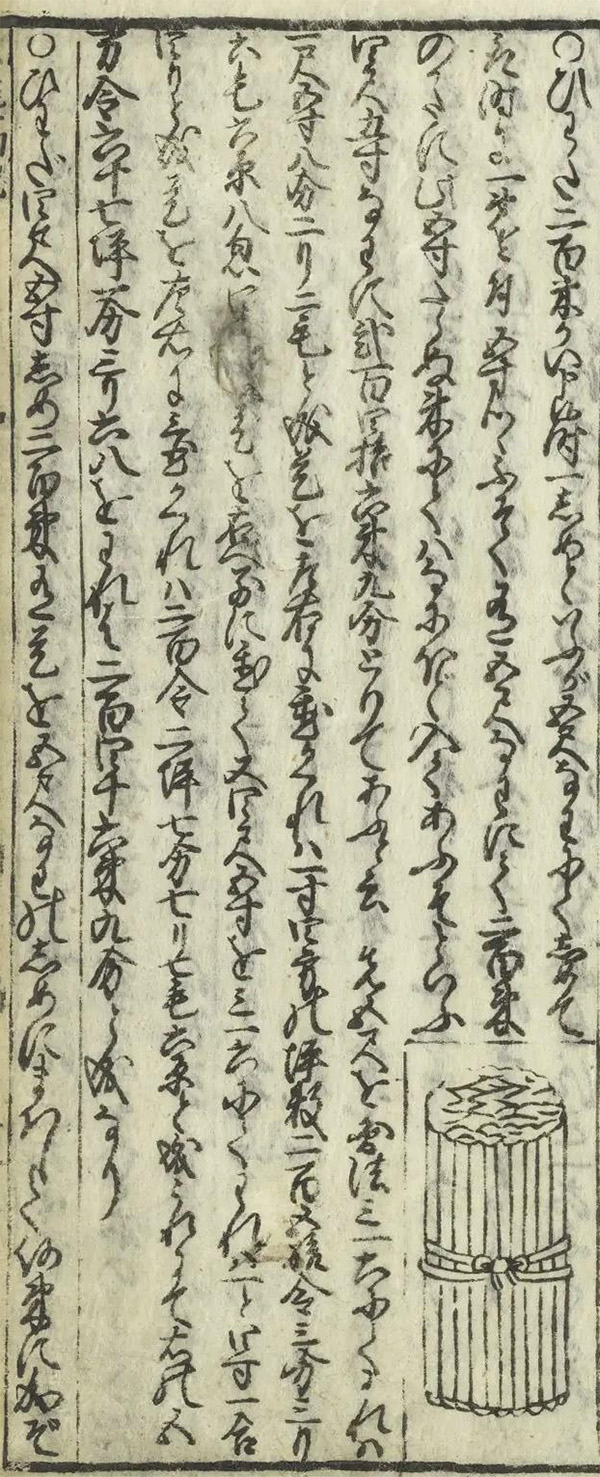
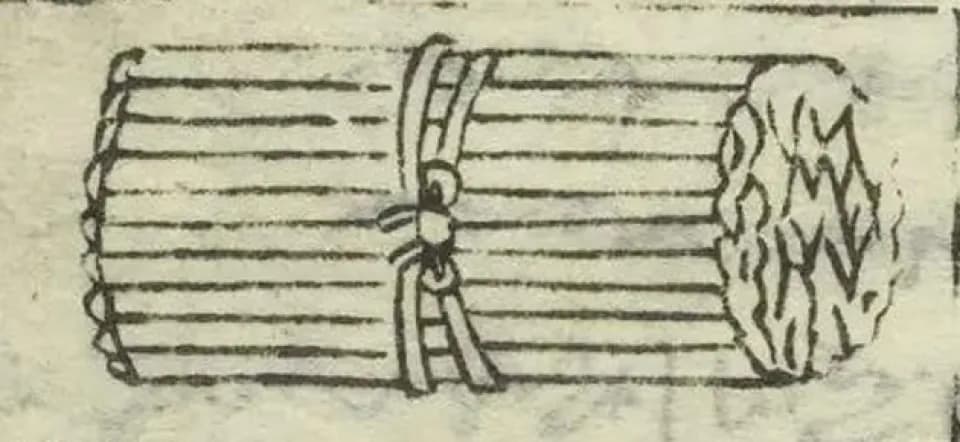
In wasan, as in Chinese mathematics, a problem statement generally consists of the problem itself, presented through a concrete situation (1), its solution (2), and the procedure used to obtain that solution (3). This concrete aspect of the problems appears in the Immutable Treatise (Jinkōki, 1641) by Yoshida Mitsuyoshi (1598–1672), where one finds, for example, a problem entitled "On Bundles of Hinoki Bark" (that is, Japanese cypress). Indeed, the Chinese works imported at the beginning of the Edo period and the earliest wasan textbooks generally proposed problems concerning everyday life, the work of bureaucrats, surveyors, or calendar specialists.