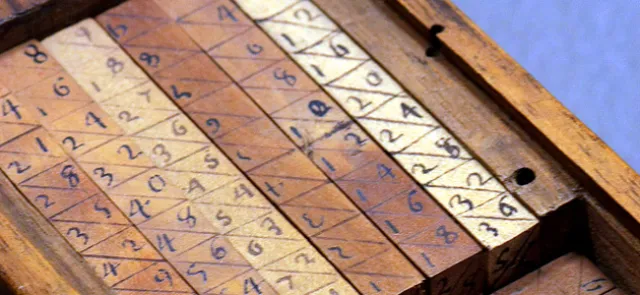
Since calculators, and later smartphones, appeared, long multiplication has become a rarity. Yet several methods remain available for die-hard technophobes, nostalgics and the simply curious.
The virtues of the lattice method
-------------------------
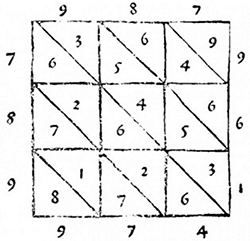
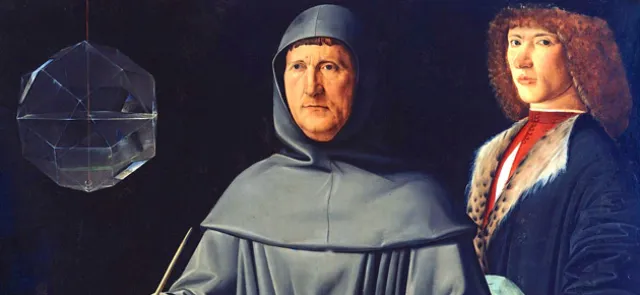
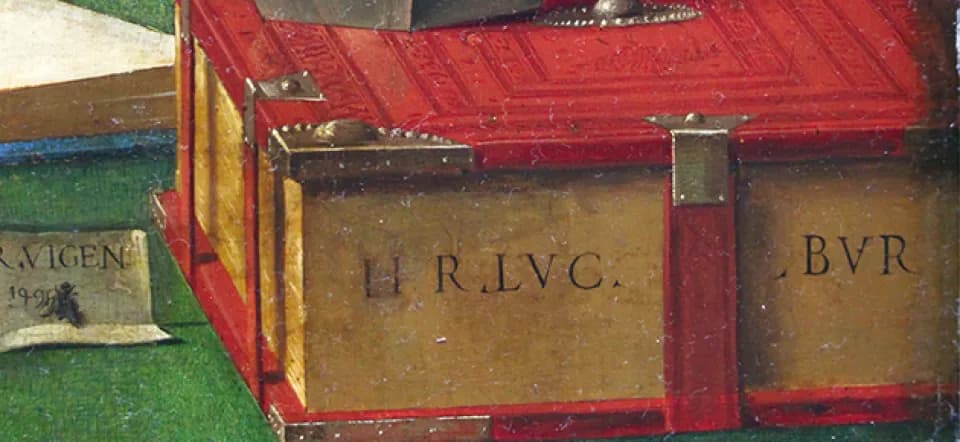
Besides the traditional method taught at school, there is, for example, the lattice method (or per gelosia). Its name comes from the shape of the grid used, which resembles the "jalousies" (shutters) used in Venice, where Luca Pacioli lived. The Italian Renaissance mathematician described the method in Summa de arithmetica, geometria, proportioni et proportionalita ("The Sum of Arithmetic, Geometry, Proportions and Proportionality"). In the famous painting depicting him—Luca Pacioli is the monk in the center—the book lies beneath the dodecahedron, in the painting's bottom right-hand corner.
This method (see the article ""Galleying" through division") consists in drawing grids of squares with the corresponding diagonals. These may be drawn from right to left (as in the previous article) or from left to right (as here). Following Luca Pacioli's method, we can then read off the result directly: 987 × 987 = 974,169.