



Jean-Jacques Dupas
107 articles published in Tangente
 Math for everyoneN°91Aug 25, 2024
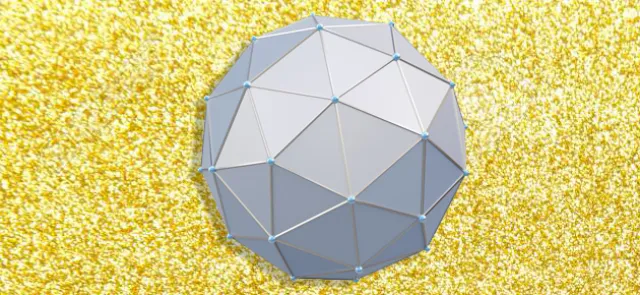
Inflating polyhedra
In his early work, Cauchy revived the study of polyhedra. Ever since his results on the rigidity of convex polyhedra, mathematicians have sought to learn more about more general cases. The quest has produced a new concept, the flexahedron, and a fascinating property: the bellows theorem.
Read → Math for everyoneN°91Aug 24, 2024
The rigidity theorem
Cauchy's earliest work concerned polyhedra, including his foundational rigidity theorem.
Read →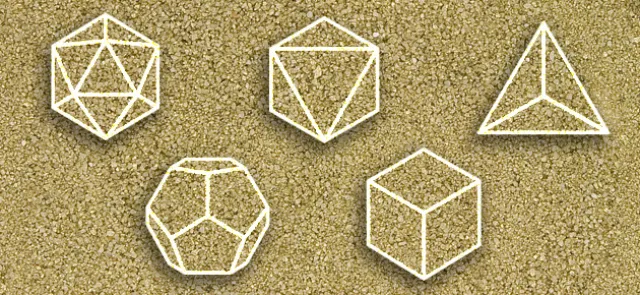 Math for everyoneN°91Aug 24, 2024
First discoveries
Although Cauchy is widely regarded as a highly abstract thinker, the first chapter of his work is, by contrast, strikingly visual. His study of regular polyhedra marked his entry into the world of mathematical research.
Read →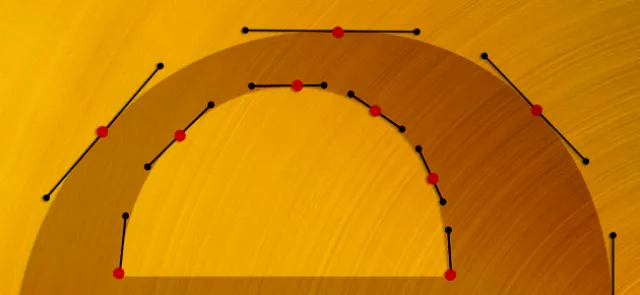 Math for everyoneN°219Aug 22, 2024
Bézier curves
Bézier curves are particularly common in computer-aided design and can be generated easily from a small number of points that completely determine them.
Read → Math for everyoneN°219Aug 22, 2024
Approximating the paths of celestial bodies
The word planet comes from a Greek word meaning "wandering star." This etymology suggests that the motion of the planets—which for the Greeks included the Moon and the Sun—is difficult to define and seems to defy all logic.
Read → History and CultureN°218Jun 13, 2024
The Mandelbrot–Zipf–Estoup law
The polymath Benoît Mandelbrot took an interest in many subjects before becoming famous for his research on fractals.
Read →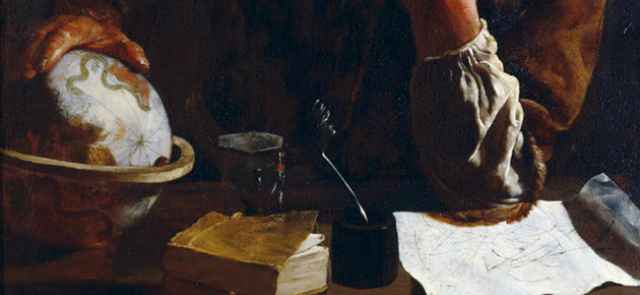 History and CultureN°90May 06, 2024
The endless quest for decimal places
Visitors to the Palais de la découverte cannot help being fascinated by the sequence of π's decimal digits in the rotunda devoted to it. The digits seem to occur in no apparent order. Yet they are the result of a calculation!
Read → Math for everyoneN°90May 03, 2024
Pi, a number beyond reason
Since π is defined as the ratio of a circle's circumference to its diameter, it would be convenient if it were rational—that is, the quotient of two integers. Unfortunately, it is not! Worse still, some might say, it is even transcendental…
Read → History and CultureN°90May 03, 2024
It’s quite a story…
The constant π is everywhere in mathematics. It is undoubtedly the best-known irrational number—and even the best-known transcendental number. How is it defined geometrically, and why does it appear in every branch of mathematics?
Read →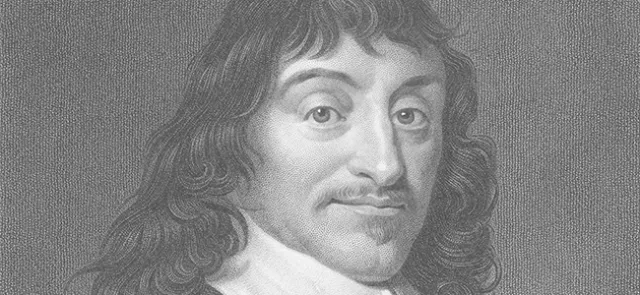 History and CultureN°89Feb 20, 2024
Descartes' way
How can fractions be handled geometrically? At the beginning of his most famous work, Descartes shows us how.
Read → Math for everyoneN°89Feb 17, 2024
Gears
How can a ratio be approximated by a simpler one? Crucial to clockmakers and engineers, this problem can be solved with a healthy dose of arithmetic and algorithms dating back to antiquity.
Read →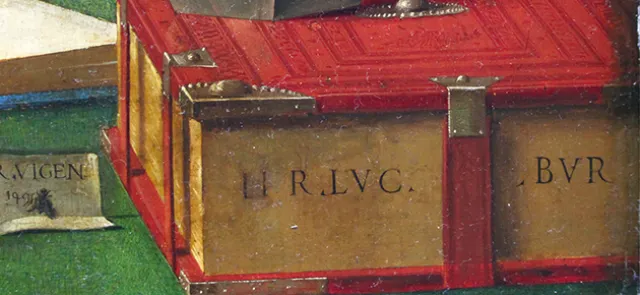 History and CultureN°216Feb 13, 2024
Multiplying with rods
Before the advent of modern technology, techniques or tools had to be devised to perform the basic calculations required by craftspeople, engineers and everyone else! From John Napier to Édouard Lucas, mathematicians distinguished themselves in this pursuit.
Read →