



Amazing Math
Surprising or counterintuitive mathematical results and proofs
 Podcast
Palindromic numbers: numerical symmetry | Tangente
These numbers, which can be read equally well from left to right or from right to left, raise questions. At first glance they seem highly unusual, and therefore rare. Yet when an elementary arithmetic process is repeated on any whole number whatsoever, we almost always end up with just such a number. Bizarre, how bizarre!
 Podcast
It doesn't take much to be happy
We know that mathematics can be a source of joy, but have you heard of happy numbers? Simple to define, they hold plenty of surprises and show just how much playing with integers remains an inexhaustible source of research at every level.
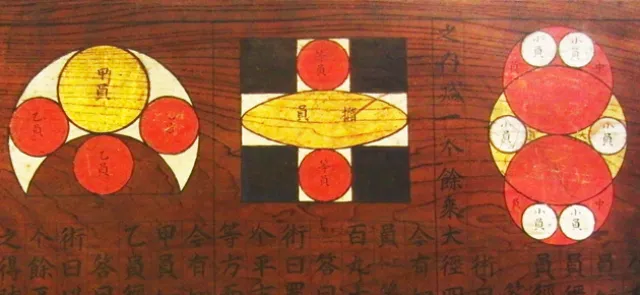
Sangaku: geometry in Japan's temples | Tangente
Sangaku are a remarkable practice, bringing together mathematics, art and spirituality. They offer a precious glimpse into the mathematics practiced during the Edo period and give a sense of how sophisticated popular mathematical culture was at the time.
 Podcast
Tangents and the parabola: gems galore
Behind its sleek appearance, the parabola brims with fascinating properties. Thus, the study of its tangents reveals remarkable angular properties and offers a playground of astonishing richness, where classical geometry meets luminous reflections.
 Podcast
Constructing a parabola | Tangente
Constructing a parabola is both fun and highly instructive. It brings its geometric properties to life and even provides an opportunity to do some arithmetic.
 Podcast
Misleading graphical proofs: the missing square paradox and more
Discover how seemingly rigorous diagrams can fool us: the missing square paradox, the astonishing proof that every triangle is equilateral, and more.
 Podcast
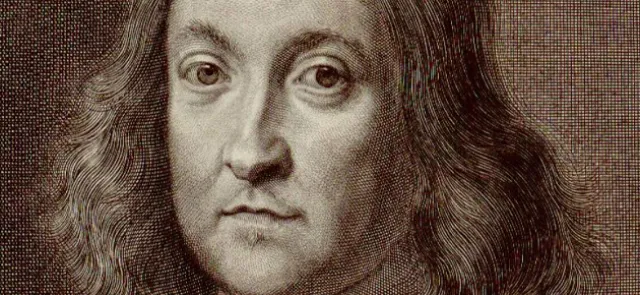
Fermat's false theorem
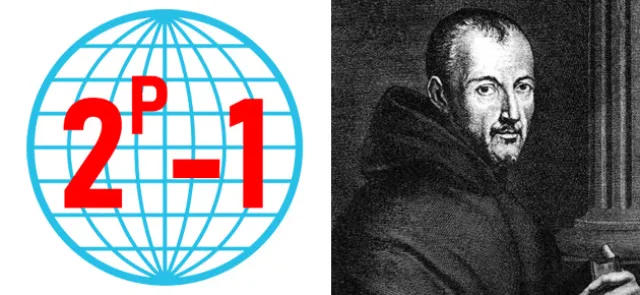
Fermat formulated many theorems, but one of them proved false: he conjectured that all "Fermat numbers" were prime, an error exposed by Euler. This notably illustrates how induction can lead us astray.
 Podcast
At Ratchinski's public school
For fifteen years, Sergei Ratchinski developed his own teaching method, based on creativity.
 Podcast
Logarithms to the rescue
Mental arithmetic usually brings to mind the four basic operations, or perhaps a few square-root calculations. Yet a little additional theoretical groundwork can take us much further, allowing us to tackle in our heads problems that might otherwise seem impossible without a calculator.
 Podcast
Is this number prime?
Prime numbers form the backbone of arithmetic. Although their distribution remains a subject of cutting-edge research, being able to decide mentally whether a number is prime is an excellent mental exercise—both enjoyable and creative.
 Podcast
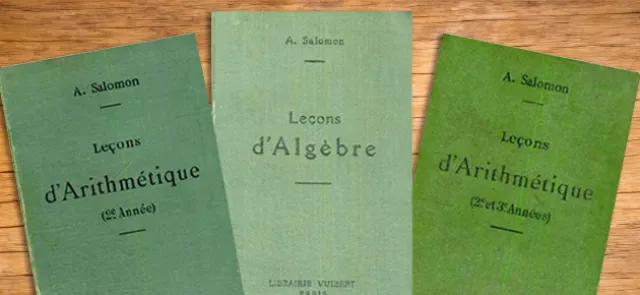
Divisibility in 19th-century textbooks | Tangente
Divisibility rules are numerous and are used by everyone who practises mental arithmetic. Blending arithmetic with common sense, they are a source of countless mathematical recreations, and have long been used in teaching.
 Podcast
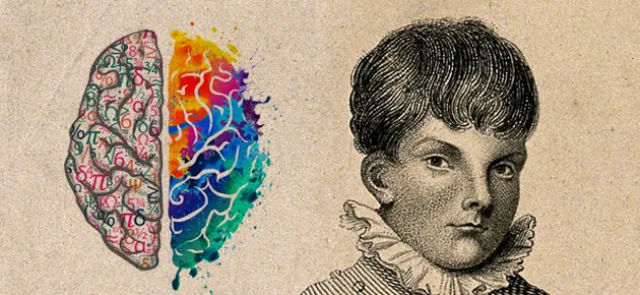
Calculating prodigies
Calculating prodigies fascinate the public with their ease in rapidly performing operations on large numbers. The tricks used by these number magicians draw on abilities that are more mnemonic than mathematical, but also on numerous methods and stratagems based on various theorems.
 Podcast
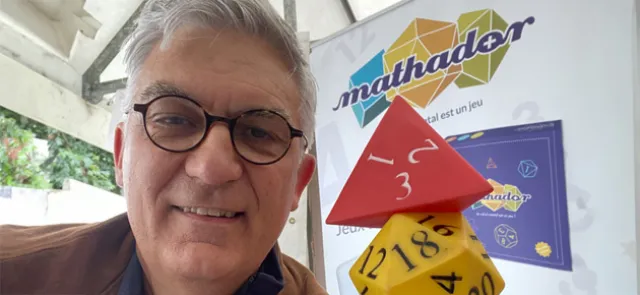
Éric Trouillot: Mental arithmetic, a path to jubilation | Tangente
The inventor of the calculation game Mathador, Éric Trouillot is one of those working to bring mental arithmetic back into teaching practice. In his view, far from being tricks performed by trained monkeys, techniques for calculating in one's head are an excellent gateway into the world of numbers, as well as an irreplaceable way to put mathematical properties — such as the distributivity of multiplication — into concrete practice.
 Podcast
Flexible in three dimensions | Tangente
The flexacube and a more sophisticated form, the Yoshimoto cube, are three-dimensional versions of flexagons. Beyond their construction, these astonishing objects raise questions about the flexibility of polyhedra and formalize that question: under what condition does a solid remain rigid?
 Podcast
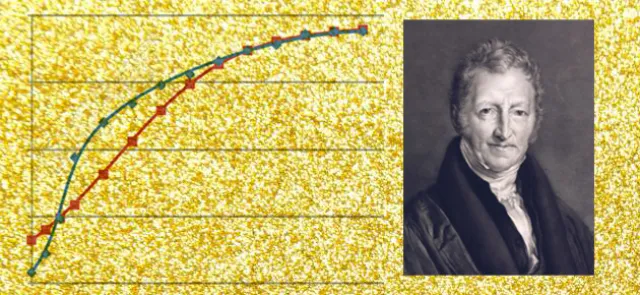
Logistic functions, from demographics to marketing
Driven by the desire for reliable demographic models, logistic functions emerged around 1840. They provide the best model for growth limited by external factors, extending Malthus's approach. Today they have unexpected applications, whether in marketing or household equipment.
 Podcast
Bees and the abstract sense of number | Tangente
Research into bees' cognitive abilities shows that they can count up to five, order numbers along a mental number line that includes zero, perform simple operations, and even associate a number with a symbol. This suggests the near-universal nature of mathematics.
 Podcast
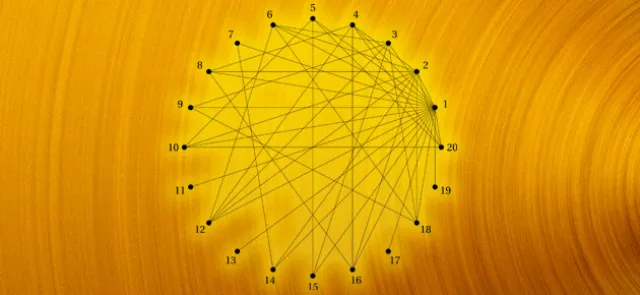
Walks in the divisor graph — Erdős and Saias | Tangente
Among Paul Erdős's interests, two fields stand out more often than others: number theory and graph theory. It is therefore no surprise that he eventually became interested in the divisor graph, a mathematical object that lies precisely at the crossroads of these two subjects.
 Podcast
Probabilities where you wouldn't expect them! | Tangente
The probabilistic method, which Paul Erdős introduced and used, makes it possible to prove the existence of a mathematical object. Despite the use of probability, what is remarkable — and all the more surprising — is that the result obtained is certain!
 Podcast
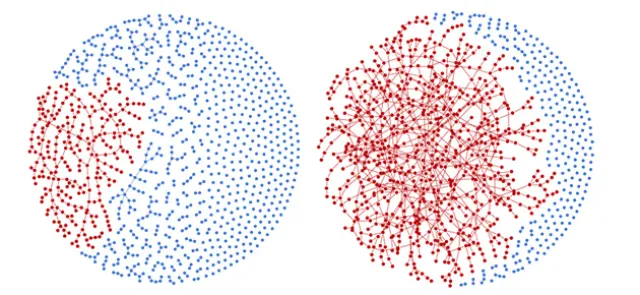
The Erdős-Rényi random graph
The Erdős and Rényi random graph model is so famous in mathematics that it has become a common noun: in probability theory, people routinely speak of "an Erdős-Rényi" the way one would speak of a Brillat-Savarin in gastronomy or a Stradivarius in music.
 Podcast
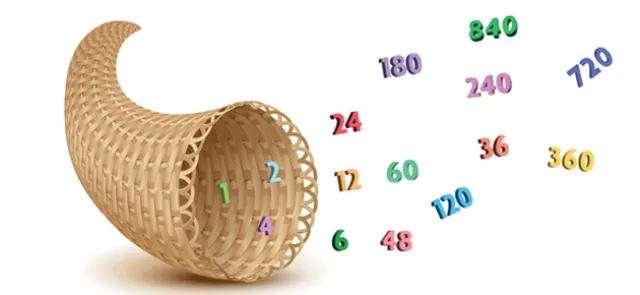
A cornucopia
Paul Erdős and Leonidas Alaoglu studied highly abundant and superabundant numbers, rediscovering along the way notions already studied, but not published, by the celebrated Indian mathematician Ramanujan.