



Curiosity
Patterns, crafts, magic squares and fun mathematical content not part of the school curriculum
Textual self-reference: Hofstadter | Tangente
Wordplay is fertile ground for self-reference. Examples can be found in Douglas Hofstadter's books (see Tangente 131, 2009, and Tangente 154, 2013), as well as in countless anonymous creations (found online, for instance), whether apocryphal or well documented. Here is a selection.
Paradoxes and self-contradictions in logic | Tangente
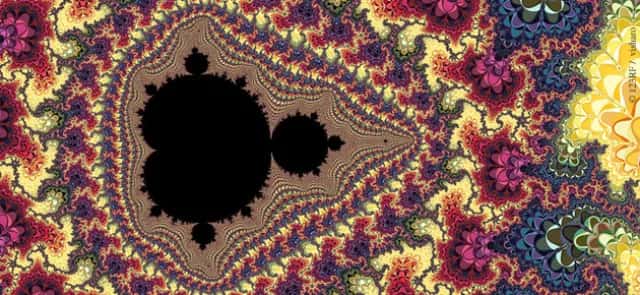
A source of amusement, self-reference also lies behind some famous and profound mathematical paradoxes. Logic, our senses and our certainties are all sorely tested. Reflection then takes over… and often leads to wonder!
Heilbronn triangles
How should points be placed in a region of the plane to maximize the smallest area determined by any three of them? Despite the elementary nature of this geometry problem, no general solution is known even today!
Plane coloring and the minimum chromatic number | Tangente
In 1950, American mathematician Edward Nelson (1932–2014) proposed an entertaining coloring problem.

The art of avoiding crossings
Artists using mathematics: nothing new there. But artists posing optimization problems that mathematicians still cannot solve: now that is surprising! One seemingly innocuous conjecture about drawing graphs has resisted all attempts at proof for fifty years.
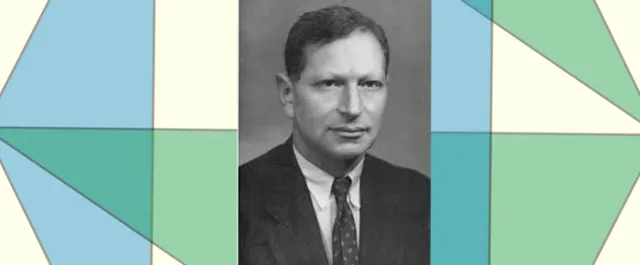
Kurt Hensel, the father of p-adic numbers
Kurt Hensel is best known for his research on p-adic numbers.
Patrick Dehornoy: a tribute to the mathematician | Tangente
The specialist in ordered braids also made numerous videos popularizing mathematics.
Number theorist Christian Mauduit has died
The number theorist was an expert on representing integers in different bases.

A dive into a strange world of numbers
At the beginning of the 20th century, the German mathematician Kurt Hensel "invented" new numbers, written with infinitely many digits, as in the decimal system, but based on a very different notion of proximity. This curious theory proved very fruitful in arithmetic!
A math problem taken to court
Should the solution to a mathematical puzzle have to be approved by a judge? If the case reported here is anything to go by, the answer is not so simple.
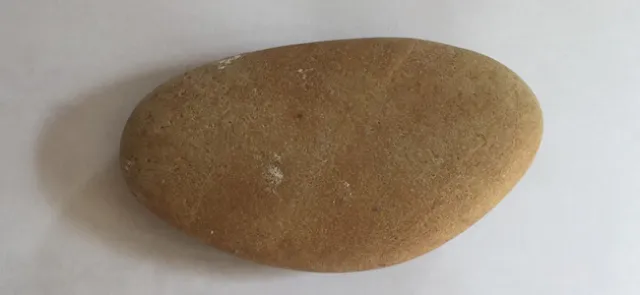
Rattlebacks: when motion reverses | Tangente
Among the unusual objects that inspire both wonder and scientific curiosity, few are more astonishing than the rattleback. When spun, it has the remarkable ability to reverse its direction of rotation "by itself."
Oumupo: The workshop of potential music | Tangente
In 1960, François Le Lionnais and Raymond Queneau founded a collective dedicated to renewing literary forms: Oulipo (the Workshop of Potential Literature). From the outset, Le Lionnais considered extending this approach to other forms of expression.
When mathematics enters musical composition | Tangente
The deep connections between mathematics and music in the process of composition grew richer during the twentieth century.
Atonal music: a rearguard debate | Tangente
In 2013, Karol Beffa, a composer and improvising pianist who held a chair at the Collège de France, organized a lecture. Drawing on examples, he set out to demonstrate the continued existence of the tonal—or neo-tonal—system and the failings of an atonal system that he considered dogmatic, inaccessible to the ear and obsolete.
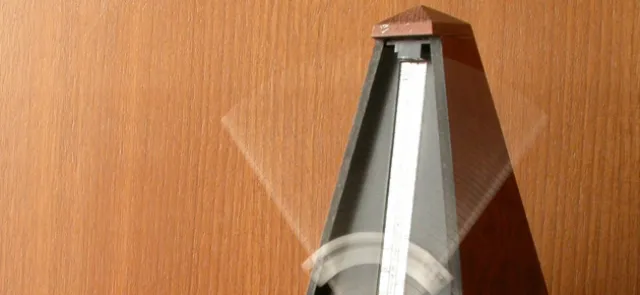
Instruments in the service of music
Marking time, giving music its rhythm by keeping the beat: these are the functions of an object that accompanies many musicians—the metronome. Originally mechanical, it later became electronic, no doubt to keep in tune and move with the times…
Statistics and epidemiology: clusters | Tangente
An article in Science et pseudo-sciences explains the statistical methods used in epidemiological studies, using cases of "babies born without arms" as an example
Arithmetic: Were things really better before? | Tangente
The latest report from the Directorate of Evaluation, Forecasting and Performance warns of declining achievement among pupils at the end of CM2.
First black hole photograph: Katie Bouman | Tangente
The first photograph of a black hole was produced using an algorithm tasked with assembling all the data collected by a network of telescopes.
Karen Uhlenbeck: first woman to win Abel Prize | Tangente
Following Ingrid Daubechies and Claire Voisin, another female mathematician has been honored this year.
Operations in billiards
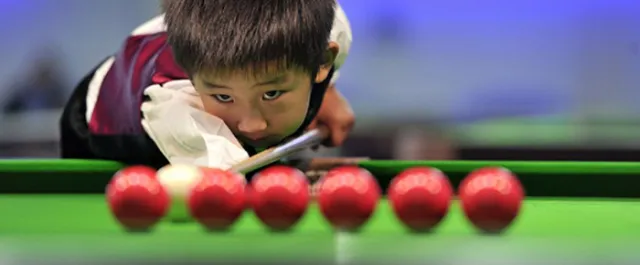
One of the arts and pleasures of mathematics is finding different ways to represent problems. Some problems in dynamics can profitably be replaced by the study of trajectories on a billiard table, revealing hidden structures—and hence hidden logical beauty.