



Curiosity
Patterns, crafts, magic squares and fun mathematical content not part of the school curriculum
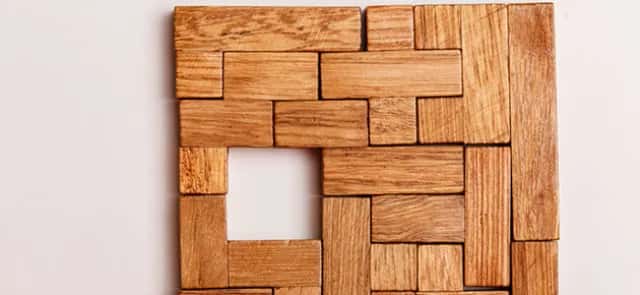
In search of the missing squares | Tangente
There is no need to invoke the paradoxes of infinity to have fun with areas: a simple rectangle is enough to create some formidable puzzles! All you need is a sheet of paper, some pencils, a ruler and a pair of scissors—and you are ready to make little squares disappear.
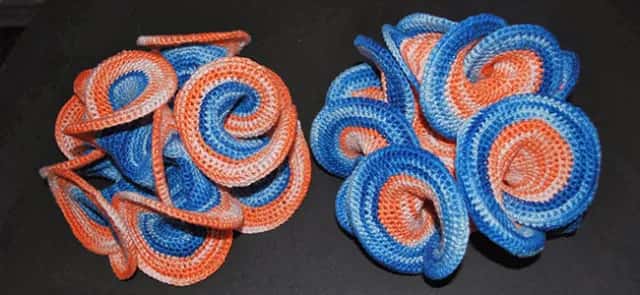
Knitting topological surfaces | Tangente
Knitting is generally used to make clothes. Mathematicians face no such limitations: they are interested in other kinds of surfaces that can be recreated with yarn and a needle. The result? Objects that are at once geometric, educational and… artistic!
Intellectual self-defense: zetetics courses | Tangente
Cortecs (Collective for Transdisciplinary Research on Critical Thinking & Science) is a teaching and research collective founded in 2010 to produce educational resources and scientific content, as well as courses and training in critical thinking, intellectual self-defense, zetetics and the scientific method.
Theorizing conspiracy theory through mathematics | Tangente
We often encounter the outlandish claims made by conspiracy-theory enthusiasts. But can we use theory itself to show just how implausible they are?
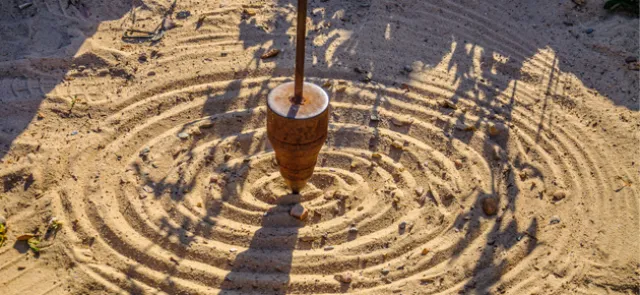
The cycloidal pendulum
The cycloidal pendulum has three key properties: it is isochronous, tautochronous and brachistochronous. Behind these learned names lie fundamental properties—so fundamental, in fact, that we owe nothing less than the birth of clockmaking to the pendulum!
Knuth's octagons
The American mathematician Donald Knuth created TeX, a mathematical typesetting system based on Bézier curves.
The art of making numbers talk
We are awash in numerical and statistical information. Yet even objective, accurate data can be interpreted misleadingly. A little calculation and a sound grasp of error theory can correct some unwarranted conclusions.
Objective and perceived reality: biases | Tangente
We are all subject to various biases arising from our senses, our experience, or the conscious and unconscious messages we receive.
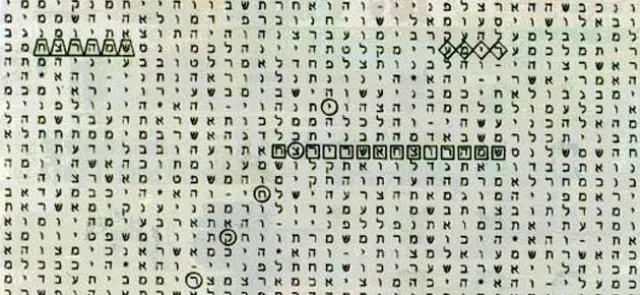
Demystifying the Bible's "secret codes"
Alain said: "You can prove anything you like; the real difficulty is knowing what you want to prove." With the advent of technologies that can produce fake documents, and everyone's desire to invent information that confirms their own ideas, this quotation has a bright future ahead of it...
Zetetics, or the art of doubt
In recent years, zetetics has found its way into the science curricula of several universities. Contrary to a common misconception, its scope extends far beyond the mere study of paranormal phenomena…
Write for Tangente: 2019 competition and prize | Tangente
What if you, too, wrote for Tangente? To that end, the Club Tangente is getting an early start on its 2019 Best Article Prize (PMA), organized in partnership with the CultureMath website and the APMEP.
Play with 2019: curiosities and decompositions | Tangente
We thought 2019 was an unremarkable number. Not at all! As it does every year, the Tangente team has surpassed itself in uncovering its finer qualities.
Math-o-LU workshops launch in 2019 | Tangente
The Maison des mathématiques de l'Ouest, which brings together mathematics outreach initiatives across Pays de la Loire, and the Résonnance association, which runs dance and theater workshops linked to science, spearheaded a project to establish a mathematics club at Le Lieu Unique, a performing arts venue in Nantes (Loire-Atlantique).
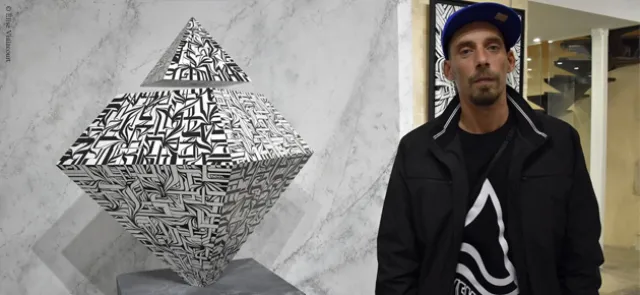
Astro: street art and optical illusions | Tangente
A painter and visual artist, Astro favors random structures and elementary geometric forms in both his paintings and his murals. Trompe-l'oeil, anamorphoses and other optical illusions also interest this self-taught artist.
Did Leonardo da Vinci invent the drone? | Tangente
Taken together, several studies and inventions foreshadow the advent of drones in aerial photography.
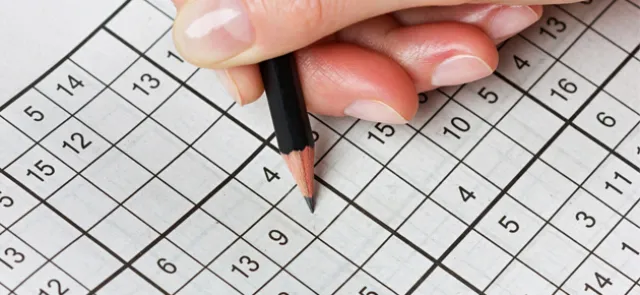
In the press too…
Mathematical games, familiar from the scientific press, are few and far between in the mainstream press. Some newspapers have nevertheless taken the plunge, often with success! There is indeed an audience for recreational mathematics—provided it is not schoolwork in disguise.
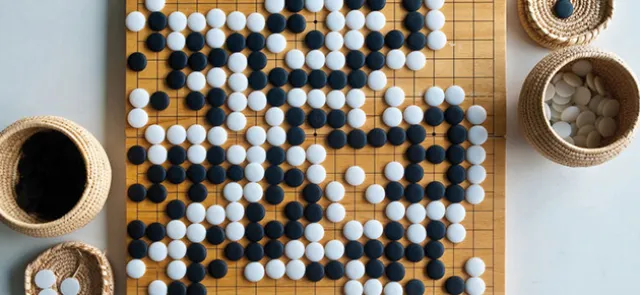
Tabletop games, games in society
Board games, solitaire games, tabletop games, games of chance, video games, traditional games… There is something for everyone, whatever their tastes! As cultural products, games reflect the societies that produce them. But they can also help us develop our mental abilities.
Mathematics lends itself to play
Play does not seem more closely linked to one discipline than another. Yet mathematics and play enjoy a special relationship. Mathematics lends itself remarkably well to play, and play returns the favour.
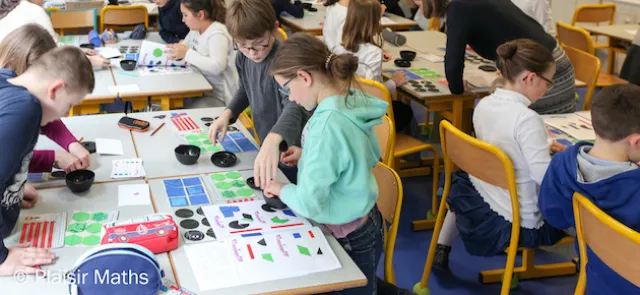
Playing games in mathematics class
Games can play an important role in school mathematics. What if every problem took the form of a game? Here is how, in just a few playful steps, to move beyond the confines of a high-school curriculum.
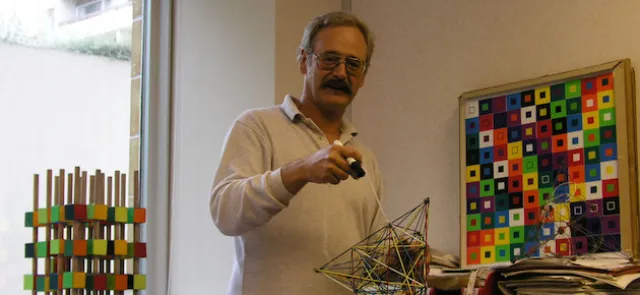
Combinatorics, past and present: An interview with Pierre Duchet
The study of combinatorial structures is a recent branch of mathematics, rich in counting problems. A journey into a far too little-known realm.