



History and Culture
History of mathematics and cultural connections
Math tourism: mathematics, geography and travel | Tangente
For some fifteen years, the "math tourist" website (mathouriste.eu) has been sharing photographs from Alain Juhel's mathematical travels and visits to places connected with mathematics and mathematicians.
Portraits of women mathematicians | Tangente
To honor Maryam Mirzakhani, International Day of Women in Mathematics is observed on May 12, her birthday.
Roman numerals and modern passions | Tangente
Controversy in Lutetia, in March MMXXI. The Carnavalet Museum, devoted to the history of Paris, has allegedly "abolished Roman numerals" from its new visitor experience on the pretext that they represent "an obstacle to understanding", claims the Italian daily Corriere della Serra.
Alan Turing on the £50 note | Tangente
On June 23, 2021, Alan Turing (1912–1954) would have turned 109. To mark this symbolic date, the Bank of England will issue a new £50 note (about 58 euros) bearing the scientist's portrait.
Lovász and Widgerson, winners of the 2021 Abel Prize | Tangente
This year, the Norwegian Academy of Science and Letters has put theoretical computer science and graph theory in the spotlight.
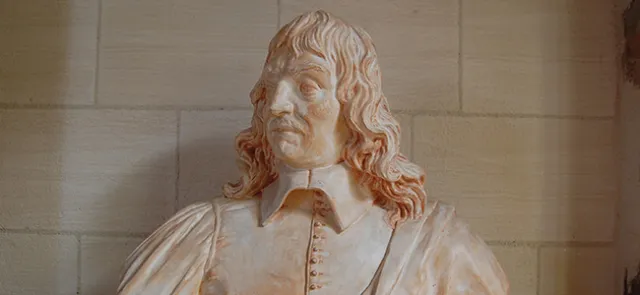
The emergence of Cartesian geometry
Greek geometers were the model for mathematicians when Descartes revolutionized geometry by introducing coordinates, making it possible to approach geometry through algebraic methods. Cartesian geometry was born.
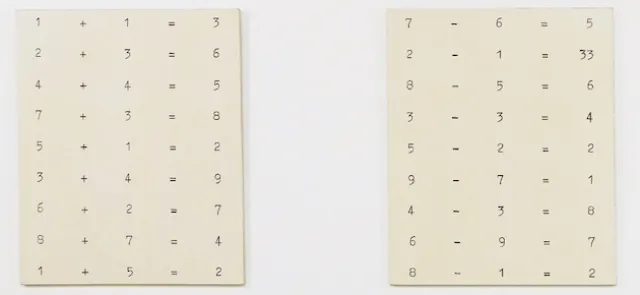
The artist and the number: art and maths | Tangente
Mathematics in general, and numbers in particular, have inspired many artists, including Dalí and Picabia. Some are drawn to the magic of numbers. Others find beauty in number sequences, which they bring to life in graphic art or painting.
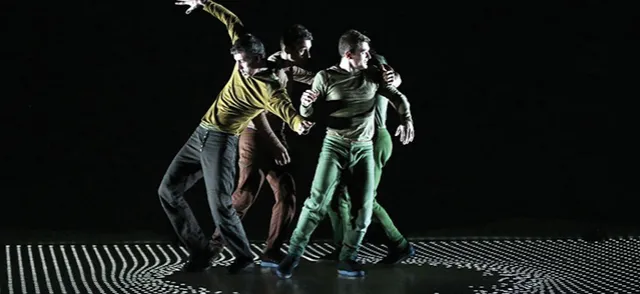
Art and mathematics: creative encounters | Tangente
Digital art takes many forms, surprising us with the new territory it explores. It can be 2D or 3D, static or moving, passive or interactive. It lies at the intersection of art and technology. How have artists moved from a mathematical concept to creating a work of art?
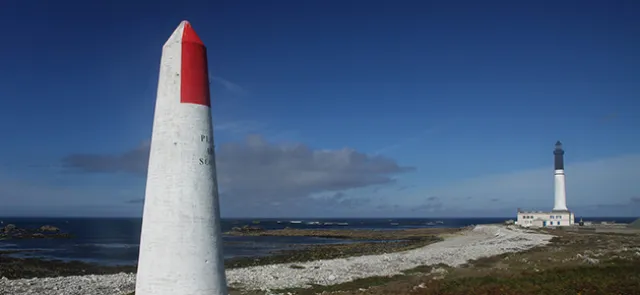
Finding your position at sea
How can you determine your position when sailing offshore or along the coast? With land in sight, one or two landmarks are enough. On the open sea, sailors’ ingenuity led to the invention of sophisticated instruments such as the sextant and the Cras plotter. A little geometry is essential to use them.
Xenakis’s UPIC: mathematics and music | Tangente
One of the pioneers of the digital revolution in music was the composer Iannis Xenakis (1922–2001). Music has always had an underlying structure closely related to mathematics, but with a composer like Xenakis, this synergy found concrete expression.
Digital technology and music: benefits and limitations | Tangente
The introduction of digital technology into the arts was a genuine revolution. In music, that revolution took many forms.
Towards vector art: art and digital technology | Tangente
If contemporary art has been marked since the twentieth century by a succession of avant-garde movements, most often breaking with their predecessors, today's digital art is no exception.
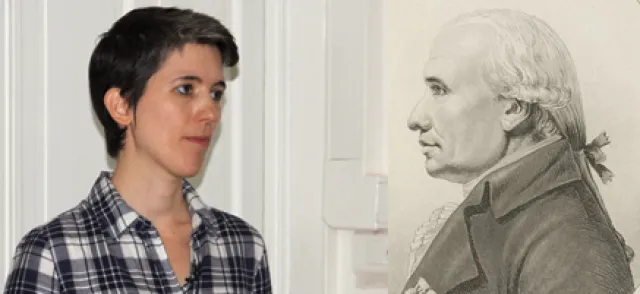
Two and a half centuries of optimal transport
Moving a pile of sand, transferring colors from one image to another, minimizing a group’s travel time—all these problems can be tackled using optimal transport. Gaspard Monge pioneered a theory that computing has made remarkably effective.
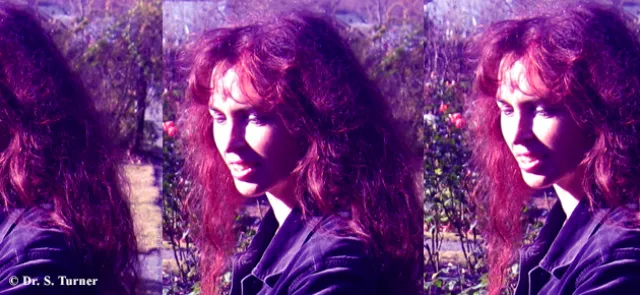
Teja Krašek in Escher's footsteps | Tangente
Born in Celje, Slovenia, Matjuska Teja Krašek (pronounced "Teyla Krashek") lives and works in Ljubljana. Her work draws on her fascination with symmetry, fractals and, more broadly, the beauty she sees in mathematics. She agreed to share her passion with us.
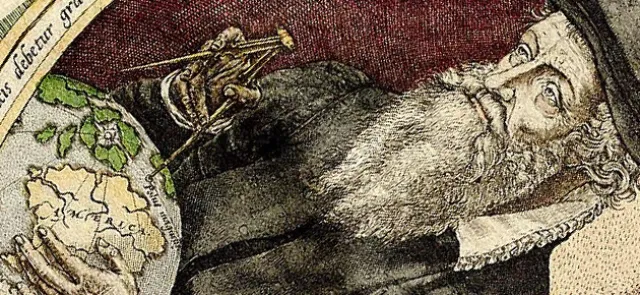
The Mercator projection
The best-known maps are based on the famous Mercator projection, named after its Flemish creator, who worked in the early Renaissance. Yet this projection relies on mathematical concepts developed well after the scholar’s death! So how could he have constructed his world map?
The Zodiac's encrypted messages | Tangente
At the turn of the 1970s, a serial killer was at large in California. What set him apart was that he communicated with the police through seventeen letters, four of them encrypted. The first was deciphered in 1969; the second has only just been cracked. These cryptograms put a new spin on classic cryptographic methods.
Promoting reliable science communication | Tangente
Since 1968, the French Association for Scientific Information (AFIS) has published the quarterly magazine Science et Pseudo-Sciences. Its aims are to promote science and combat those who invoke its name as a cover for quackery.
Squares in art | Tangente
Several artists have taken an interest in the square in order to explore its geometry
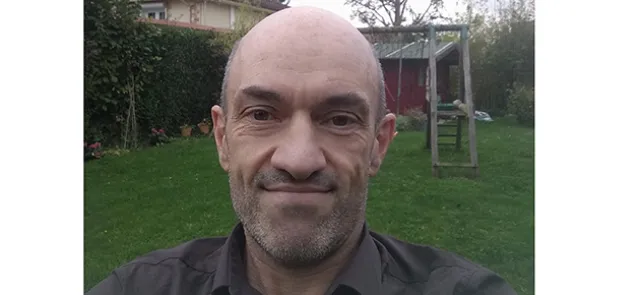
Meet Fabien Durand, president of the SMF | Tangente
At the end of last June, the Société mathématique de France (SMF) elected mathematician Fabien Durand as its new president. He enthusiastically agreed to speak with the editorial team at Tangente.
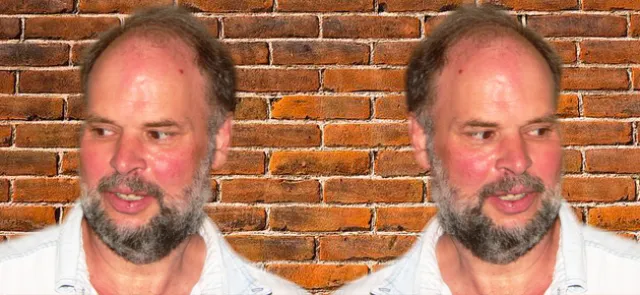
Vaughan Jones, the knot magician
The mathematician Vaughan Jones, who died on September 6, 2020, profoundly influenced several areas of mathematics, including topology and functional analysis, as well as physics, particularly quantum theory. His name remains associated with powerful invariants in knot theory.