



History and Culture
History of mathematics and cultural connections
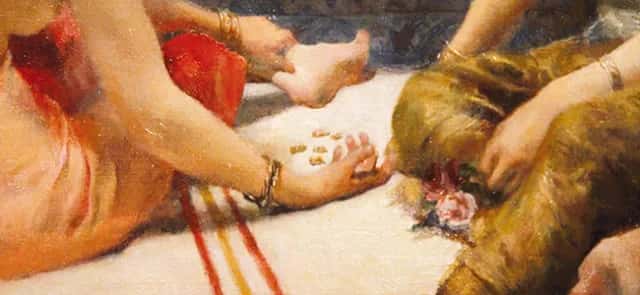
Martin Gardner's challenge: paradoxes | Tangente
Can a game in which one player's gain is the other's loss benefit both players? That was the question Martin Gardner posed in 1980 with his "Loser Takes All" problem. More than forty years on, the paradox remains as relevant as ever!

A driving force for innovation in education
Tangente reaches a great many teachers and is also available in secondary-school libraries across France and the French-speaking world. Alongside its initiatives aimed directly at teaching, its support for more diverse approaches to learning has proved extremely valuable. Experts attest to this.
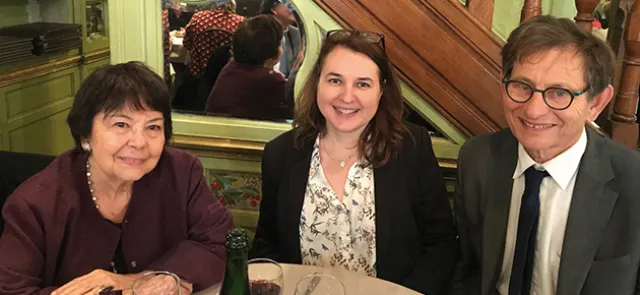
Tangente: a catalyst for mathematical culture | Tangente
A magazine devoted to mathematical culture—that is sure to surprise more than a few people! When Tangente arrived in 1987, it transformed the way mathematics was viewed. It inspired some readers to pursue a path they had never considered and others to embark on initiatives to popularize mathematics. Many prominent figures bear witness to this.
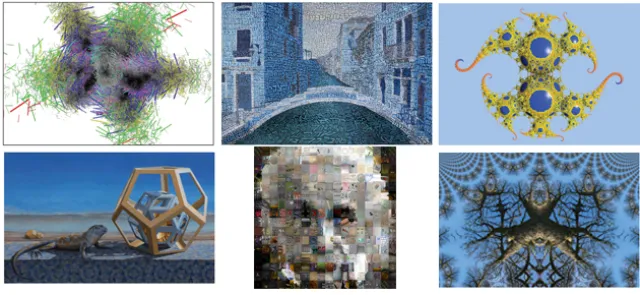
Artworks from Tangente's central insert | Tangente
Don't wait any longer—buy issue 200 of Tangente to get the magnificent artworks below in A3 format and display them in your home!

Magic and curiosities: 7th Math Night | Tangente
For its seventh edition, Math Night will once again be held in Mareau-aux-Prés, a Loire Valley town near Orléans whose mayor, Bertrand Hauchecorne, is none other than the editor-in-chief of Tangente.

Maurice Glaymann, a leading figure in mathematics education | Tangente
Maurice Glaymann was an outstanding figure in French mathematics education.

A Goncourt for a mathematician | Tangente
Mathematics scored twice in 2021, with two Goncourt Prizes.

Napoleon's problem
In this bicentenary year of 2021, let's revisit a result that bears his name. The emperor is said to have had a keen interest in geometry; according to one story, he once discussed the subject with two mathematicians of his day, Joseph Lagrange (1763–1813) and Pierre-Simon Laplace (1749–1827).
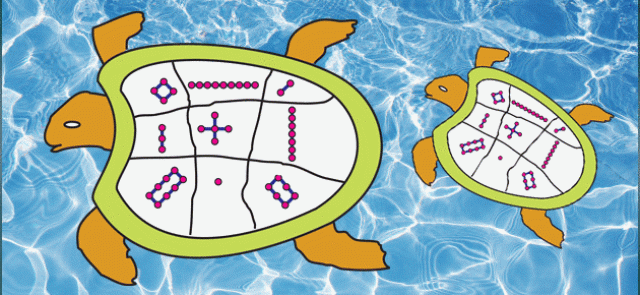
Timeless mathematical puzzles | Tangente
Puzzles have been part of human culture since earliest antiquity. At first, inventing puzzles was bound up with mythology or religion; gradually, it became a purely intellectual game, independent of any purpose or practical application.
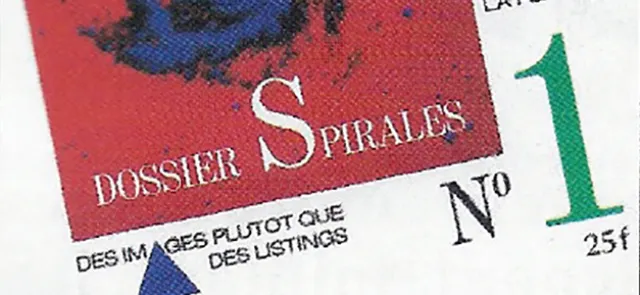
Tangente: an extraordinary story | Tangente
How did France manage to create the world's only general-interest mathematics magazine, sold at newsstands? How did this bimonthly reach its 200th issue after a third of a century of uninterrupted publication? What a story!

Give Euclid his due...
Geometric constructions are central to reasoning in Euclid's The Elements. The various methods of teaching geometry, right up to the present day, claim to follow this approach.
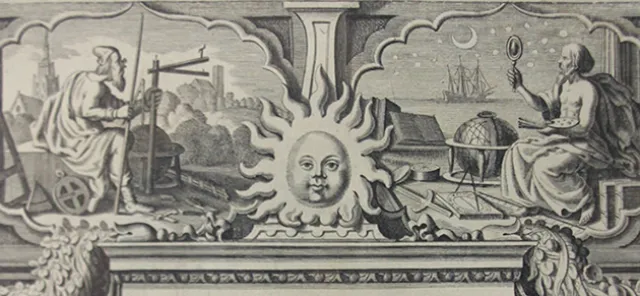
Through Euclid's eyes
Two postulates in Euclid's Elements embody the ideal conception of the straightedge and compass inherited from Plato's realm of Ideas. The Alexandrian scholar built much of plane geometry—and the constructions he bequeathed to us—on these two postulates.
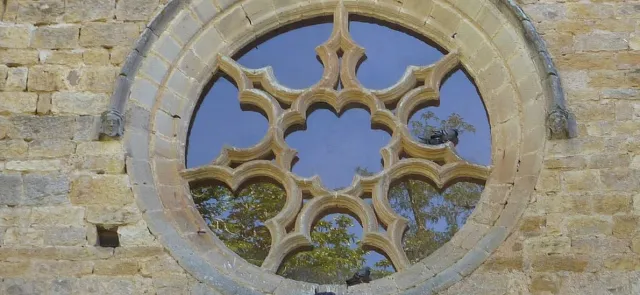
The builders' geometric constructions
Several centuries before the Renaissance, whether building a church or a fortress, builders needed only a compass and an unmarked straightedge to draw arcs, pointed arches, basket-handle arches and rose windows. Let us explore the basic geometry behind their methods.
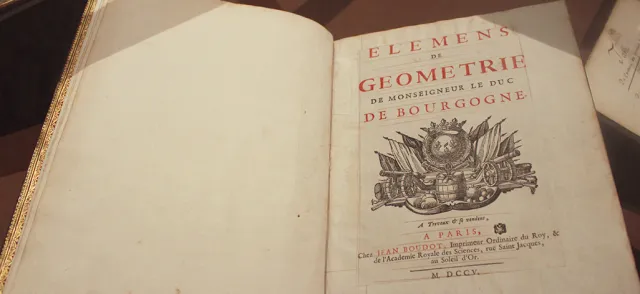
Straightedge and compass in education
How long have schoolchildren been drawing geometric figures with a straightedge and compass? More importantly, why? Even elementary geometric constructions must be introduced progressively, and this requires knowledge to be organized systematically.
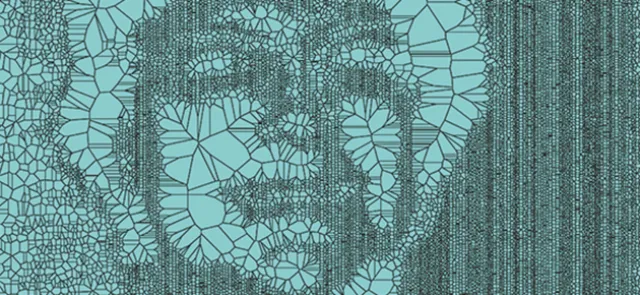
Bernard Cornet's geometric art and Voronoi | Tangente
In art, mathematical tools can help artists develop and create their work. The Nantes painter Bernard Cornet (born in 1952) has brought Voronoi diagrams and Delaunay triangulation into his artistic practice.
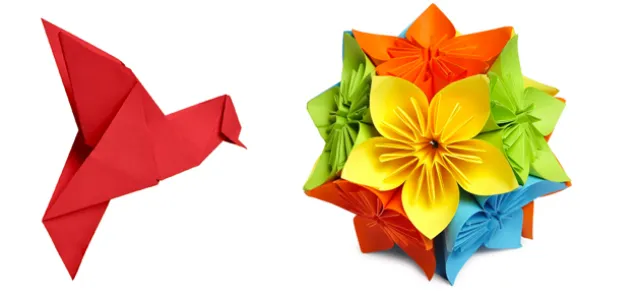
Origami and folds for geometric constructions
Greek geometers regarded only straightedge-and-compass constructions as acceptable. Some problems that defeated their ingenuity—for reasons that would not be understood until the advent of algebra—can nevertheless be solved using origami.
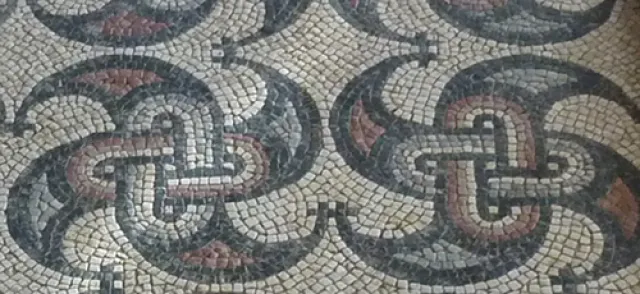
Circles in ancient Roman mosaics | Tangente
Besides their undeniable aesthetic appeal, mosaics and other archaeological remains from our past often hold wonderful mathematical surprises. These geometric examples from Gallo-Roman sites offer ample proof.
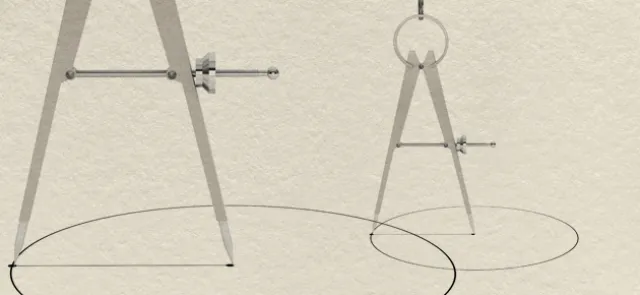
When the compass won't follow the ruler
A famous result in geometry, still surprising when first encountered, states that any point in the plane constructible with straightedge and compass can be constructed with a compass alone. But how is this actually done?
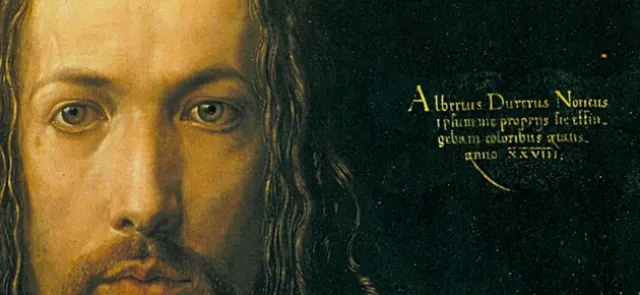
Albrecht Dürer and technical drawing | Tangente
Albrecht Dürer (1471–1528) devised a fascinating straightedge-and-compass construction of the ellipse. It foreshadowed descriptive geometry, which Gaspard Monge (1746–1818) would formalize almost three centuries later.

Let’s bite into maths: 2021 Fair | Tangente
Get a first glimpse of the programme for the 22nd Culture and Mathematical Games Fair. Held online, it will be accessible to everyone, from anywhere.