



Math for everyone
Mathematical content accessible to everyone

Research
Singmaster's conjecture, the Polymath projects, the Green–Tao theorem…

Some questions about sums of integers…
You might think that everything has already been said and done about adding two integers. Think again! That mischievous carry, which can ripple from one step of the calculation to the next, gives rise to difficult questions. This elementary algorithm still raises formidable problems.

Enter the Trophées Tangente | Tangente
Every summer, Club Tangente presents its awards. Alongside its literary prizes—the Tangente Book Prize and the Tangente High School Students' Prize—which recognize books devoted to mathematical culture, two competitions invite our readers to get creative. Don't hesitate to enter!
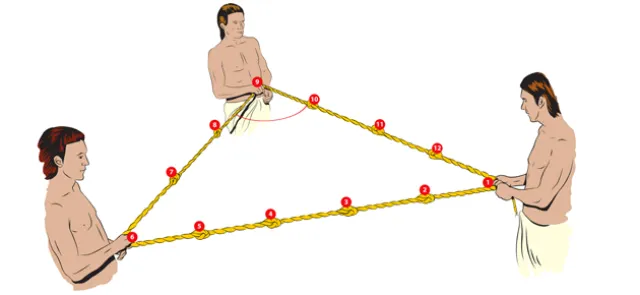
Generating the famous Pythagorean triples
Characterizing all right triangles in the plane with integer side lengths amounts to finding all Pythagorean triples. The geometric problem thus appears to become purely arithmetic! How did mathematicians go about completing this quest?

Pythagorean triangles
When the side lengths of a triangle form a Pythagorean triple, the triangle is called a Pythagorean triangle. Discover its properties...

The Pythagorean theorem before Pythagoras | Tangente
Pythagoras would never have accepted this result being named after him: he knew perfectly well that he had learned it on his journeys of study. As we shall see, it already existed in Babylon and India!

Some results
Terence Tao has successfully tackled many mathematical conjectures. Here are a few examples.

From an Erdős conjecture to Tao’s theorem
The prolific Hungarian mathematician Paul Erdős (1913–1996), along with many number theorists and combinatorialists who followed him, studied the "discrepancy problem." In 1932, Erdős formulated a deep conjecture. In 2015, Tao proved it.

Key statistical terms explained | Tangente
A quick refresher on a few statistical terms to get us started.

Future medicine: AI and medical statistics | Tangente
How can we predict the outcome of a treatment before testing it on a patient? How can we choose the best treatment for that patient? All of this relies on statistics and, in particular, on artificial intelligence to improve medicine tomorrow—and already today.
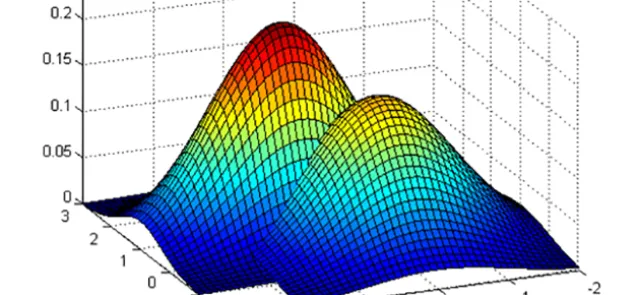
Omics data: genomics, statistics and Big Data | Tangente
Technological advances in high-throughput sequencing make it possible to produce large volumes of biological data at lower cost and at different scales of living systems. The resulting massive datasets are both high-dimensional and heterogeneous.

Bruno Falissard, biostatistician: interview | Tangente
Bruno Falissard is a psychiatrist, professor of biostatistics at Université Paris-Sud and director of the Centre for Research in Epidemiology and Population Health. He explains how statistics can help evaluate new therapies.

How maths helps evaluate drug efficacy | Tangente
More than ten years. That is the time that elapses between the discovery of a new molecule and the marketing of a product. Proving a drug's efficacy is a lengthy process in which statistics play an essential role at every stage of development.

ChatGPT and the mathematics of intelligence | Tangente
Who hasn't heard of ChatGPT? The feats of this artificial intelligence have sparked impassioned debate, along with fears and hopes for the future. To understand what it is all about, let's begin by exploring how this gigantic neural network works!

Individual-level data protection | Tangente
How can millions of individual records be processed and made available to researchers while protecting privacy and commercial confidentiality? This is a challenge the official statistical service faces every day—and one it meets rather convincingly.

Statistics: what is it for?
You like mathematics, but it seems too far removed from "real life." Why not take a look at statistics? This discipline has countless direct applications, with many more undoubtedly still to be imagined or discovered!

Modelling a football match using the Poisson distribution | Tangente
How can you estimate your favourite team's chances of winning the next FIFA World Cup? To some extent, mathematics and artificial intelligence make this possible. Here is an example from the 2018 tournament.

Modeling sports training with mathematics | Tangente
Modeling the relationship between performance and training is a delicate statistical problem. Seeking a mathematical model that links these two sets of data means thinking about sport and the potential effects of an athlete's efforts on their results.
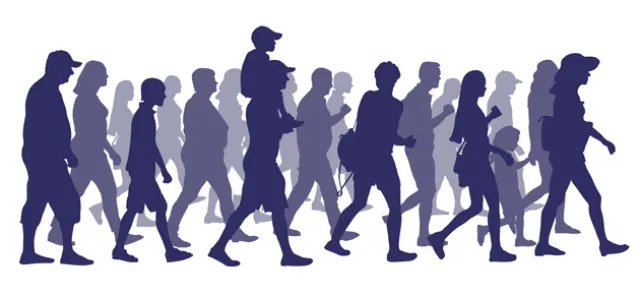
Statistical mixture models explained | Tangente
How can we estimate a model's parameters from a sample whose members come from several different subpopulations that have been mixed together, when information about which one each belongs to has been lost? Several methods are available, depending on the requirements and assumptions, including the famous EM algorithm.

How many tanks? Statistical estimation | Tangente
During the Second World War, the Allies used statistics to estimate German tank production.