



Math for everyone
Mathematical content accessible to everyone

Autonomous vehicles: life-or-death maths | Tangente
How can morality be programmed into autonomous vehicles? The question, worthy of science-fiction novels, is topical today.

Mathematical economics
Economists have often used percentages in their models

In economics too: maths at the heart of the system | Tangente
In economics, as in everyday life, rates are everywhere. Let's see how.
Deus ex machina: in mathematics too!
Looking for a simple, unexpected solution to a difficult problem? A deus ex machina can sometimes provide a surprise resolution to a desperate mathematical situation. Combinatorics, arithmetic and geometry are fertile ground for such an "aha!" moment.
The pitfalls of rates
Our thinking seems naturally additive. If we add 10% and then another 10%, we expect the total to be 20%. Yet that is wrong! Rates are not added; they are multiplied. How can we avoid the pitfalls of percentages? How can we work out the cost of a loan?

They are among us: everyday mathematics | Tangente
Percentages are everywhere. Learn how to avoid their pitfalls.
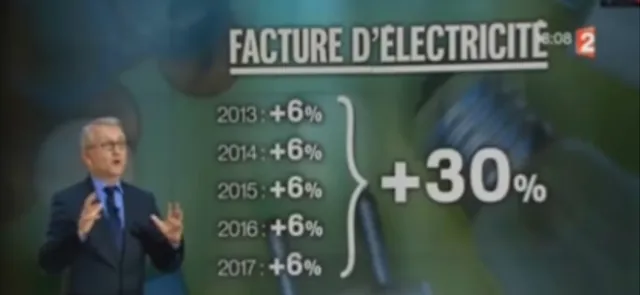
The multiplier: a tool for every citizen
Everyone encounters rates of change sooner or later. Handling them is often a source of error, although one simple, effective tool can solve many such problems: the multiplier.
Percentages, for better or worse
Since antiquity, data have been compared by scaling the total to 100. The introduction of Arabic numerals gave percentages an important role, offering a clear, quick view of a wealth of statistical data... provided, of course, that one understands how they work and can count!

A practical protractor at last: measuring tools | Tangente
What could be more commonplace in geometry than a protractor?

This polyhedron is dangerous: the geometry of the Zika virus | Tangente
Behind this polyhedron, a virus

Cancer: maths to beat the disease | Tangente
"At a time when medicine can join forces with mathematics to predict how a cancer develops, it is high time we rethought our prejudices about maths — and, while we're at it, about women mathematicians…"

Solar System stability: the KAM theorem | Tangente
Jürgen Moser belongs to the long line of mathematicians who have tackled the problem of the Solar System's stability. He is the "M" in the KAM theorem's trinity—Kolmogorov, Arnold and Moser—which links number theory and celestial mechanics.
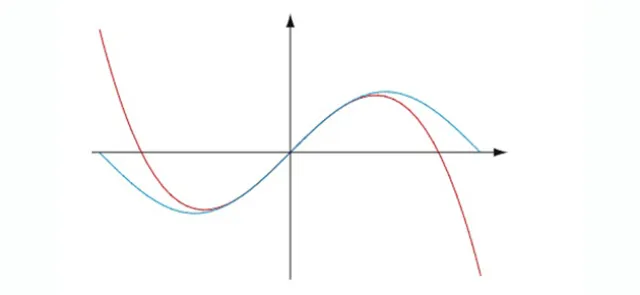
Approximating a function and following its curve
Assuming that a function is a polynomial yields useful approximation formulas. A complicated function can thus be replaced by a polynomial, simplifying most calculations. More surprisingly, interpolation lies at the heart of a secret-sharing technique.

In search of asymptotes
Euclidean division of polynomials is very useful in analysis! The proof, with three examples
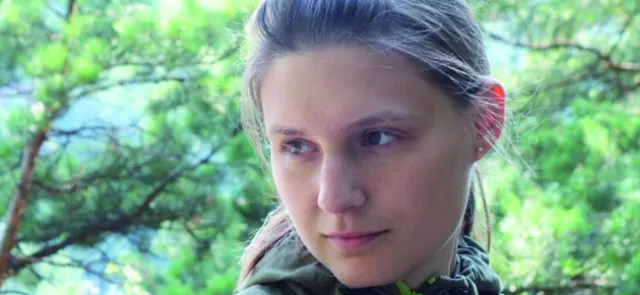
Sphere packing:
We live in extraordinary times! Not a month goes by without a new mathematical breakthrough. The latest? A young researcher has solved the problem of the optimal packing of identical spheres in dimensions 8 and 24.
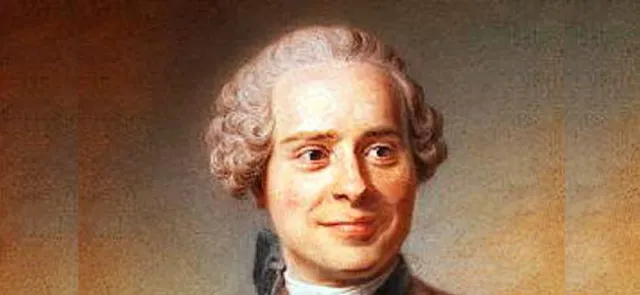
Between algebra and analysis: an indispensable world
Polynomials belong to both algebra and analysis, which can lead to all kinds of confusion! This dual nature offers a simple way to explain the subtle differences between variables, unknowns and indeterminates.

Crocodile tears
So many tears shed in Scotland over this famous crocodile problem!

The chocolate equation
Coating roasted hazelnuts, almonds, candies, sugar Easter hares or other tempting shells in chocolate is generally no trouble at all for chocolatiers.
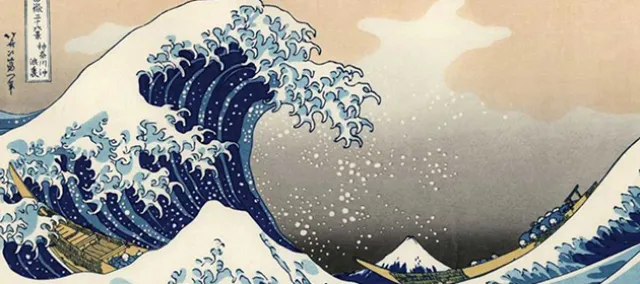
From Brel to Navier–Stokes
Beyond the poetry and the images evoked in Jacques Brel's songs lies a surprising mathematical reality: the basic models used to describe the movement of waves and dunes are identical! Moreover, they are far from having revealed all their secrets.
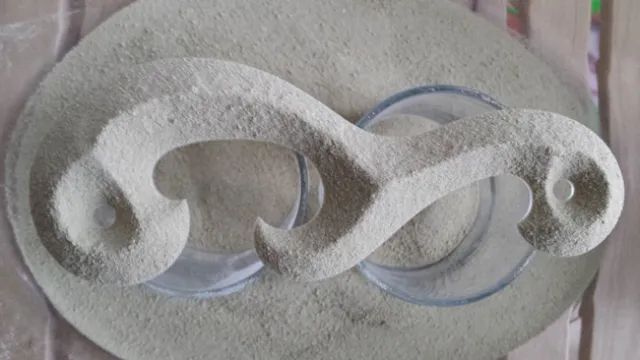
Sandpile geometry: surfaces and skeleton | Tangente
There are a thousand ways to keep your mind active while soaking up the sun on the beach. Let's set aside those—not so foolish after all—that involve not tanning at all. Instead, let's borrow our young nephew's bucket, spade and sieve, and embark on the great geometric adventure of sandpiles!