



Math for everyone
Mathematical content accessible to everyone

Shadows revealed: mathematics and vision | Tangente
As summer begins and temperatures soar, we all seek out a little spot sheltered from the sun. Let us not forget that drawing shadows is where perspective begins! Seeing an object's shadow already means recognizing it to some extent—and therefore knowing how to draw it in 3D.

Fascinating prime numbers
A look at the latest theorems about prime numbers, which continue to inspire just as much as ever.
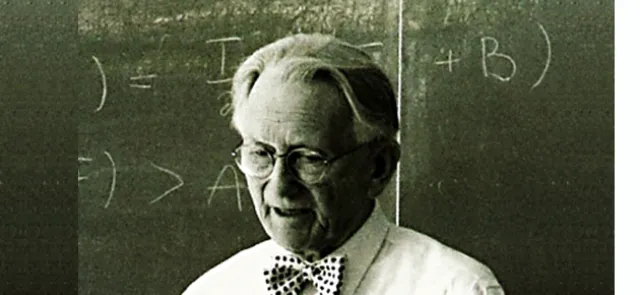
The inexhaustible prime number theorem
Prime numbers are an endless source of mathematical surprises: they are infinite in number yet rare, and attempts to count them bring transcendental functions into play, such as the Riemann zeta function, which at first glance seem far removed from arithmetic.

Bac and maths: specialization, APB, algorithms | Tangente
Following on from Tangente 170 and its feature "Should We Abolish the Baccalauréat?" Robert Cabane, dean of the Inspection générale de mathématiques, sent us some interesting comments.

2017: neither blank nor double, the math of tax | Tangente
To file or check your taxes, it helps to know how to calculate (a little)

Babies love numbers too: an innate number sense | Tangente
"At three days old, babies are sensitive to a ratio of 3 to 1. They can tell 3 and 9 apart, 4 and 12. At six months, it's 2 to 1. At nine months, 3 to 12."

A sculptor of polyhedra in Paris: art & geometry | Tangente
In the "Village Saint-Paul" in Paris is a shop called Cabinet de curiosités géométriques, where numerous polyhedra pile up. Our editorial team got in touch with its owner, Sylvain Calvier.

Solving equations: Rolle's theorem to the rescue
The mean value theorem guarantees that very concrete compounding problems do indeed have a solution, and that applying the standard governing equations does indeed lead to that solution. A dream for any economist!

The foundations of differential calculus: the 1700 quarrel | Tangente
A famous scientific quarrel over infinitesimals pitted Rolle against Varignon.
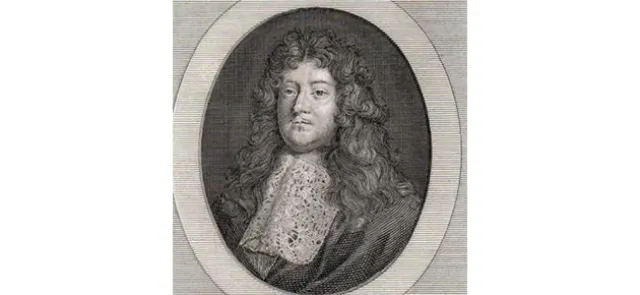
Rolle: a cascade of theorems!
Rolle's theorem, like the celebrated mean value theorem, has been dropped from the secondary-school curriculum. Yet these two major results in analysis are of far more than historical importance. They can be used to solve a great many mathematical problems!

The calendar is good for calculations
Our calendar is organized into seven-day weeks. So we sometimes need to calculate remainders modulo 7…

Euclid, master of division
With the Greek mathematicians—Euclid in particular—numbers moved from the concrete to the abstract. One key concept endured: Euclidean division and the host of developments it spawned. These methods have not aged a bit: Euclid's algorithm is still used today... by computer scientists!

Number theory in 2016: a wealth of news | Tangente
An unexpected bias in the distribution of prime numbers has just come to light. At the same time, Andrew Wiles receives the Abel Prize.

APB software: post-bac placement algorithm | Tangente
A software program assigns students who have just passed the baccalauréat according to their preferences. But the opacity of how it works leaves room for a number of concerns.

Abolishing the baccalauréat: arguments and issues | Tangente
Created in 1808, the baccalauréat remained both an academic and a social landmark until the mid-20th century. It no longer plays that role, devalued by steadily falling standards and a rising but increasingly artificial pass rate. Should we not move on?

Heine and the rigorous study of continuous functions | Tangente
Eduard Heine is not among the best-known mathematicians, even though his name is attached to a theorem on the uniform continuity of continuous functions on a closed interval.

From Euclid to Bourbaki: perpetual reform
Mathematics has undergone waves of reform in the past, is undergoing them now, and will continue to do so. This applies to schools of mathematical thought and major research movements, but also to elementary mathematics—the mathematics taught in secondary schools in most countries around the world.
Above all, let's keep the baccalauréat: in defence of a republican examination | Tangente
It is easy to yield to the siren song of those who discredit the baccalauréat to make it easier to abolish. Yet a majority of people in France want to preserve this symbol of "republican elitism".

GCD algorithms: comparing calculation methods | Tangente
The algorithm for computing the GCD dates back at least to Euclid. It was subsequently refined over the centuries.

Divisibility criteria: history and methods | Tangente
You know the divisibility criteria for 2, 3 or 5 — but do you know those for 11 or 25?