



Maths and philosophy
Links between mathematics and philosophical thought, epistemological questions
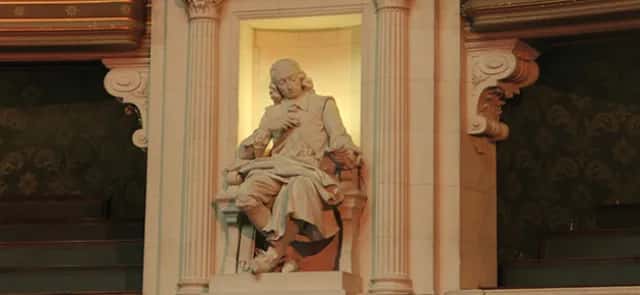
An extraordinary mind — The life of Pascal | Tangente
Blaise Pascal was no universal scholar, but he developed a rigorous, experiment-based scientific method that enabled him to transcend the prevailing orthodoxy and open up new avenues in both mathematics and physics.

Pascal on stage — Descartes and Pascal on stage | Tangente
The mathematician is also one of the central characters in a philosophical comedy by Jean-Claude Brisville (1922–2014), best known to the general public for Le Souper (1989), featuring Talleyrand and Fouché, whose film adaptation was a memorable success.

The barber was a woman
The barber paradox is said to be just the thing for dazzling people at parties. Although it serves an educational purpose by illustrating one of the most fundamental results in set theory, taken out of context it may well backfire on you!
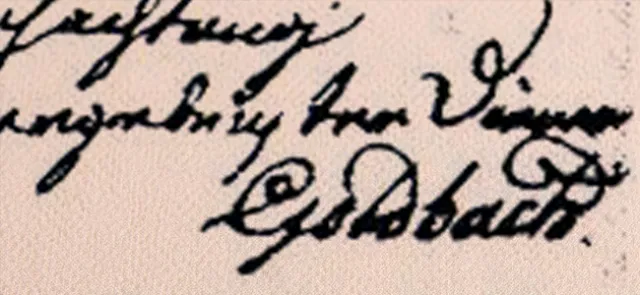
A passion for Goldbach's conjecture | Tangente
In set theory, which Cantor founded, intuition has little place. Yet his approach to open mathematical problems relied more on intuition than on rigorous reasoning. His interest in Goldbach's conjecture is a case in point.
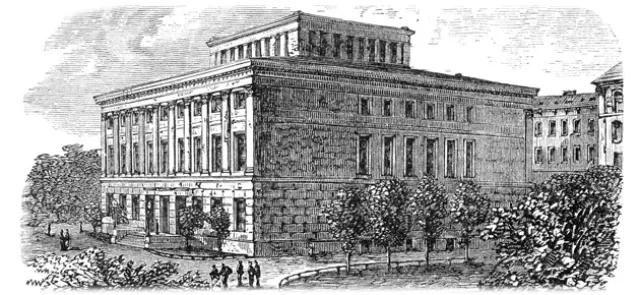
A journey into infinity | Tangente
While many mathematicians toiled in the footsteps of their predecessors, Cantor opened up an entirely new field that many of his colleagues refused to enter. This journey through the different infinities proved to be both fascinating and fruitful.
Editorial
"Tangente", from the Latin tangere, "to touch". If it's the name of your favorite magazine, it is because the word is rich in meanings that have opened up entire branches of mathematics.

Hervé Lehning (1948–2022) | Tangente
Tireless in his work, Hervé Lehning devoted his life to sharing the mathematics he loved so deeply and making it accessible without sacrificing quality, driven above all by a desire to pass on his passion. But he was much more besides.
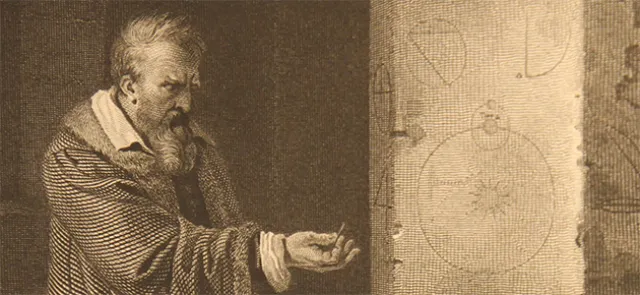
Mathematics and existence: philosophy of number | Tangente
Since mathematics aims at a knowledge stripped of any reference to sensible reality, nothing would seem more opposed than mathematics and existence. How, then, could mathematics express the singularity of what is? This question prompted a great deal of reflection between the seventeenth and twentieth centuries.

Bertrand Russell: A century of passionate living | Tangente
Bertrand Russell was no ordinary mathematician. His Nobel Prize in Literature attests to the breadth of his talents. His advocacy of sexual freedom and his campaigning for peace gave this exceptional man his full stature.

A genius off the beaten track
In the scientific world, Bertrand Russell is known first and foremost as a logician and philosopher. His contribution cannot be understood without grasping the major shift then taking place in the development of mathematics: this was the era of the "foundational crisis."

Russell: logic, faith and reason | Tangente
A free thinker, Bertrand Russell made no secret of his agnosticism and did not hesitate to criticize religion. He deplored the fact that people's reasons for embracing faith had little to do with rational argument. In his view, hatred of reason seems to be a constant throughout human history.

Wittgenstein and Russell at Cambridge | Tangente
Born in Vienna in 1889, Ludwig Wittgenstein began studying mechanical engineering in 1906. Drawn to mathematics, he initially explored its applications before becoming fascinated by Russell's writings.

Bertrand Russell's politically engaged writings | Tangente
Bertrand Russell's literary writings range widely; they are tinged with philosophy, politics, and sociology. What unites them is that they all have a message to convey.

Bertrand Russell: a man of letters and numbers | Tangente
At 78, too old for a Fields Medal, and with no prize specifically devoted to philosophy, the mathematician and philosopher Bertrand Russell was awarded the 1950 Nobel Prize in Literature, much to his surprise.
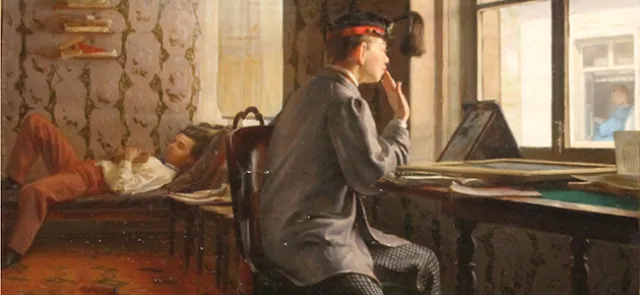
Galois's handwritten papers at Louis-le-Grand | Tangente
Although Galois's "complete" works were published in 1962, they can be "completed"—a kind of paradox of completeness—with his papers from the 1829 entrance examination for the École préparatoire. They are held in the Archives nationales. Let us open them! Some of them have never been published.

An example of a group in the social sciences
A simple, classic, real-world application of the mathematical concept of a group can be found in social anthropology. It was brought to light by the anthropologist and ethnologist Claude Lévi-Strauss, working with the mathematician André Weil.
The adoption of non-Euclidean geometries
Euclid's fifth postulate differs from the others: it seems provable. Yet its negation leads to other geometries, known as non-Euclidean geometries. They have their place within mathematics and have applications both in arithmetic, as Poincaré showed, and in general relativity.
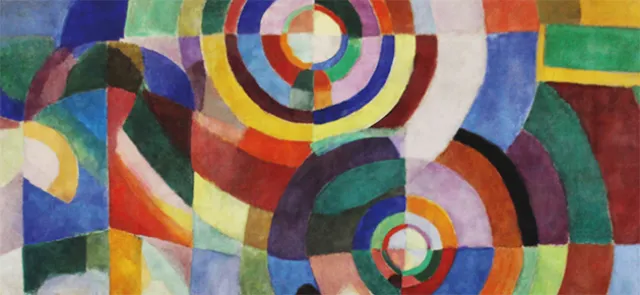
Poincaré and analytical Cubism: geometry and art | Tangente
As an artistic movement, Cubism grew out of a fundamentally mathematical approach to space, shortly after the publication of La Science et l’Hypothèse. In it, Henri Poincaré discusses the nature of space, and artists would strive to "turn his words into paintings."
Poincaré and science: conventions and reality | Tangente
Poincaré's works on the philosophy of science were a resounding popular success. Today they have lost none of their value, interest or charm! His distinctive way of understanding and describing facts is one hallmark of Poincaré's original thought.
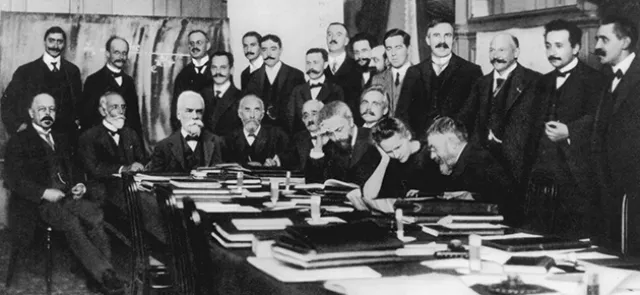
Poincaré and the context of the Belle Époque | Tangente
Poincaré's era was exceptionally fruitful for science: the twenty years around 1900 saw extraordinary conceptual advances and feats of intellectual ingenuity, fostered by increasingly international exchanges through publications and meetings.