



Maths and philosophy
Links between mathematics and philosophical thought, epistemological questions
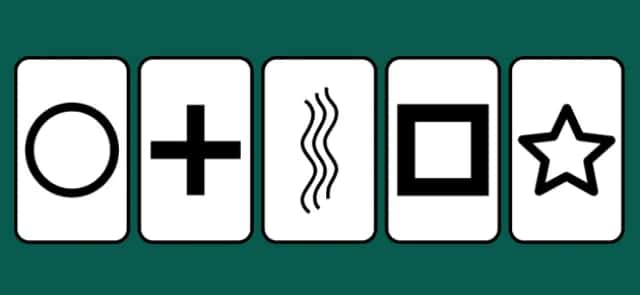
Telepathy
How can we be sure that the predictions made are not the result of a gift of clairvoyance? Profound results in probability, which sometimes seem counterintuitive, can help convince you that the results observed are in fact nothing out of the ordinary...
Objective and perceived reality: biases | Tangente
We are all subject to various biases arising from our senses, our experience, or the conscious and unconscious messages we receive.
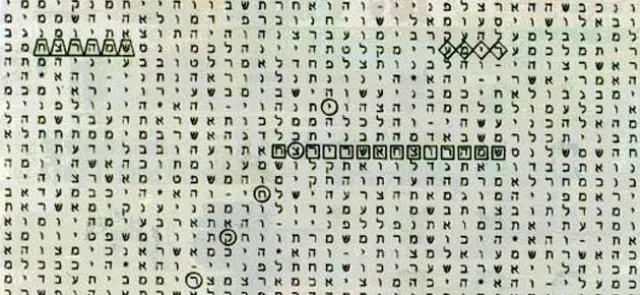
Demystifying the Bible's "secret codes"
Alain said: "You can prove anything you like; the real difficulty is knowing what you want to prove." With the advent of technologies that can produce fake documents, and everyone's desire to invent information that confirms their own ideas, this quotation has a bright future ahead of it...
The leading series on scientific skepticism | Tangente
Henri Broch founded the Book-e-Book publishing house in 2002 to publish works on scientific skepticism.
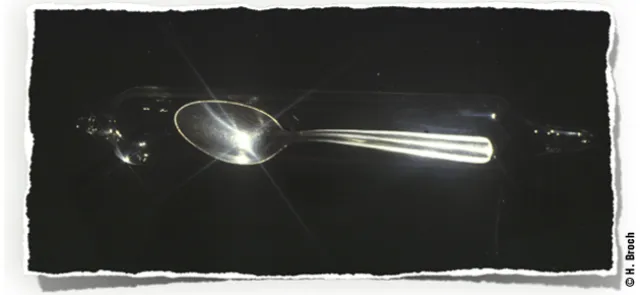
A mathematical approach to the paranormal
When it comes to the paranormal, it may seem easy to separate fact from fiction and use various tests and experiments to prove that a supposed medium or clairvoyant is nothing of the kind. Not so fast! Such protocols are difficult to set up, and few impressionable souls know about the Yule–Simpson paradox...
Zetetics, or the art of doubt
In recent years, zetetics has found its way into the science curricula of several universities. Contrary to a common misconception, its scope extends far beyond the mere study of paranormal phenomena…
The mind-bending properties of infinity
Infinity abounds in paradoxes of every kind. For example, the terms of certain numerical series can be rearranged so that they converge… to any number chosen in advance! Skeptical? Follow Bernhard Riemann's reasoning…
Lagrange and the analytical method
At the time of his death, Isaac Newton was proud to have found a method for solving problems in natural philosophy, but he was aware of its limitations. The Moon's trajectory is described only very approximately by the two-body problem. It fell to Joseph-Louis Lagrange to make a spectacular breakthrough.
Newton's synthetic method
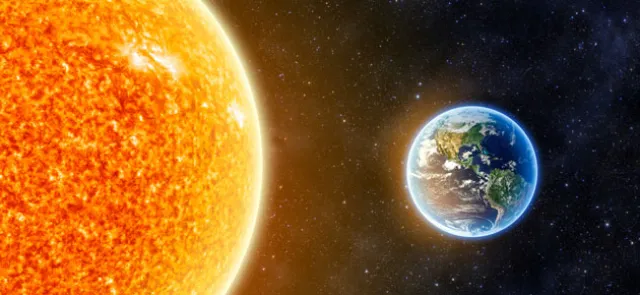
How does the Earth, of mass m, move around the Sun, of mass M, under gravity alone? To answer this question with something more than philosophical assertions, Newton proposed a synthetic method inspired by the description of motion.
A science in motion | Tangente
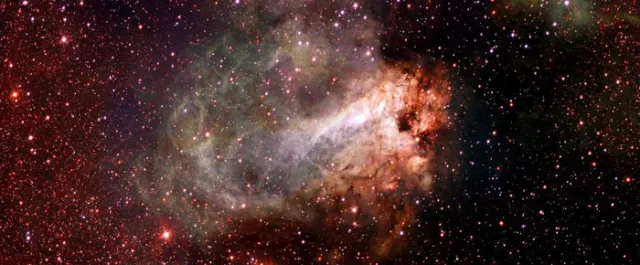
Neither mathematics nor physics stands still! Until recently, the two disciplines went hand in hand, offering a natural philosophy. They sought to uncover, describe, and explain nature's hidden laws.
The pioneers – A mathematical brief | Tangente
Artificial intelligence has its roots in the daring efforts of pioneers who sought to "mechanize" human thought.
Ethical driving - mathematics brief | Tangente
Programming self-driving cars raises ethical questions. Unexpected new conundrums have emerged. Some require only minor adjustments, but others remain unsolvable for now.
Reasoning means solving
Reasoning means organizing your thoughts. Yes, but how? Are there methods for keeping our thoughts from descending into anarchy and confusion? Mathematics is, by its very nature, the discipline that has enabled us to answer these questions over the centuries. And it works!
Antarctica: a still-mysterious continent | Tangente
Unlike in the Arctic, where the area covered by winter sea ice is shrinking, Antarctica's ice-covered area is growing. How can this paradox be explained when temperatures are rising?

Greenhouse gases: the paradoxes of transport
Greenhouse gas emissions continue to rise. Quantifying the share attributable to road transport is no simple matter—and reducing it is harder still!
Joseph Bertrand's probability paradoxes
Joseph Louis François Bertrand (1822–1900) is known for his research in analysis. Less well known is the remarkable book on probability that he published in 1889 (see
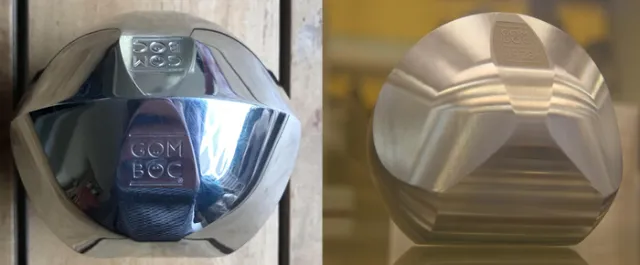
The Gömböc, that obscure object of geometrical desire
An okiagari-koboshi, or Japanese roly-poly toy, is designed always to return to an upright position. This traditional lucky doll symbolizes perseverance—a quality that two Hungarians displayed in abundance when proving the existence of a homogeneous body with the same property.
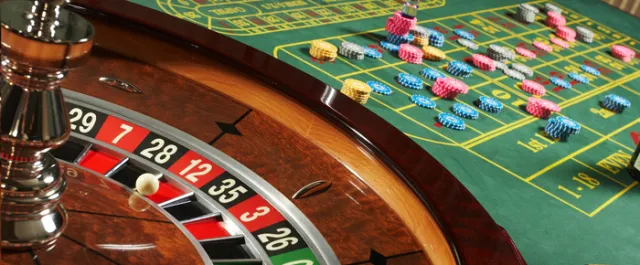
Expected value and its surprising paradoxes
Expected payoff is essential to rational decision-making, but tricky to use. Many paradoxes arise from misinterpreting what it represents. Casinos—and the unscrupulous people who encourage you to wager your money—understand this only too well...
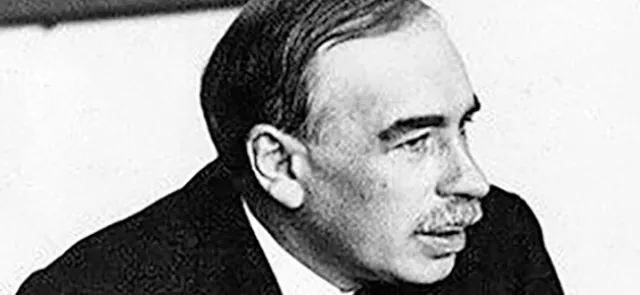
The very delicate principle of indifference
The principle of indifference invites us to reflect on the subtle blend of knowledge and ignorance. The probabilities it generates are sometimes surprising, but always consistent. By analyzing a problem's data, it dictates the probabilities that should rationally be assigned.
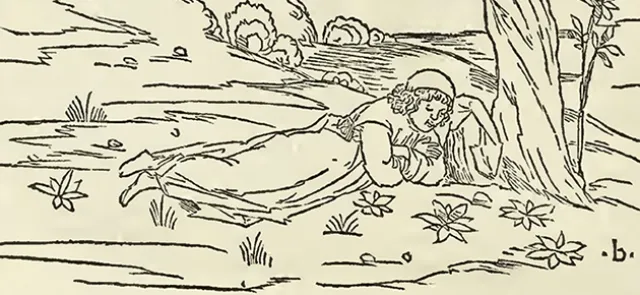
Steganography, cryptography's inseparable companion
While cryptography seeks to make information unintelligible, steganography aims to conceal the very existence of that information. The idea is to hide it within a drawing, image, text or sound.