



Maths and philosophy
Links between mathematics and philosophical thought, epistemological questions
The Earth in a ping-pong ball: Nash–Kuiper
Nothing is mathematically impossible! Although, back in the 1950s, the Dutch mathematician Nicolaas Kuiper and the American John Nash had already proved the existence of a vast class of paradoxical mathematical objects (flat tori in 3D, shrunken spheres…), they lacked the tools to visualize them

Conjugates, moduli and arguments
Once we accept the existence of a number i such that i² = −1, do we risk losing touch with physical reality? Quite the opposite: a profound and fruitful correspondence emerges, allowing questions of pure geometry to be solved through simple algebraic manipulations.

Pascal's triangle: a thousand-year history | Tangente
"Pascal's triangle" may have been discovered by Indians more than two thousand years ago. It reached the Arab-Muslim world and China as early as the 11th century. It did not appear in Europe until the 16th century, when Blaise Pascal began to study it rigorously.

Bookmakers don't like probabilities
Since bookmakers try to assess the outcomes of horse races, it is easy to imagine that they rely on probability. Rather surprisingly, they do not! This paradox can be explained by a mathematical property of probabilities.
Famous paradoxes: Pascal's wager & St. Petersburg | Tangente
Let's rediscover the famous Pascal's wager, a line of reasoning as questionable mathematically as it is theologically!
The Nobel Prize saga, part 1 | Tangente
Contrary to popular belief, there is no Nobel Prize in Economics! Discover the truth about this prize...
Imre Lakatos and mathematics education | Tangente
The Hungarian mathematician Imre Lakatos set out his perspective in his best-known work, Proofs and Refutations. He illustrated his argument using Euler's formula.
The structures of language
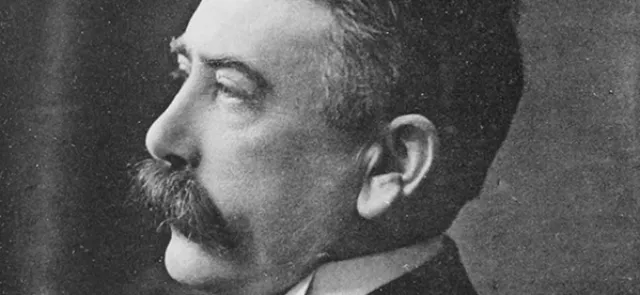
Inspired by formal logic, the study of language as a structure developed under the influence first of Saussure and then of Chomsky. Statistics, meanwhile, can be used to analyze texts and are an indispensable tool for machine translation.
Deduction, induction, abduction: three forms of logic | Tangente
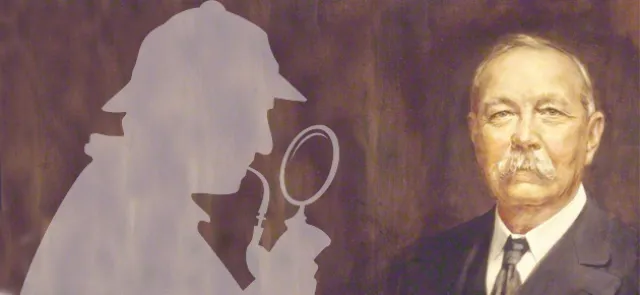
A host of tiny clues leads the detective Sherlock Holmes to formulate a theory, moving from the particular to the general. He is well aware that his method leads to the truth only if it is confirmed by the facts—that is, by observation!
Those darn paradoxes! (4): A Mathematical Brief | Tangente
Every claim must be proved properly.
Those pesky paradoxes! (3) — Maths brief | Tangente
Logic may sometimes try to deceive us—beware!
Those darn paradoxes! (2) — Mathematical note | Tangente
God exists because mathematics is consistent, and the devil exists because we cannot prove it...
Holy paradoxes! (1): A mathematical brief | Tangente
Paradox is to logic what experiment is to the physicist: it allows us to adjust theory in response to the question posed by an alarming result. It is a springboard for the mind.
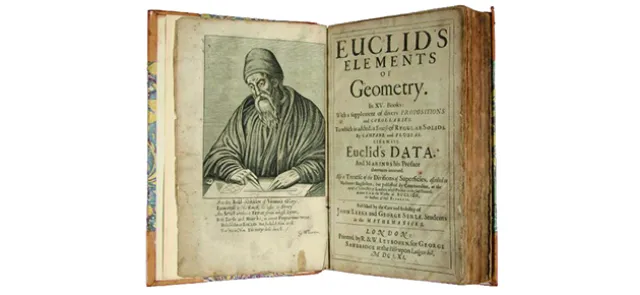
What exactly are axioms? — Geometry | Tangente
In mathematics, every proof starts from premises assumed to be true. What particular form must these premises take to become axioms, the foundation of all our current theories?

Relations and maps: structuring sets
A notion of relation between sets is essential if we are to begin doing mathematics. At the heart of the foundations of mathematics, the concept of a relation includes maps as a special case and gives sets structure.

From a collection of objects to a set
A set can be defined extensionally or intensionally. Constructing the natural numbers then becomes an easy but instructive exercise. Yet beware the apparent simplicity of a set viewed as a mere collection of objects: paradoxes lurk...
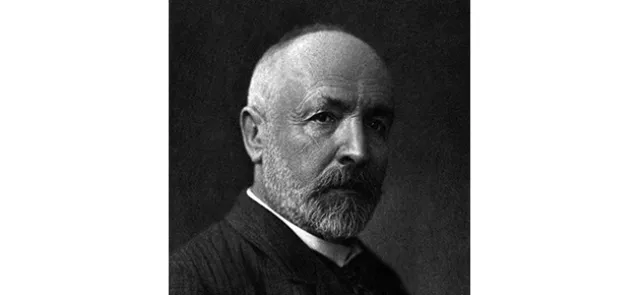
An unsettling approach to mathematics | Tangente
Set theory, iconoclastic in Cantor's day, has become universal. Nothing like it had been seen since Euclid: it provides a foundation for mathematics! That foundation seemed solid—until paradoxes emerged. So what is this highly controversial mathematical construction?
Paradoxes of infinity — Math brief | Tangente
Infinity must be handled with care, lest we lose ourselves (in its paradoxes)...
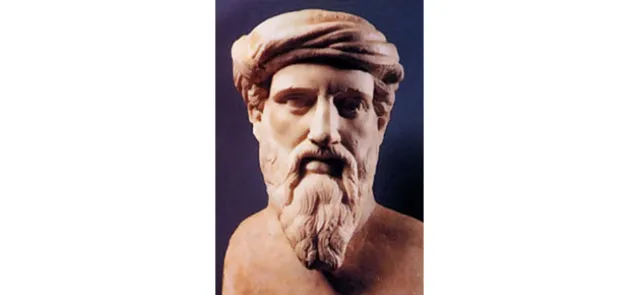
Pythagoras: much more than a theorem
Pythagoras is more than the name of a famous theorem: he inspired an entire philosophical tradition that would influence not only mathematics and astronomy but music itself. Beyond the sciences, history has not heard the last of the "long-haired Samian"!
A few classic paradoxes
Paradoxes are fun to explore and require no specialist knowledge. They help us better understand rationality, truth, probability, uncertainty and information… along with the many theories built around them. Prepare to be surprised by a few spectacular classics.