



Maths and philosophy
Links between mathematics and philosophical thought, epistemological questions
Special relativity: Poincaré forgotten? | Tangente
At the dawn of the 20th century, spectacular advances in science reveal the limitations of Newtonian theories in physics. A revolution is in the air, and it will take shape with the advent of general relativity. Many scientists, including Lorentz and Poincaré, are working towards it. History will remember Einstein, who publishes a groundbreaking paper in 1905.
Poincaré, the last great polymath | Tangente
Henri Poincaré embodies an ideal of scientific unity: he mastered every field of science in his day. His name remains associated with a staggering number of mathematical ideas, concepts and objects. More than a century after his death, he continues to inspire mathematicians, physicists and philosophers.
Poincaré vs Hilbert: intuition and logic | Tangente
The debate between Henri Poincaré and David Hilbert illustrates two opposing views of the nature of mathematics.
Martin Gardner's challenge: paradoxes | Tangente
Can a game in which one player's gain is the other's loss benefit both players? That was the question Martin Gardner posed in 1980 with his "Loser Takes All" problem. More than forty years on, the paradox remains as relevant as ever!
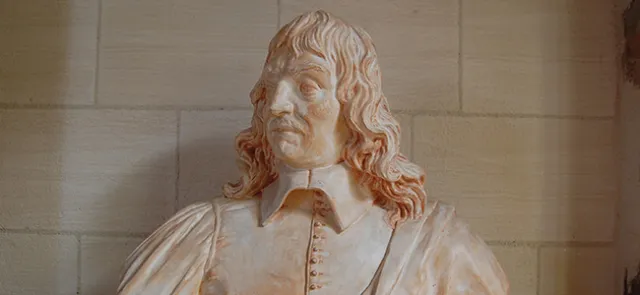
The emergence of Cartesian geometry
Greek geometers were the model for mathematicians when Descartes revolutionized geometry by introducing coordinates, making it possible to approach geometry through algebraic methods. Cartesian geometry was born.
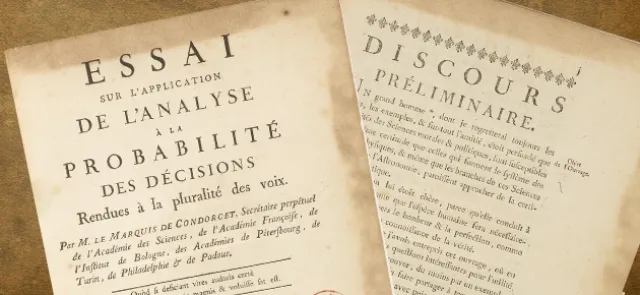
Political rationality and calculation | Tangente
Public policies are often supported by rational, even mathematical arguments. Philosophers such as Leibniz, Condorcet and Bentham sought, through a variety of approaches, to put both economic and social behavior on a mathematical footing. Yet they all came up against the fact that combining individual rationalities does not necessarily serve the common good.
Promoting reliable science communication | Tangente
Since 1968, the French Association for Scientific Information (AFIS) has published the quarterly magazine Science et Pseudo-Sciences. Its aims are to promote science and combat those who invoke its name as a cover for quackery.
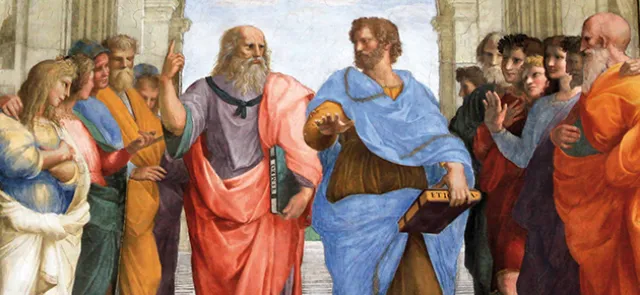
The unreasonable effectiveness of mathematics
In the latest physical theories, mathematical models have achieved such descriptive and predictive power that the question inevitably arises: is this mysterious fit a miracle, or does it have a deeper meaning?
Electoral redistricting: the mathematics of voting | Tangente
The bill to renew democratic life, as presented to the Council of Ministers in August 2019, includes a major reform of parliamentary elections. How, and to what extent, can the principle of "one person, one vote"—the foundation of the republican ideal that all citizens should have an equal say at the ballot box—be achieved with this new electoral map?
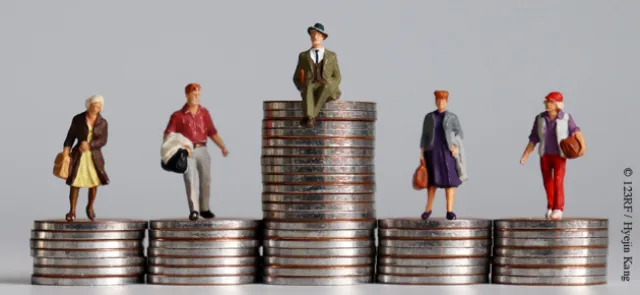
Fair optimization
Decisions made within organizations often affect several individuals, whose interests must be considered fairly. Fair optimization finds efficient solutions while maintaining a balance among the individuals’ levels of satisfaction.

How Archimedes squared his spiral
Archimedes is admired for his great discoveries. Less well known is how his proofs unfolded. Without effective mathematical notation, reasoning was fraught with difficulty and demanded considerable ingenuity…
The Anosov flow takes center stage | Tangente
What is the mathematical meaning of the magnificent image on the cover of Tangente special issue 74, Courbe et surfaces?
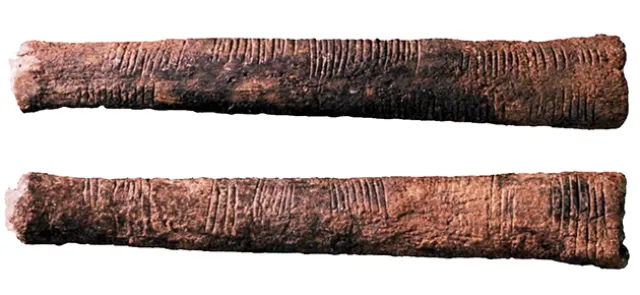
When numbers awoke to wonder
Ancient peoples used numbers for purely practical purposes: to count and enumerate. Five centuries before the Common Era, after travelling the world, a Greek scholar named Pythagoras returned certain that the original order of the World was Number, thereby turning it into a philosophical concept.
Disputes and paradoxes | Tangente
Even the greatest mathematicians have fallen into the traps laid by logic and its paradoxes.
The paradoxes that shook mathematics
What a devilish theory Georg Cantor created with set theory! So thought some mathematicians at the turn of the 20th century, when a series of paradoxes seemed to threaten the foundations of mathematics. This prompted a reassessment of the role of logic.
Shuffling an infinite deck of cards
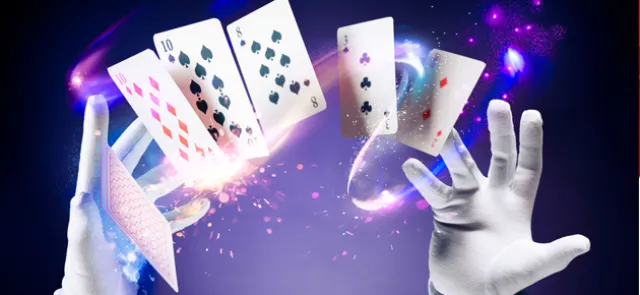
Shuffling a fifty-two-card deck is easy enough. But suppose the deck contained infinitely many cards: could it still be "shuffled"? The answer is entirely up to you! Welcome to the world of paradoxes that play with infinity…
Erwin Schrödinger's cat
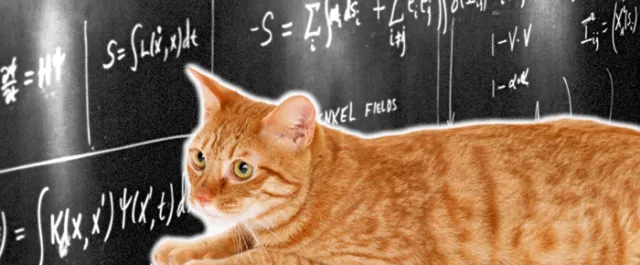
In its century of existence, quantum physics has proved extraordinarily effective and has never been found wanting. Yet many difficulties remain when it comes to interpreting it. One emblematic example of its strangeness is a famous feline thought experiment.
Intellectual self-defense: zetetics courses | Tangente
Cortecs (Collective for Transdisciplinary Research on Critical Thinking & Science) is a teaching and research collective founded in 2010 to produce educational resources and scientific content, as well as courses and training in critical thinking, intellectual self-defense, zetetics and the scientific method.
Theorizing conspiracy theory through mathematics | Tangente
We often encounter the outlandish claims made by conspiracy-theory enthusiasts. But can we use theory itself to show just how implausible they are?
Russell's teapot and the burden of proof | Tangente
We often hear the phrase "absence of evidence is not evidence of absence." This statement is ambiguous: many fanciful claims cannot be disproved.