



Math for everyone
Mathematical content accessible to everyone

Inflation: a scam? | Tangente
Inflation is falling, but prices are rising: are we being lied to? No—sadly, this is normal! Saying that the price index is rising means that "the" function representing prices is increasing.
The "A Matter of Logic" column | Tangente
"A Matter of Logic" is a weekly column in the newspaper Le Monde, written since 1997 by Gilles Cohen and Élisabeth Busser. In 2000, it earned them the D’Alembert Prize for popularizing mathematics, awarded by the Société mathématique de France.
A form of harmony between geometry and arithmetic
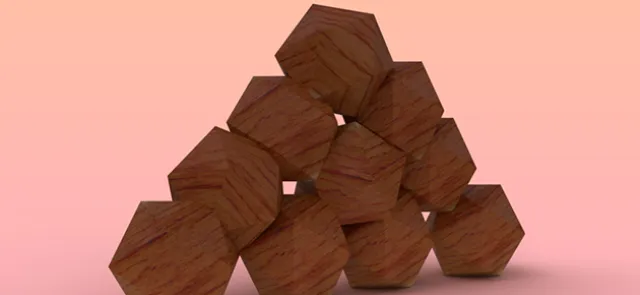
Many mathematicians have taken an interest in figurate numbers. But their concerns have not always been the same! In ancient times, people sought to construct and represent numbers using counters. The resulting shapes illustrate a host of arithmetic relationships.
Mathematics and literature | Tangente
Gilles Cohen has always championed breaking down the divide between literary and scientific backgrounds. To him, the two are not only perfectly compatible but also mutually enriching.
Francesco Maurolico's extensions
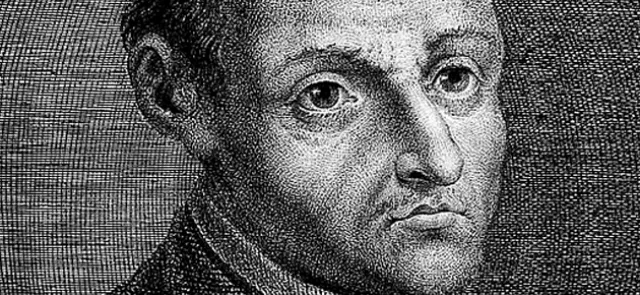
A member of a Greek family that emigrated to Sicily after the fall of Constantinople, Francesco Maurolico was born in Messina in 1494 and died there in 1575. He entered the Church at the age of 27, proposed an extension of figurate numbers, and established many of their arithmetic properties.

An inventory of arithmetic puzzles | Tangente
Figurate numbers, which provide a visual representation of integers, form a wonderful bridge between geometry and arithmetic. Some properties in either field can be reformulated in the other, and vice versa! New questions naturally arise…
A new life for figurate numbers
Figurate numbers entered Arabic mathematics through Thabit ibn Qurra’s translation of the work of the mathematician and philosopher Nicomachus of Gerasa. Thabit’s name is associated with Thebit numbers (the "e" replacing the "a" in medieval Latin transcription).
A life spent sharing mathematics | Tangente
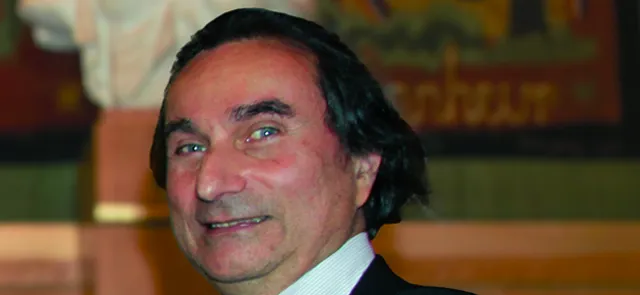
Gilles Cohen was far more than the director of Éditions POLE and its flagship magazine, Tangente. Brimming with projects and ideas, he launched initiatives in every direction to bring mathematics to a wider audience. In recent years, he was chiefly involved in Club Tangente's activities.
2023 Tangente Awards winners | Tangente
Since 2010, the Tangente Club has used the Tangente Awards to honor creative works that showcase mathematics. The winners receive a work of art. The awards ceremony took place at the Musée des Arts et Métiers in Paris on December 3, 2023, during Tangente Day.
Before black holes: Laplace's hidden stars | Tangente
In astronomy, a "black hole" is neither a hole nor black. The existence of these celestial objects was predicted by Einstein's theory of general relativity in the early twentieth century. It was demonstrated several decades later through the detection of gravitational waves produced by the coalescence of objects that came to be called black holes. What exactly are they?
A pedagogical interest in transmitting knowledge
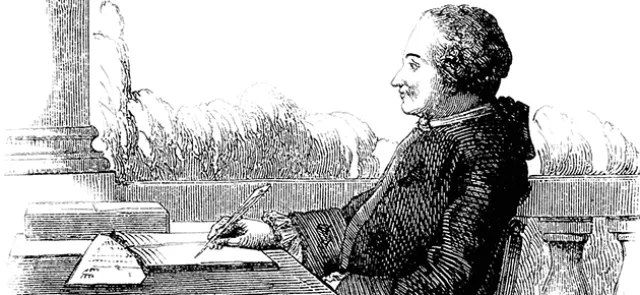
An exceptional scientist, Laplace was also a driving force behind the development of education at the highest level, helping to devise curricula and concerned that mathematics teaching should not be detached from philosophical reflection.
The empire of resonances
Kepler's laws and the law of gravitation made it possible to predict the positions of the planets over time. Yet Jupiter and Saturn insisted on straying from those predictions—and every attempt to explain why had failed! It was Laplace who would uncover the underlying phenomenon of resonance.
From Laplace's equation to the Laplacian
The Laplacian operator is used to describe most diffusion phenomena in physics. It is central to analysis, geometry and probability theory, among other fields. Its origins lie in an equation discovered by Laplace that governs the gravitational interaction between bodies separated by empty space.
The ebb and flow of the sea: a dynamic theory | Tangente
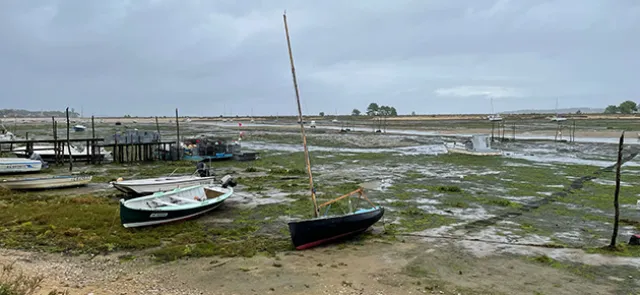
Laplace took an interest in "the ebb and flow of the sea," as he put it. After examining the approaches taken by his predecessors, he grasped the impact of the Earth's rotation and studied the tides, paving the way for their times to be calculated accurately.
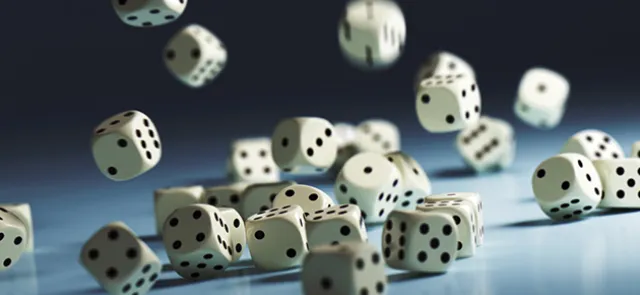
Laplace: philosopher of chance and determinism | Tangente
The chief architect of determinism, Laplace marked a crucial milestone in the transformation of probability theory into a fully fledged branch of mathematics. Is that a paradox, or a coherent intellectual approach? Let's return to his writings to find out!
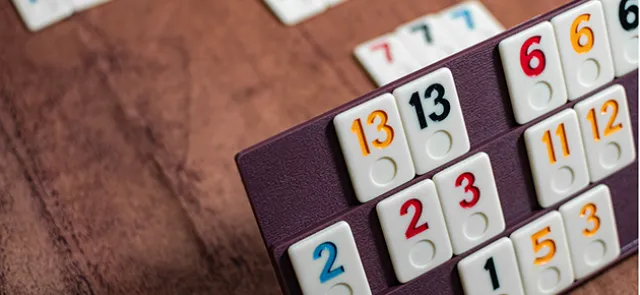
The first law of large numbers
Repeating a random experiment with two possible outcomes a large number of times leads to probabilities that are difficult to predict directly, let alone calculate explicitly. Yet the de Moivre–Laplace theorem provides an excellent approximation.
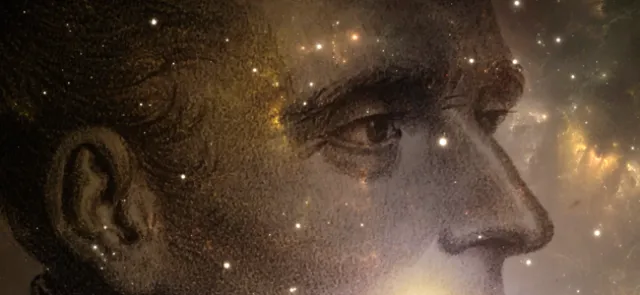
Three laws of error
Observations of celestial bodies are invariably subject to error. How can we choose the "most relevant" value from several measurements? Laplace, along with Legendre and Gauss, developed theories that ultimately led to the celebrated normal distribution.

Will the Sun rise tomorrow?
Should we live each day as though it were our last? The question is a fair one, given that in 1814 Pierre-Simon de Laplace put the probability of the Sun rising again the next day at 0.99999945…
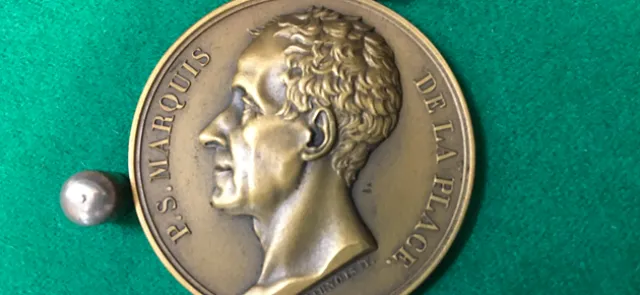
Laplace's many mathematical functions | Tangente
In his scientific work, Laplace introduced and used numerous mathematical functions. Alongside the Laplacian and the Laplace transform, we find generating functions and the potential function.

Laplace on probability and metaphysics | Tangente
When Laplace took up a seat in the Senate, he thought his active involvement in science was effectively over. Yet he went on to state a fundamental law of probability theory, before exploring the philosophical implications of his findings in this emerging new science.