



Math for everyone
Mathematical content accessible to everyone

The weight of social inequalities in mathematics | Tangente
While gender inequalities in mathematics are now widely recognized, other forms of exclusion remain less studied: people from the working classes are also notably absent. This finding challenges the idea that mathematics is socially neutral and open to everyone, as it is often assumed to be.
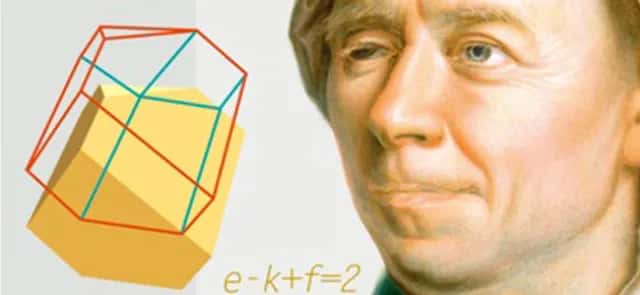
Geometric delights with Euler’s formula
Euler’s formula, a fundamental relation in mathematics, offers an opportunity to explore the properties of objects in three dimensions—and in higher dimensions as well. Along the way, we will encounter a classic of operations research: the simplex algorithm.

In the service of curves
Through the magic of analytic geometry, the properties of an algebraic formula find visual expression in the corresponding curves. Taylor expansions play an absolutely crucial role in this constant interplay.

A fine remainder
Replacing the function itself with a Taylor expansion is justified only if this approximation does not alter the calculation of the properties being studied, whether a limit, an upper bound, or something else. The behavior of the remainder is therefore important.

The origins of function expansions
The first power-series expansions of functions emerged alongside the development of differential and integral calculus in the late 17th century. Truncating them produces Taylor polynomials!

Equivalent functions: a tool for calculating limits
Why go to the trouble of finding equivalents for seemingly well-behaved functions? To gain detailed insight into local or asymptotic behavior—and for applications, too! Without these techniques, even spreadsheets would be unable to perform seemingly innocuous calculations.

Some troubling counterexamples
Think you know everything about asymptotic expansions? Here are a few perplexing counterexamples...

The limits of the pie chart
To represent the fraction 5/6 graphically or geometrically, it is tempting to draw a pie chart with six slices, five of them shaded, as shown opposite. This solution is often described as "taking five out of six equal slices."

The people of the rational numbers
A brief imaginary, non-chronological history that attempts to answer a question less straightforward than it seems: are fractions numbers?

Descartes' way
How can fractions be handled geometrically? At the beginning of his most famous work, Descartes shows us how.

Let's grapple with division | Tangente
The four arithmetic operations that we all learn to set out so conscientiously in our school notebooks are “elementary,” aren’t they? Yet the methods of addition, subtraction, multiplication and division have not always been presented as they are today in Western countries!
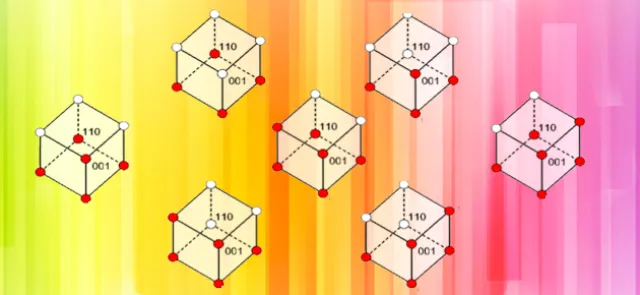
The ninth Dedekind number
Some well-known number sequences have thousands of terms, or even more, that can be calculated without the slightest difficulty. Others put up more resistance. Here is one whose ninth term mathematicians have only just managed to calculate!

Navigating the mathematical universe | Tangente
Did you know that a list covering almost every current area of mathematical research was created to help classify publications? It runs to more than two hundred pages! No wonder it is hard for general readers who are simply curious about mathematics to find their way around.

A genealogy of fractions
A beautiful construction due to Calkin and Wilf, foreshadowed a century earlier, provides an elegant and deep way to list all fractions. Beginning with 1 / 1, each fraction in this construction gives birth to two new ones.

Fractions of fractions, full speed ahead
A very simple way of constructing a sequence of fractions can lead to surprisingly deep mathematical tools. Here is an example that leads to the famous Prouhet–Thue–Morse sequence and its many applications.

Endless sums
Adding several fractions always produces another fraction. But when the sum continues indefinitely, things are very different. If chosen carefully, such sums can approximate numbers like π and yield a wealth of fascinating, unexpected results.

One problem, four approaches
Line and Maurice are keen gardeners. Line takes two hours to complete a particular task, while Maurice takes three. How long will it take them if they work together? This problem can be solved in many ways. Here is a small selection…

An unhurried journey to infinity
The harmonic numbers form a sequence that tends to infinity, but very slowly. That does not stop them from playing a role in several important problems.
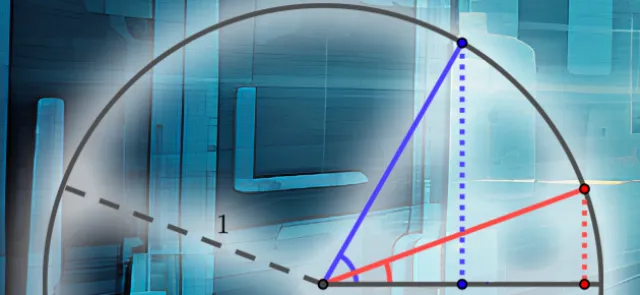
When fractions fail
Fractions cannot do everything! The existence of irrational numbers forces us to accept that the concept of number extends beyond quotients of two integers. The reward is a new world to explore, full of surprises.
Coming to grips with decimal expansions
Like any real number—for example, pi—a fraction can be written as a finite or infinite decimal expansion. Remarkably, the resulting decimal expansion is always eventually periodic.