



Math for everyone
Mathematical content accessible to everyone

Fermat Museum: Heritage and mathematics | Tangente
In July 2024, the Fermat Museum opened in Pierre de Fermat's birthplace in Beaumont-de-Lomagne, Tarn-et-Garonne.
The new Fourier has arrived! | Tangente
The mathematician Joseph Fourier is buried in Père-Lachaise Cemetery (Division 18, near the Casimir-Perrier roundabout) in Paris. His tomb, decorated with Egyptian motifs, was restored in 2023 by the City of Paris at the request of the Society of Friends of Joseph Fourier.

Beyond Gauss in finance | Tangente
Gaussian curves are unsuitable for modelling risky financial assets such as stocks. To overcome this problem, Benoît Mandelbrot introduced the concept of a multifractal measure and generalized Brownian motion.
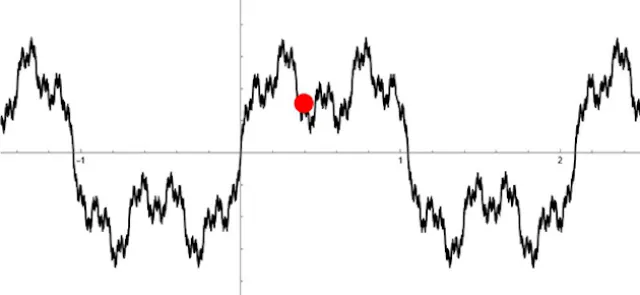
Fractal dimension
The construction of fractal objects called for new definitions of distance.
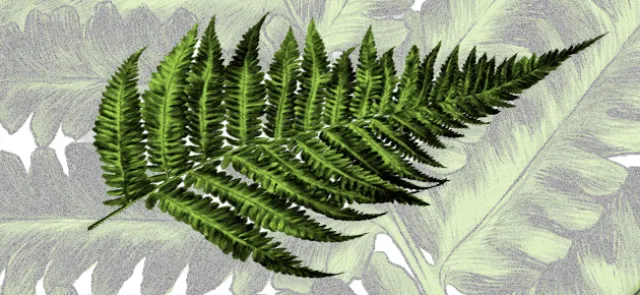
The man of fractures
For millennia, straight lines, circles, parabolas, and other smooth surfaces had reigned supreme and unchallenged over geometry. Then Mandelbrot unleashed the "mathematical monsters" of the early 20th century, transforming our picture of the world forever.
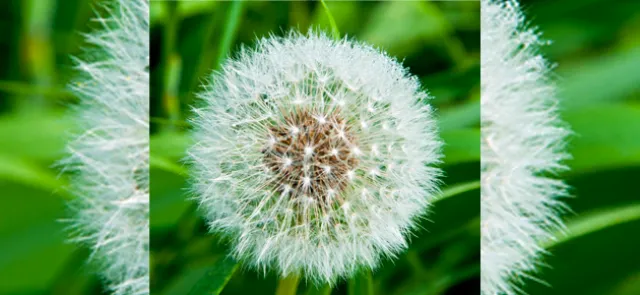
Mandelbrot, a free spirit | Tangente
In the centenary year of his birth, we look back at the life of Benoît Mandelbrot, the "father of fractals": those strange geometric entities with which he adorned mathematics and which he managed to uncover even in nature.
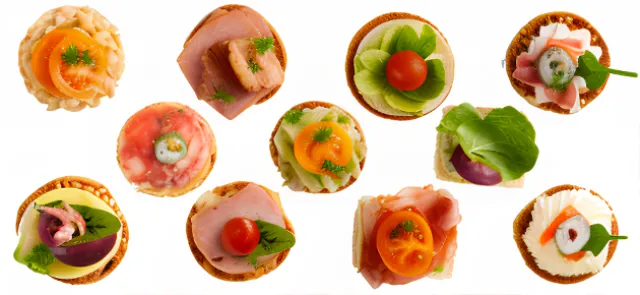
The surprising aperitif problem | Tangente
Where should a platter of canapés be placed to satisfy the guests as well as possible? This seemingly innocuous problem has inspired brilliant developments over the centuries. It also illustrates how individual and collective optimization are often at odds—a seemingly paradoxical result.

Allais and the limits of utilitarianism | Tangente
The paradox formulated by the French economist Maurice Allais exposes a contradiction in an earlier theory of decision-making. But the paradox is only apparent and, above all, illustrates a major limitation of rational choice theory.

The two-envelope paradox | Tangente
A paradox can sometimes resemble an urban legend. First, its precise origins may be difficult to pin down; second, over time it may become distorted, change form, and proliferate. Such is the case with the two-envelope paradox.
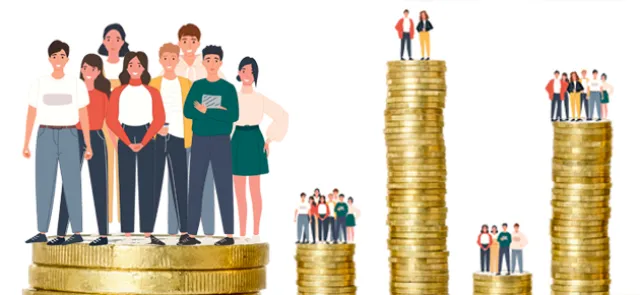
Simpson's paradox and appearances | Tangente
Could something that is true in every subgroup of a population become false when the population is considered as a whole? How is that possible? This is exactly what Simpson's paradox—the best-known paradox in statistics—shows.

The notion of paradox in mathematics | Tangente
The terms "paradox" and "paradoxical" are part of everyday language. In mathematics and logic, however, they have precise meanings that need to be clarified if we are to understand what we are talking about and what status to assign to so-called "paradoxical" results.
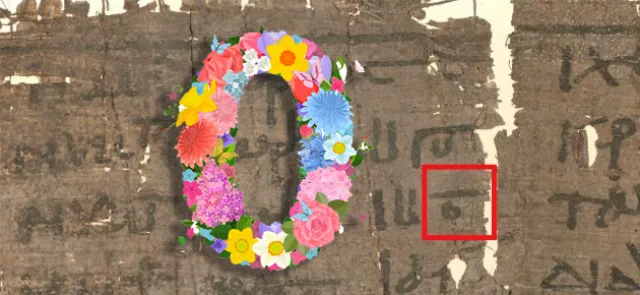
Did the Greeks use zero?
It is commonly thought that the Greeks did not know about zero. That is not entirely true: Greek astronomers had a positional zero, and Iamblichus even invented an arithmetical zero before it was consigned to oblivion.
Almost everything is normal
Looking at the distribution of a number's decimal digits leads to the definition of "normal" numbers.
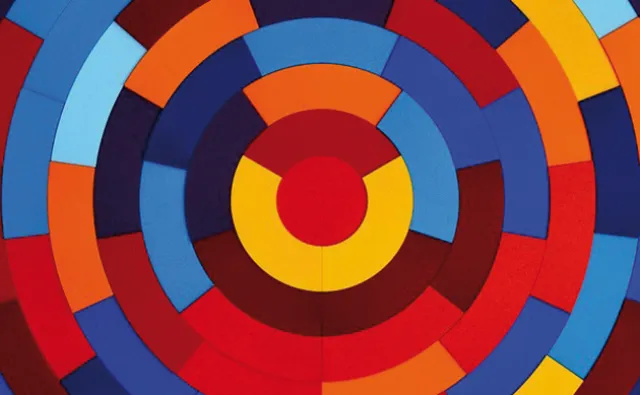
Philippe Leblanc,
Visual artist Philippe Leblanc describes his artistic development this way: "Discovering Op Art, kinetic art and the abstract geometry of the 1960s and 1970s had a decisive influence on my artistic direction." Mathematical concepts and emblematic numbers are recurring features of his work.
Algebraic numbers among other numbers
Algebraic numbers that count...
Free radicals
Being algebraic does not mean being expressible in radicals.
One of them—or not…
A number for which, apparently, no definition involves a polynomial with integer coefficients has no reason to be algebraic. But that does not prove it is transcendental! Despite the many theorems on the subject, a great many numbers continue to resist classification.
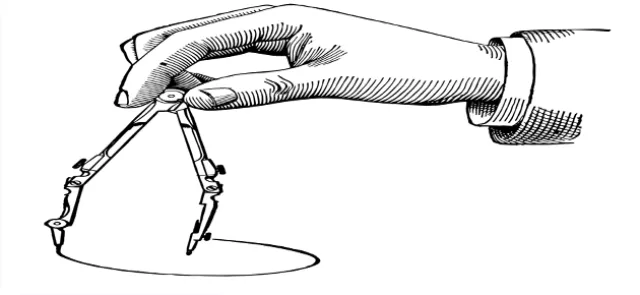
When algebra meets geometry
Some real numbers have a geometric origin: they are defined by straightedge-and-compass constructions. Although the basic idea seems simple, the properties of these numbers are not always easy to establish. This is where algebra proves indispensable.
An astonishing coincidence!
The Borwein brothers, Jonathan (1951–2016) and David (1953–2020), worked extensively on—and published widely about—the number π.
Record for memorizing digits of pi: 70,000 | Tangente
Pi Day is celebrated every year on March 14: in the American date format, this is written 3/14.