



Math for everyone
Mathematical content accessible to everyone
Polygon names: etymology and nomenclature | Tangente
The word "polygon" comes from the Greek poly, "many", and gonos, "angle, corner", which some authors link to gonou, "knee", the body's archetypal angle.

The mathematicians of Père-Lachaise | Tangente
At this time of year, around All Saints’ Day, tradition calls for visits to cemeteries. So let's take the opportunity to visit the graves of mathematicians in the most iconic cemetery of all: Père-Lachaise.

Italo Calvino's mathematical writing | Tangente
Widely read in Italian schools and universities, Italo Calvino is a major author, renowned for the literary quality of his work. He was also an avid lover of mathematics and readily drew on it in his writing, particularly to structure his texts, as one would expect of a committed Oulipian.

Working environments for mathematicians
The abstract notion of space in mathematics is very different from what intuition suggests. Depending on the type of structure available, we can work with concepts from algebra, analysis, or geometry.
The curiosities of antiparallelism
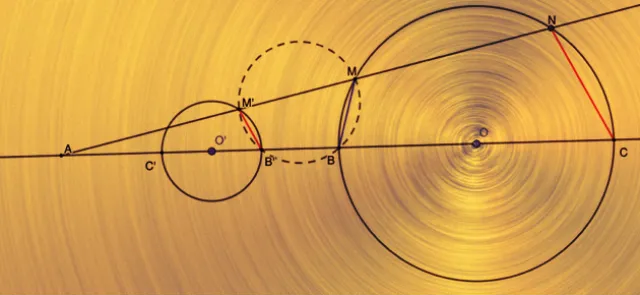
In elementary geometry, proportionality often involves parallel lines, through the intercept theorem. But there are also antiparallel lines. Might there likewise be such a thing as "antiproportionality"?
Thales’ children
Many proofs in elementary geometry rely on proportionality. Almost all of geometry’s classic theorems involve it: Thales, Ptolemy, Menelaus, Ceva, Pappus… Here is a brief tour of these great problems.
In Euclid's work
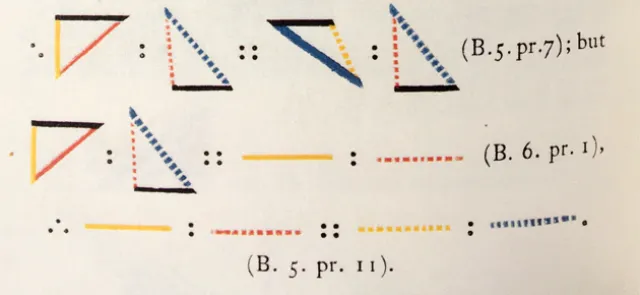
Ancient geometers struggled to handle ratios of lengths or areas that were not necessarily commensurable, because they could not conceive of irrational numbers. The definition found in Euclid's Elements remained in use until the 19th century.
Rediscovering proportionality
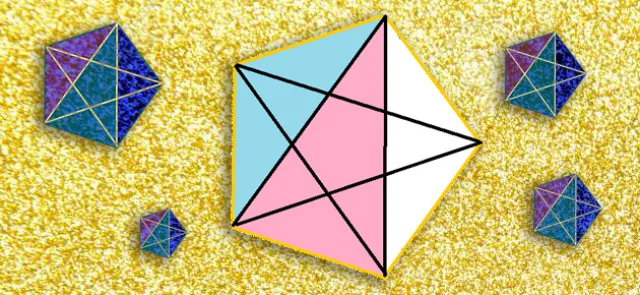
Proportionality often brings to mind the rule of three—in other words, a method of calculation. Yet the concept first emerged in geometry, through the study of similar figures, a cornerstone of many theorems that gave rise to the idea of incommensurable quantities.
How Cauchy saw the world: science and faith | Tangente
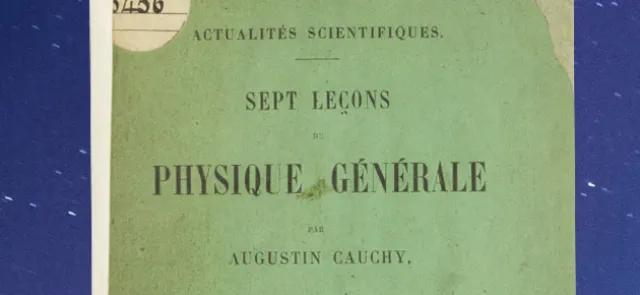
In a series of lectures, Cauchy reveals his vision of the real world through the science of his day. They reveal a scholar wrestling with his religious convictions.
Complex analysis in fluid mechanics | Tangente
When Cauchy, ever the theoretician, developed complex analysis, he could hardly have imagined that his results would lead to so many powerful methods for designing aircraft wings or studying fracture mechanics.
Origins of group theory: Cauchy and Galois | Tangente
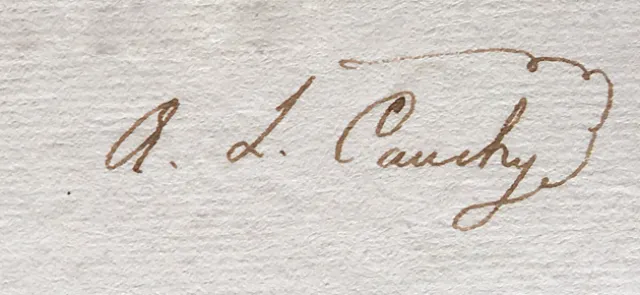
Cauchy the analyst is well known; Cauchy the algebraist, much less so. Cauchy's contribution to group theory long went unrecognized, even though his research on algebraic structures was highly influential.

Inflating polyhedra
In his early work, Cauchy revived the study of polyhedra. Ever since his results on the rigidity of convex polyhedra, mathematicians have sought to learn more about more general cases. The quest has produced a new concept, the flexahedron, and a fascinating property: the bellows theorem.
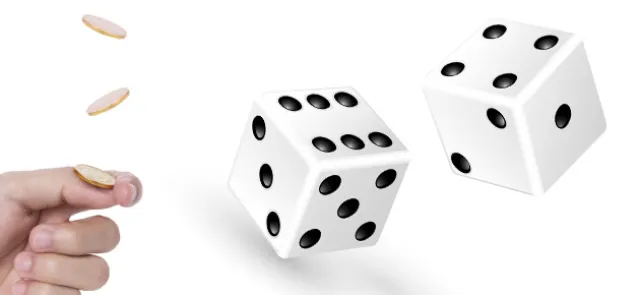
A distribution like no other
Standard probability distributions can sometimes be far removed from what is observed. When extreme cases occur too often, the Cauchy distribution comes into its own.

The battle over infinity: Cauchy and limits | Tangente
For more than two centuries, scholars and mathematicians debated infinitesimals: could they be handled safely, or were the paradoxes they generated insoluble? Amid this debate, Cauchy ushered analysis into the modern era while maintaining a nuanced position.

A mathematical password: sin x in 1830 | Tangente
In their 1894 book on the slang of the École polytechnique, Albert Lévy and Gaston Pinet recount an anecdote illustrating the atmosphere that could prevail in Paris during the revolutions of 1830 and 1848.

Cauchy's rigidity theorem and polyhedra | Tangente
Cauchy's earliest work concerned polyhedra, including his foundational rigidity theorem.

Counting by substitution
At barely 25, Cauchy puts the finishing touches to a paper on symmetric functions that is eventually published as two articles. In it, he introduces new concepts, notation and methods, and creates the calculus of substitutions, which will play a central role in the development of group theory.
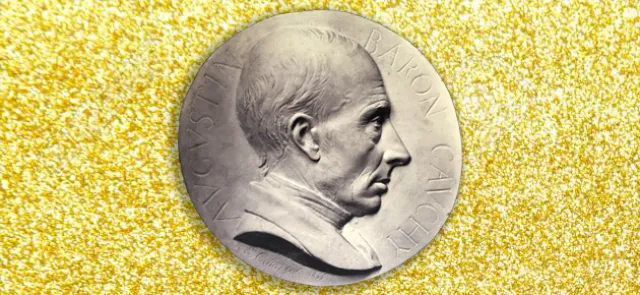
The origins of complex analysis
Cauchy is often credited with single-handedly founding complex analysis. The reality is subtler: although Cauchy gave the subject its structure and rigor, he drew on a wealth of earlier research, notably dating back to d’Alembert. Moreover, his involvement was prompted by debates between Laplace and Poisson over whether the use of complex numbers in integral calculations was legitimate. To understand Cauchy’s work, then, we must reconstruct its entire intellectual context.
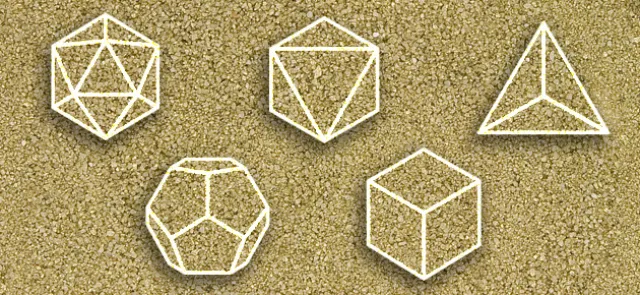
Cauchy’s first discoveries: polyhedra | Tangente
Although Cauchy is widely regarded as a highly abstract thinker, the first chapter of his work is, by contrast, strikingly visual. His study of regular polyhedra marked his entry into the world of mathematical research.

A series of errors
Nobody is perfect—not even the greatest mathematicians in their own field. Take Cauchy, who made a mistake concerning the convergence of series of functions—one that no student would dare make today.