



Math for everyone
Mathematical content accessible to everyone

Mathematics unleashed: passion and research | Tangente
As an amateur, where can you find topics to explore? How can you learn about a subject and keep abreast of the state of the art? Where can you meet people to exchange ideas with—or even find opportunities to publish? Here are a few pointers for anyone eager to take the plunge.

A centenarian devoted to magic squares | Tangente
After a busy career in public works engineering, during which he held various positions in Alsace, René Descombes (born in 1924!) has pursued his interest in magic squares since retiring.

The joy of mathematical discovery: amateur mathematicians | Tangente
Christian Boyer, Vincent Thill, Jean Moreau de Saint-Martin and Philippe Fondanaiche—all passionate amateur mathematicians—agreed to answer our questions about how their interest in mathematics began and the activities they have developed in their favorite areas.

They found it
Here are a few amateur mathematicians whose names are associated with recent results.
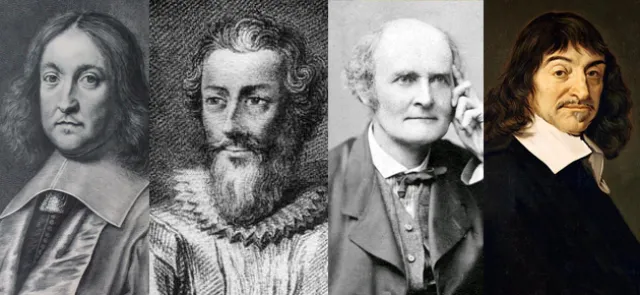
Recognized amateurs
What is an amateur mathematician? Defining one is no easy task, especially since the concept has undoubtedly evolved over time. Nevertheless, we will look at a few examples, both past and present.
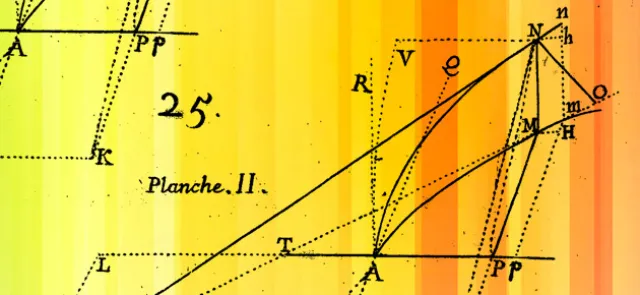
The geometry of curves
Alexis Claude Clairaut first came to the attention of learned circles through his book on curves of double curvature, presented to the Académie in 1729. He was only 16 at the time. The book was published in 1731, earning him election to the Académie des sciences at the age of 18.

2025: a very square number!
What better way to celebrate the new year than with some delightful mathematical properties of the number 2025? Tangente wishes all its readers a wonderful 2025.

Curious stories of mathematics on video | Tangente
For almost a year, Noëlle Krajcman has been running a TikTok and Instagram channel devoted to mathematical anecdotes.

Sylvie Méléard wins the Irène-Joliot-Curie Prize | Tangente
A specialist in probability theory, particularly stochastic processes, Sylvie Méléard has spent the past twenty years applying mathematical models to living systems: changes in population size over time (such as bacterial growth), the proportion of an allele in a population, and genetic evolution (such as antibiotic resistance).

Kepler, or the defeat of the circle
Kepler's first law states that planets follow elliptical orbits around the Sun. How can this be proved with the bare minimum of theory? To answer this question, physicist Richard Feynman produced a little gem of classical geometry applied to celestial mechanics.

Ellipse snippets
There are several ways to construct an ellipse. Here are a few.
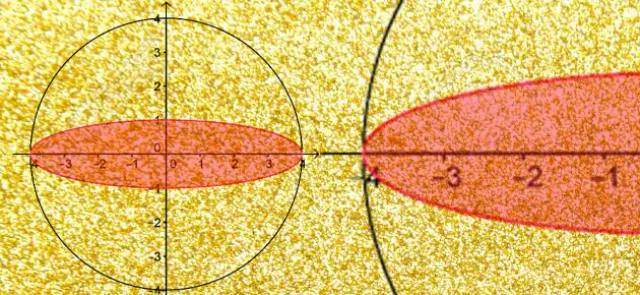
A question of circumference
You might expect calculating the perimeter of an ellipse—a fairly ordinary shape—to be straightforward. Yet it is a problem on which mathematicians have displayed extraordinary ingenuity. And in the formula contest, Ramanujan wins!
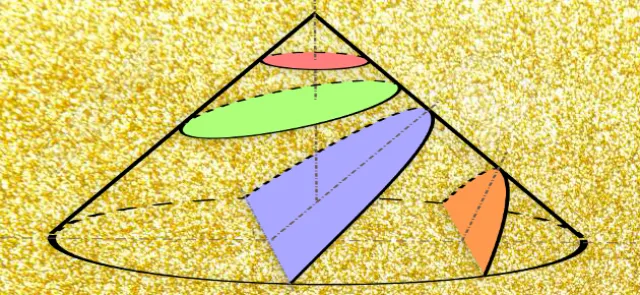
A little something missing
The term "ellipse" differs from the names of the other two conics, the parabola and the hyperbola. In fact, it means "something missing". Behind this surprising etymology lies a mathematical revolution: Apollonius of Perga's theory of conics.

Condorcet and physiocratic political economy | Tangente
Condorcet's ideas were influenced by the Physiocrats, who championed free trade and restricted voting rights to property owners.

Condorcet's paradox explained | Tangente
From Lewis Carroll to Kenneth Arrow, the famous Condorcet paradox has generated a great deal of discussion.

Polygonizing a number: histonumbers and Theodorus' spiral | Tangente
Several methods can be used to associate a polygon with a given number.

Vertex figures: duality and Platonic solids | Tangente
A polyhedron is an assembly of polygons with vertices, edges and faces, arranged so that every edge is shared by two faces.

Jolygons: iterative polygonal spirals | Tangente
This is not a polygon

The one-cut theorem: any polygon in a single cut | Tangente
Can a polygon be cut from a sheet of paper with a single straight cut? Surprisingly, the answer is yes! More surprisingly still, this also applies to other objects.

Pentagonal architecture: towers, castles and the Pentagon | Tangente
The pentagonal tower has stood since the 14th century in Castellane, a fortified town and subprefecture of Alpes-de-Haute-Provence.