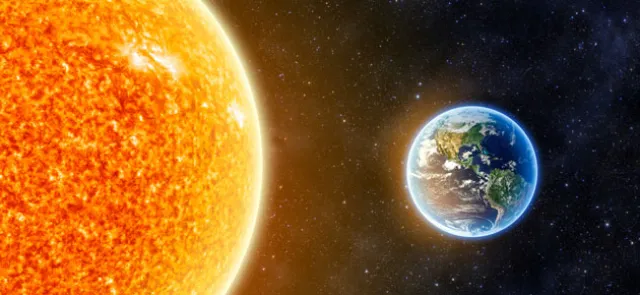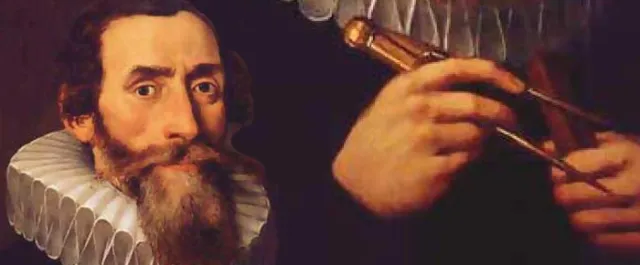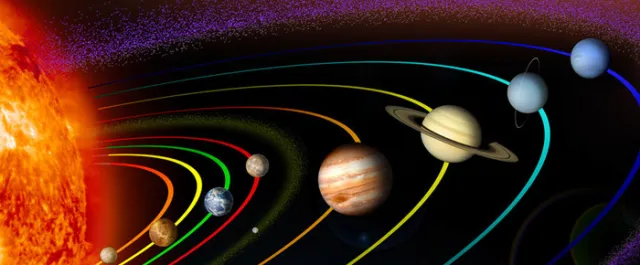
Known since antiquity (see the article "Something a little less"), ellipses burst onto the scene in the physical sciences in the 17th century, when Kepler formulated his famous laws of planetary motion—more precisely, the first: planets follow ellipses with the Sun at one focus. By abandoning the circle, until then the path traditionally ascribed to the planets, Kepler enabled the heliocentric model to overcome its inaccuracies. Ever since, the planets have revolved around the Sun rather than the Earth.
Incomprehensible Newton
-----------------------
Kepler's intuition proved correct, but it remained an intuition. A theoretical explanation for the unexpected presence of ellipses in the solar system had to wait for Newton. The first proof of Kepler's laws appears in his foundational work on the theory of universal gravitation, Mathematical Principles of Natural Philosophy.
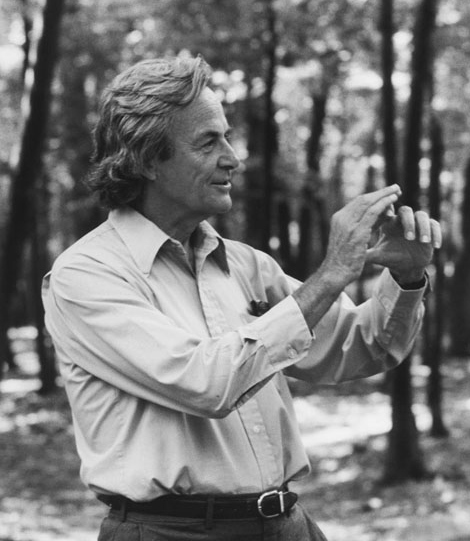
Several centuries later, while preparing a lecture, physicist Richard Feynman decided to leaf through Newton's book to see how his illustrious predecessor had proved Kepler's first law. A surprise awaited him: the man who would receive the Nobel Prize in Physics the following year for his research in quantum electrodynamics realized that he could not understand a word of Newton's proof of a law that nevertheless belongs to elementary mechanics. The vocabulary was different, as was the method of proof, and even the concepts themselves did not match those of 20th-century physics—Newton, for example, knew nothing of vectors.