



Math for everyone
Mathematical content accessible to everyone
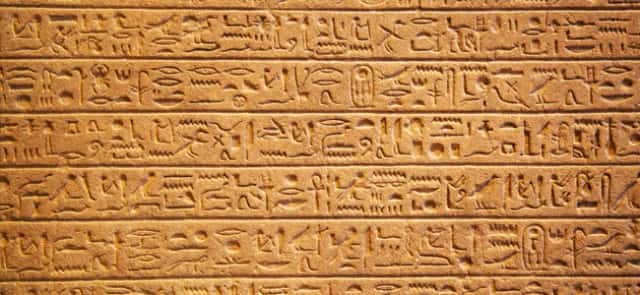
The Egyptian way
Although the general concept of a fraction was absent from the mathematics of early antiquity, Egyptian scribes made extensive use of what we call unit fractions, or reciprocals of integers. Further developed by Fibonacci, this so-called "elementary" mathematics remains an active subject of research in number theory.
Gears
How can a ratio be approximated by a simpler one? Crucial to clockmakers and engineers, this problem can be solved with a healthy dose of arithmetic and algorithms dating back to antiquity.
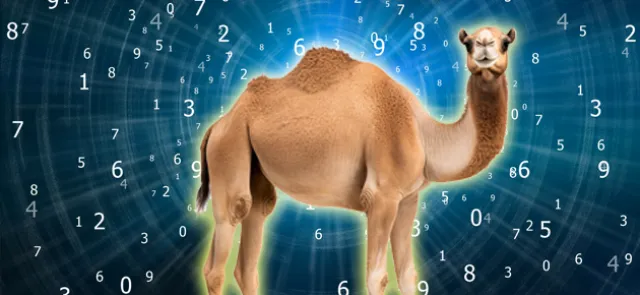
The case of the camels
Seventeen camels: an inheritance that seems impossible to divide? This slightly paradoxical Eastern puzzle has a mathematical answer.
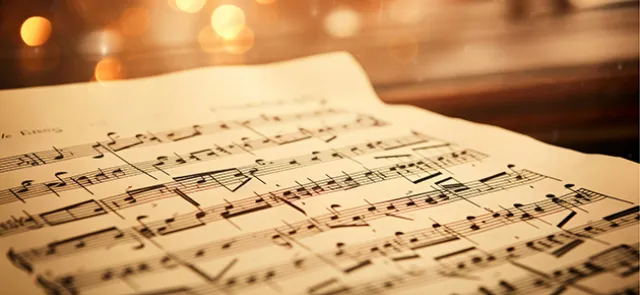
Fractions and music: when 3/4 is not equivalent to 6/8
Octaves, fifths, triplets… The rhythms and pitches of Western music were built on fractions.
Proportionality: so crucial, so difficult
Proportionality arises in problems involving multiplication, division, and combinations of the two. Because it is difficult to learn, it poses challenges for teaching and has prompted extensive research in mathematics education.
Fractions in the temple of integers?
As its name suggests, Neil Sloane's On-Line Encyclopedia of Integer Sequences contains only integers. Yet there is a roundabout way to introduce fractions into it…
Japanese multiplication | Tangente
How can you multiply without a calculator—or even knowing your multiplication tables?
Calculating? With calculi, of course! | Tangente
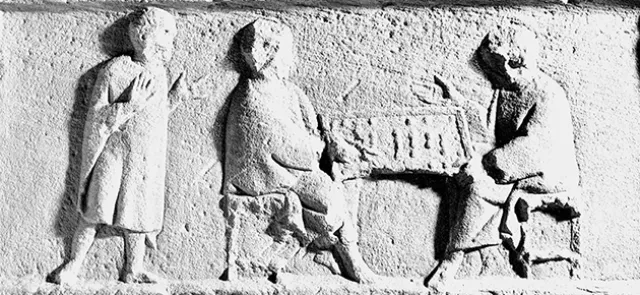
It is hard to believe that the multiplication and division methods we learn at school did not become universally adopted in the West until the 18th century. So how did people calculate before then? They used calculation aids such as counting boards.
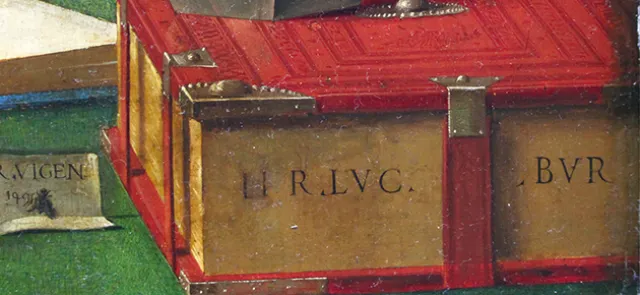
Multiplying with rods | Tangente
Before the advent of modern technology, techniques or tools had to be devised to perform the basic calculations required by craftspeople, engineers and everyone else! From John Napier to Édouard Lucas, mathematicians distinguished themselves in this pursuit.

Essential tools of analysis
Given a somewhat complicated function, who has not wished they could replace it with a much simpler one that "behaves in the same way," such as a polynomial? Taylor expansions make this possible in almost every case—at least locally!
The centenary of Gustave Eiffel's death
Gilles and the mathematics culture and games fair | Tangente
Two passions guided Gilles throughout his life: puzzles and popularizing mathematics.
The culture of Tangente | Tangente
From the outset, Tangente envisioned a whole world of worlds: mathematics linked to literature and poetry, to music; a publication opening the door to the wonderful world of logical puzzles; mathematics as a whole world in itself, extraordinarily vibrant and fully in tune with the latest technological advances. Above all, it stood for openness to the world, through writing that aimed to be accessible to everyone.
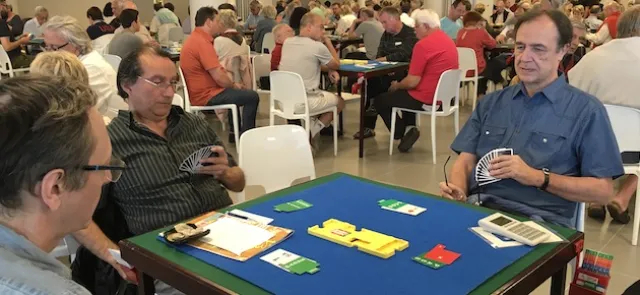
Bridge: a bridge between games and statistics | Tangente
Bridge begins with an auction, in which players commit to taking a minimum number of tricks during play. Statistical methods make it possible to rationalize this decision-making process.
A brand-new game | Tangente
"What's New?... in the Henhouse!" is the latest game from Julien le Magicien. The aim is to make 9 by combining several cards.
Maths through song | Tangente
"Today, we're doing maths!" That is the message Adrien Deslypper and Stéphane Delobel (along with a few accomplices), two high school teachers from Hauts-de-France, bring to their students every day.

2024: a new year with many properties
What spectacular mathematical advances, major scientific discoveries and gains in knowledge does the new year have in store for us? It is hard to say! What is certain is that the natural number 2024 abounds in wonderful arithmetic and combinatorial properties…
Mathematicians make progress on coloring
Coloring problems are often very simple to state and may appeal to many amateur mathematicians. Unfortunately—or perhaps fortunately?—they conceal deep difficulties that continue to tax the mathematical community. A new breakthrough was made recently.
PISA: the plunge | Tangente
Released in December, the results of the 2022 PISA survey (the Programme for International Student Assessment, which assesses 15-year-olds) show a sharp decline in French students’ mathematics performance.
Mathematics, the key to the future | Tangente
More than 180 leading figures from the worlds of science, business and industry warned in the December 5 issue of Le Monde that France is losing ground as a scientific and mathematical power.