



Math for everyone
Mathematical content accessible to everyone

Wittgenstein and Russell at Cambridge | Tangente
Born in Vienna in 1889, Ludwig Wittgenstein began studying mechanical engineering in 1906. Drawn to mathematics, he initially explored its applications before becoming fascinated by Russell's writings.

Bertrand Russell's politically engaged writings | Tangente
Bertrand Russell's literary writings range widely; they are tinged with philosophy, politics, and sociology. What unites them is that they all have a message to convey.

A graphic novel on the foundational crisis | Tangente
Logicomix is a graphic novel centered on Bertrand Russell.

Why do clocks turn clockwise? | Tangente
Clock hands turn clockwise, rather than counterclockwise. Why?

Bertrand Russell: a man of letters and numbers | Tangente
At 78, too old for a Fields Medal, and with no prize specifically devoted to philosophy, the mathematician and philosopher Bertrand Russell was awarded the 1950 Nobel Prize in Literature, much to his surprise.

The Möbius strip in art | Tangente
The legendary Möbius strip—a two-dimensional, non-orientable surface with only one side, easily made from a strip of paper—has inspired several artists.

The etymology and history of orientation | Tangente
Do you know where the words "orientation" and "orient" come from?

Hilbert's thirteenth problem
At the second Congress of Mathematicians, held in Paris in the summer of 1900, David Hilbert presented a list of research questions that he considered important. The list contains twenty-three problems spanning every field: algebra, geometry and analysis.

The building blocks of Galois theory
Although inspired by Galois's work, "his" theory developed long after his death and did not take off until algebraic structures were introduced.

Beyond Lagrange's memoir
As a teenager, Galois read Legendre and Lagrange, followed by Gauss and Cauchy. He often cites the latter two, but rarely Lagrange. Galois was clearly influenced by Lagrange's ideas; he would, however, go much further, benefiting from all the advances made since 1771.

Tales of roots
The roots of unity form an abelian group. A quick refresher...
Two geniuses, two approaches
Two methods are known for proving that the general quintic equation cannot be solved: Abel's method, presented in 1824 and refined in 1826, and Galois's method from 1829–1830. Galois theory is fairly well known, whereas Abel's ideas are less often discussed.

Galois's handwritten papers at Louis-le-Grand | Tangente
Although Galois's "complete" works were published in 1962, they can be "completed"—a kind of paradox of completeness—with his papers from the 1829 entrance examination for the École préparatoire. They are held in the Archives nationales. Let us open them! Some of them have never been published.
Cauchy, a forgotten pioneer
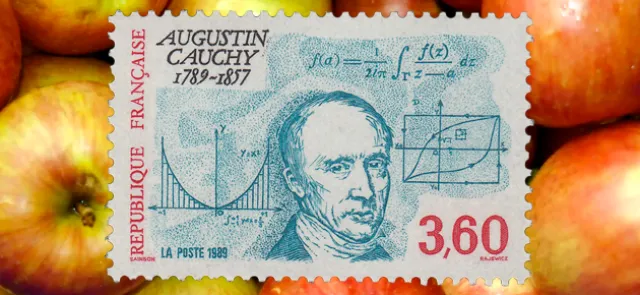
Because Augustin-Louis Cauchy did not take a direct interest in solving algebraic equations, he is an overlooked figure in the history of group theory. Yet his research on permutations provided valuable tools for those who worked on Galois theory.

Finite-difference schemes
Physics, biology, chemistry, mechanics and many other fields abound in phenomena that can be modelled mathematically using differential equations or partial differential equations. In general, these equations cannot be solved explicitly. We must therefore seek approximate solutions…

An epidemic of ODEs
In epidemiology, mathematical modeling has three aims: to understand, describe, and predict. Since the focus is on what happens in the "fairly distant" future, continuous-time models involving differential or partial differential equations are generally preferred.

Proving without saying a word
No drawing or diagram can ever replace a "proper" proof, but both can help make a proof self-evident. In this respect, proofs without words, so beloved of mathematicians, are a fine exercise in style. Some have become classics of the genre.
Models for biology
Historically, differential equations emerged in response to geometrical questions and problems in physics, particularly the study of planetary motion, pendulums and, later, heat diffusion. Yet they have plenty of applications in biology too!
When numerical methods provide the solution
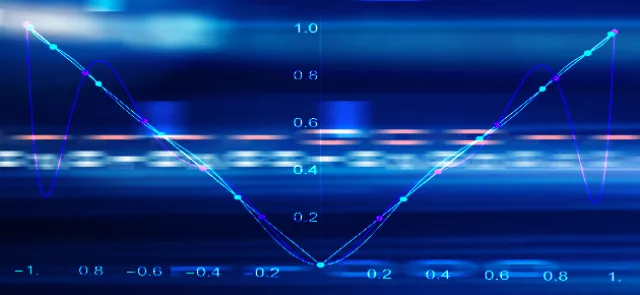
Except when a differential equation is linear or of a very special type, there is generally no exact method for solving it—that is, for finding a solution. We therefore often have to resort to approximation methods and numerical schemes.

A relationship between functions and derivatives
Historically, differential equations emerged early in the development of analysis, through problems in geometry and mechanics.