Math for everyone
Mathematical content accessible to everyone

No doubt about it | Tangente Magazine
We were used to highly faceted origami figures with clearly visible folds. Now a group of Austrian researchers has given these forms much smoother contours.

Malevitch: Geometry at the heart of Suprematism
A hundred years ago, the artist Kasimir Severinovitch Malevitch (1878–1935) was appointed commissioner for the preservation of buildings and the arts

The Earth in a ping-pong ball: Nash–Kuiper
Nothing is mathematically impossible! Although, back in the 1950s, the Dutch mathematician Nicolaas Kuiper and the American John Nash had already proved the existence of a vast class of paradoxical mathematical objects (flat tori in 3D, shrunken spheres…), they lacked the tools to visualize them

The gravity equation
For once, an economist is talking about an "equation"—which makes it worth a closer look

Gérard Tronel: A life devoted to mathematics | Tangente
Mathematician Gérard Tronel, a great friend of the Tangente editorial team, had been battling cancer for years. He passed away on August 25.

Maryam Mirzakhani: a star has just gone out | Tangente
The brilliant Iranian mathematician Maryam Mirzakhani died of breast cancer on 15 July 2017, at the age of 40
On inscribed angles
The inscribed angle theorem is one of the key results of elementary Euclidean geometry. It requires few tools to state—or even to prove—and has many consequences.
And the angle makes history…
The so-called inscribed angle theorem, still part of every middle-school student's mathematical toolkit today, was already known to ancient geometers. It can sometimes have unusual applications.
2018 Championship
The 32nd Mathematical and Logical Games Championship, organized by the Fédération française des jeux mathématiques, is under way. Tangente brings you an exclusive look at the eighteen problems from the individual quarterfinals.
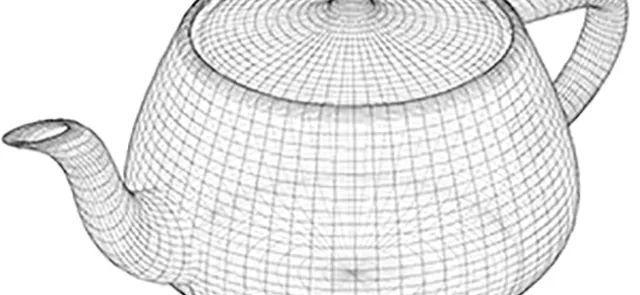
Special effects
Computer-generated imagery (sometimes called "3D") makes it possible to create fictional worlds on a computer, whether ultra-realistic or cartoon-like, according to the wishes of graphic designers, filmmakers and artists… But how do you create a world? With mathematics!
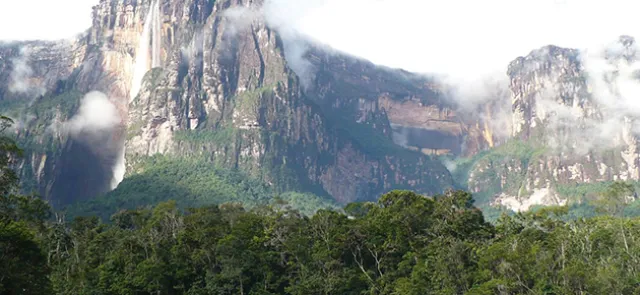
Fractals in film: from geometry to special effects
Fractal geometry was central to the earliest computer-generated imagery on the big screen. The study of self-similar forms found in nature gave rise to the first computer-generated images… and thus spawned an entire entertainment industry!
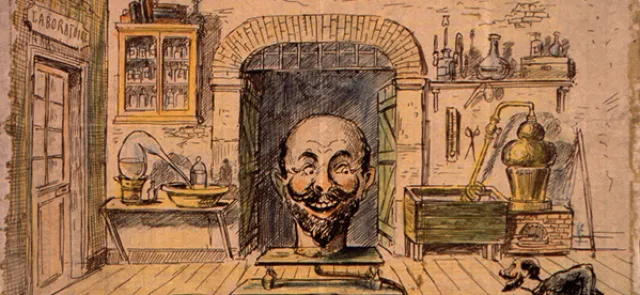
Georges Méliès: special effects, anamorphosis and maths
Georges Méliès is often described as the creator of cinematic spectacle, while the Lumière brothers are the inventors of the cinematograph. In fact, Méliès was passionate about technology. He found solutions to problems that can readily be expressed in mathematical terms.

Three camera forerunners: from Marey to the Cinematograph
The pioneers of cinematography used objects that were sometimes unusual, which you can still admire at the Musée des arts et métiers (60 rue Réaumur, 75003 Paris).

Dissections: Greg Frederickson's trilogy | Tangente
Greg Frederickson's trilogy is regarded as THE definitive reference on geometric dissections.

The seven types of frieze | Tangente
A tiling covers the plane, extending infinitely in two dimensions; a frieze extends in just one direction. The quintessential decorative motif, it is the decorative border you can put above your wallpaper. There can be only seven different types.

The mosaics of the Alhambra in Granada
The decorative patterns of the Alhambra in Granada, a fortress built in the 14th century, encompass all the symmetry groups of plane tilings that can be repeated using two nonparallel translations. But this finding is recent, incomplete and somewhat controversial...
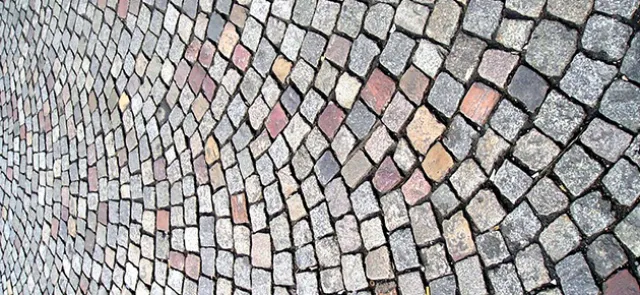
Seventeen groups that tile the plane
The plane tiling theorem states that the weight of a motif must equal 2. This small value makes it possible to consider every possible wallpaper symmetry: there are only seventeen wallpaper groups.

Dissecting an obtuse triangle | Tangente
The problem of dissecting an obtuse triangle was proposed by Martin Gardner in Scientific American.

Rep-tiles | Tangente
The self-similarity requirement has led to many interesting results on tilings