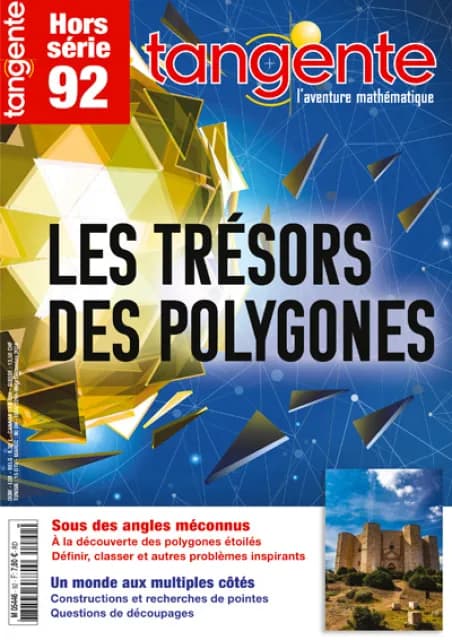
The Treasures of Polygons
This issue is not fully translated into English yet; only translated content is shown.
Read the French versionAll folders in this issue
From various angles
The mention of polygons generally refers to the geometric figures of our tilings, often regular. Their apparent simplicity might make one believe that their study is without difficulty, therefore without interest. However, certain operations, such as checking convexity or differentiating vertex and side intersection for a crossed polygon, remain complex. A first task is therefore to seek a definition general enough to bring together polygons with exotic names – acoptic, aploic or isotoxal – into a single family. The question then arises whether one can obtain from all their characteristics a typology that makes it possible to classify and construct them.



Classics at the summit
Since Antiquity, people have been interested, for land redistribution problems, in calculating the area of a quadrilateral. The Indian mathematician Brahmagupta established a formula from the measure of its sides, a formula similar to that of Heron of Alexandria for triangles. A generalization of these expressions has recently made it possible to determine the area of any pentagon from its sides. Another ancient problem, the construction of regular polygons with a ruler and compass. It would be necessary to wait until the 19th century, the work of Gauss and the development of Galois theory, to determine which ones are indeed constructible according to the rules of Euclid.

A world with many sides
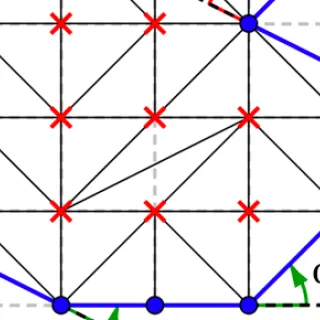
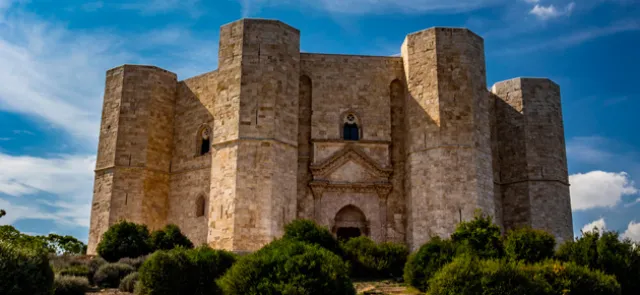
Polygons largely exceed the strict framework of geometry, with practical or recreational applications. They can be found, for example, in architecture, in building plans, or in arithmetic in the form of so-called polygonal numbers. They are naturally the tessellations of many puzzles, including the oldest of them all, Archimedes' Stomachion. It was left to Bolyai, the grandfather of non-Euclidean geometry, to prove that two polygons of the same area can have the same constituent pieces. Since then, Dudeney and the Demaines, father and son, have opened a vast field of mathematical creations – and recreations – with hinged polygons.