The engine of mathematics
Mathematical progress owes much to conjectures, large and small, that challenge mathematicians. This was true long before Landon Clay and others offered million-dollar prizes: conjectures are the engine of mathematics.


Mathematical progress owes much to conjectures, large and small, that challenge mathematicians. This was true long before Landon Clay and others offered million-dollar prizes: conjectures are the engine of mathematics.


Articles recommended for you.

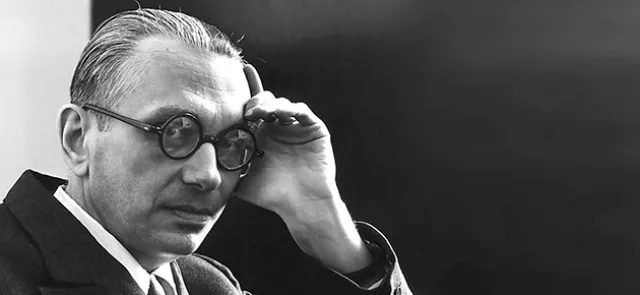
In mathematics, although there are many conjectures and hypotheses, it is generally assumed that any well-formed statement must have either a proof or a refutation. Kurt Gödel showed that this is not so. His proof uses self-reference.

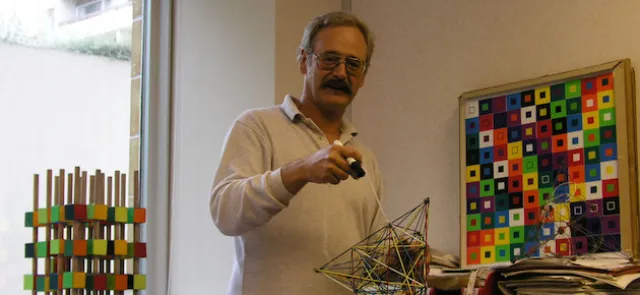
The study of combinatorial structures is a recent branch of mathematics, rich in counting problems. A journey into a far too little-known realm.

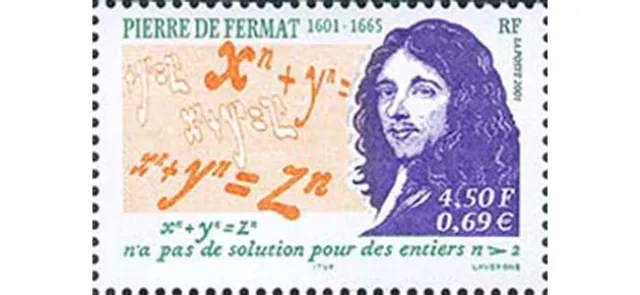
Conjectures are especially famous when they have simple statements and resist mathematicians’ efforts for a long time. They give mathematics an air of mystery and bring great renown to those who solve them, but above all to those who first formulated them, such as Fermat and Goldbach.

The question has kept the scientific community on tenterhooks for more than forty years. It is one of the "Millennium Prize Problems," a list of seven major mathematical puzzles posed by the Clay Mathematics Institute in 2000. Here is a closer look.
Discussion
Sign in to post a comment and talk with other readers.
No comments yet. Be the first to respond.