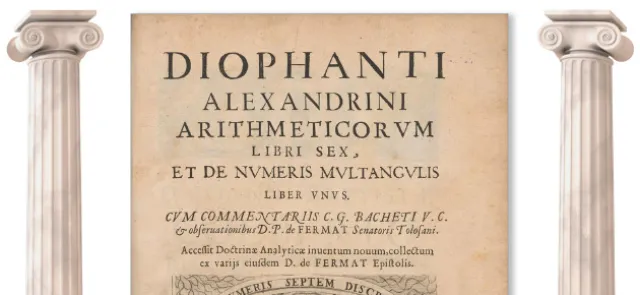



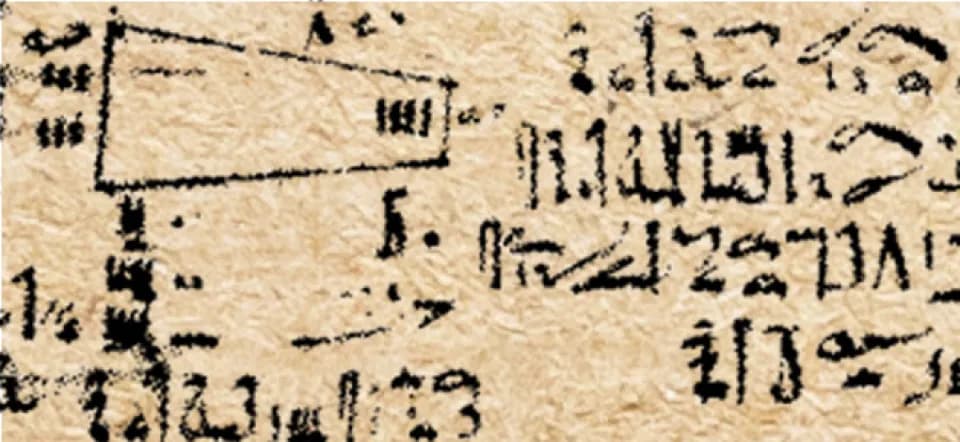
« Chercher une quantité telle que si on lui ajoute son quart elle devient 15 » : le problème a été proposé dans le papyrus Rhind il y a trois mille six cents ans. La solution peut s’obtenir simplement : puisque 4 ajouté à son quart donne 5, multiplions par 3 pour obtenir 15 et la solution 12 apparaît. Si Monsieur Jourdain, chez Molière, faisait de la prose sans le savoir, nous avons tous traité ce genre d’équations, dites diophantiennes, sans le savoir. C’est en effet le mathématicien grec Diophante d’Alexandrie (entre +150 et +350), grand arithméticien, qui a laissé son nom à ces équations à coefficients entiers dont on cherche les solutions en nombres entiers.
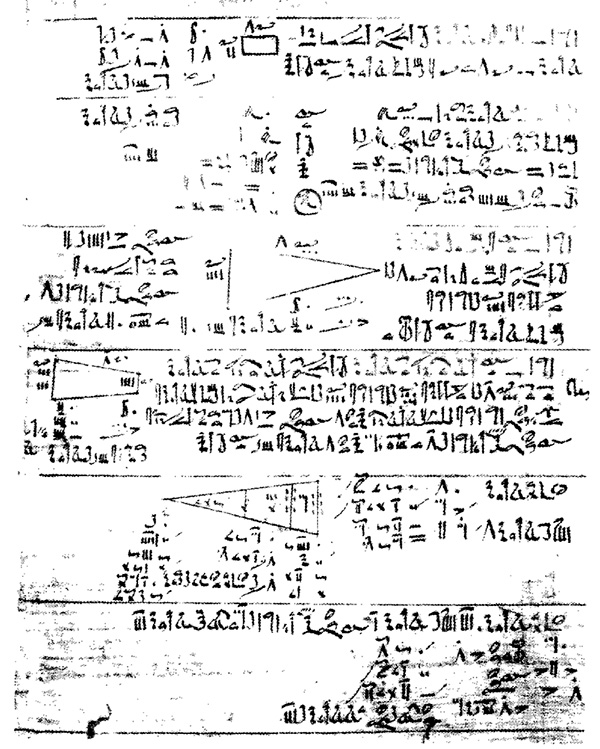
Un extrait du papyrus Rhind.
De telles équations ont été aussi traitées par Euclide (au IIIe siècle avant notre ère), qui avait jeté les bases de l’arithmétique, en particulier avec le lemme qui porte son nom (« Si un nombre premier p divise le produit bc de deux entiers, alors p divise b ou c »). Ce résultat va favoriser la recherche de triplets pythagoriciens (voir notre dossier dans Tangente 212, 2023), solutions en nombres entiers de l’équation x 2 + y 2 = z 2, autre équation diophantienne !