


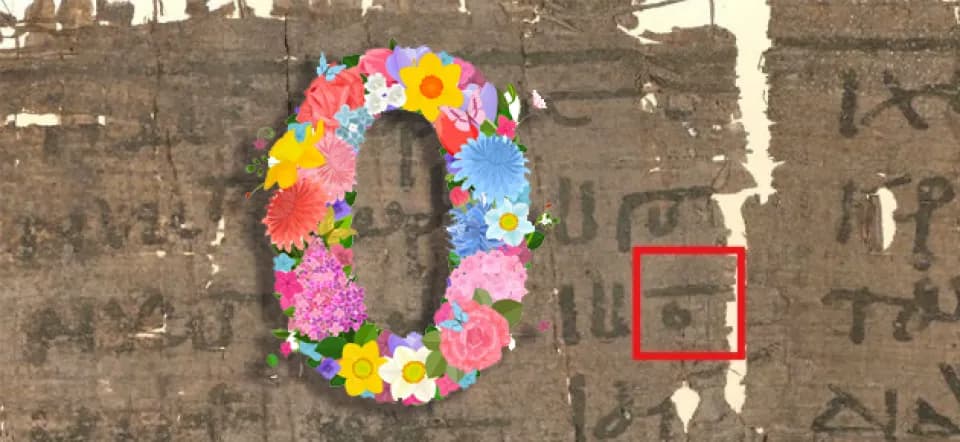
Le zéro n’a pas toujours existé et son introduction fut révolutionnaire. On fait généralement remonter son apparition à Brahmagupta et à son ouvrage Brāhma Sphuṭa Siddhānta (littéralement : « Doctrine de Brahma correctement établie »), daté de 628 après J.-C. Peu à peu, le zéro a permis ou accompagné de nombreuses révolutions : le passage de l’arithmétique à l’algèbre, l’aboutissement de la méthode d’exhaustion en le calcul infinitésimal...
Faire des maths sans zéro
Pourtant, le fait que le zéro n’a pas toujours existé montre qu’il n’est pas un objet strictement nécessaire pour faire des mathématiques. La numération romaine, bien connue, ne possède pas de zéro, de même que la numération grecque (qui utilise l’alphabet grec), tout comme les numérations égyptienne ou babylonienne.
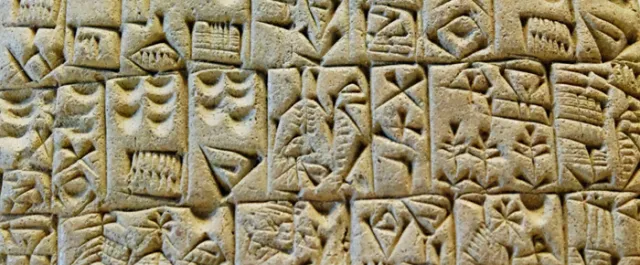
Dans cette dernière, par exemple, qui est liée au contexte de l’écriture cunéiforme, on notait les unités avec des clous et les dizaines avec des chevrons. Il s’agit d’une numération positionnelle, comme la nôtre, avec la seule différence qu’elle n’est pas purement décimale mais en partie décimale (les unités vont de 1 à 9) et en partie sexagésimale (les dizaines vont de 10 à 50).
Ainsi, le nombre 59 s’écrivait