



All articles
Dive into the fascinating world of mathematics with our captivating articles, written by passionate experts. Whether you are a curious amateur or a seasoned mathematician, our articles cover a wide range of topics, from fundamental concepts to the latest discoveries, including practical applications and philosophical reflections.
A world of oscillations: from Huygens's clock to quantum physics
Huygens's invention of the first pendulum clocks in 1650 helped shape modern differential geometry—with unexpected repercussions for a very recent problem in quantum mathematical physics.

Jacques Besson and his theatre of mathematical instruments
In the mid-16th century, a French mathematician became fascinated with designing instruments born of his ingenious mind…
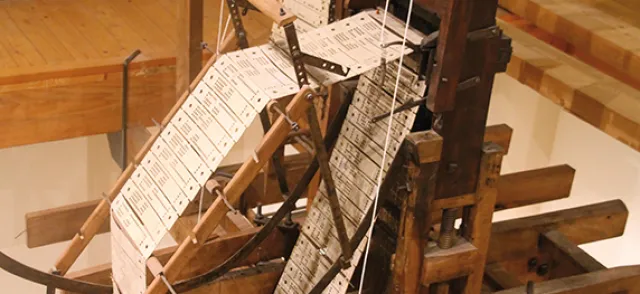
Punch cards: from Jacquard to Hollerith
Interfaces are a defining feature of our culture: the punch-card control system of the Jacquard loom transformed textile manufacturing. But who remembers it today? It was a first step towards the computer, which now governs how we interact with the world.
Sam Loyd: a puzzle-making mathematician in 15 minutes
Fifteen minutes to retrace the key moments in a mathematician's career: that was the challenge set—twice during the day—for the outstanding speakers in the conference room at Tangente's 30th-anniversary celebration (times in parentheses).
Mathematics to make you think: games and mental arithmetic
To celebrate Tangente's 30th anniversary, here are a few small mathematical challenges to get you thinking carefully...

Hands-on mathematics: maths at your fingertips
Mathematics can be hands-on too! Such activities will be on offer on December 3, for Tangente's 30th anniversary.
Tangente at 30: lectures on surprising mathematics
For Tangente's 30th anniversary, on Sunday, December 3, renowned experts will talk about the mathematics they love. Here are the summaries.

Tangente turns 30 in Brussels | Tangente Magazine
Tangente is also celebrating its 30th anniversary in Brussels. Here is the programme, built around the theme "Popularizing isn't vulgar!".
Tangente's 30th anniversary program | Tangente Magazine
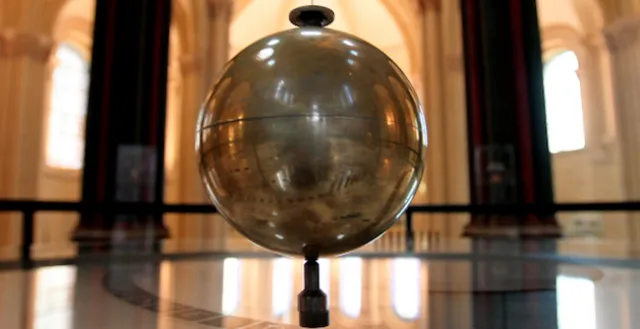
Here is the programme (which will be updated regularly) for Tangente's 30th anniversary celebrations at the Musée des arts et métiers on Sunday, December 3, 2017. Admission is free for everyone!
Tangente Day programme: 2 December | Tangente
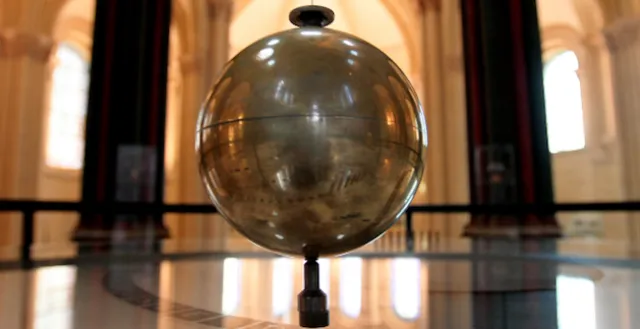
Here is the programme (which will be updated regularly) for Tangente Day at the Musée des Arts et Métiers on Sunday, 2 December 2018. Admission is free for everyone. Save the date!
The Ramanujan–Hardy duo on screen | Tangente Magazine
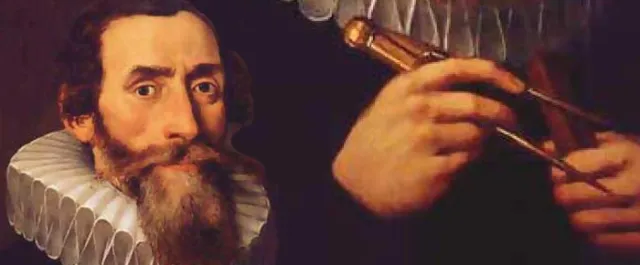
Kepler's law of equal areas
It is number two on the list of Kepler's laws, yet it is the easiest to prove. The law of equal areas is one of three results by the German astronomer who revolutionized our view of the heavens at the dawn of the 17th century.
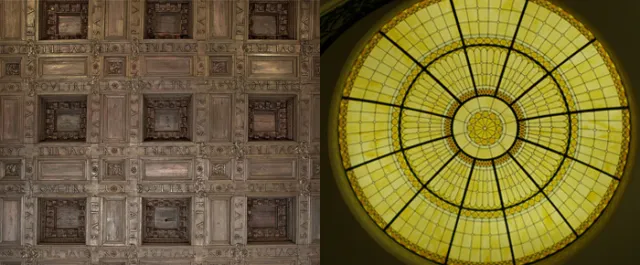
The value of polar coordinates
Using integral calculus to calculate areas can sometimes be cumbersome in Cartesian coordinates. Switching to polar coordinates can then be a considerable help. It also makes it possible to normalize the normal distribution in probability.
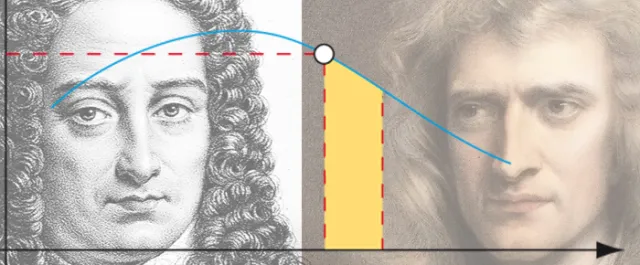
Areas and antiderivatives: a close connection
Areas and antiderivatives have been linked ever since the foundational work of Leibniz and Newton in the 17th century. This connection has simplified the calculation of the areas of many regions in the plane, but the relationship between area and the integral goes far deeper than this computational question.
Area briefs
Discover different ways to calculate the areas of polygons
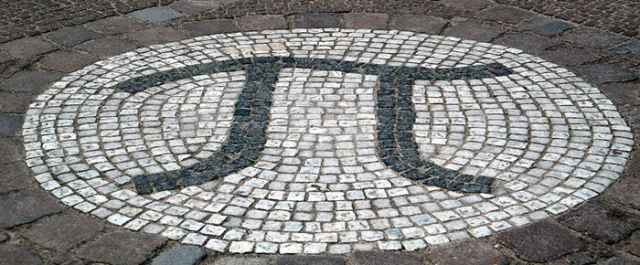
Approximately π
We can play with areas to calculate π, but we can also start with π and choose areas accordingly. For a change from Archimedes' famous method of exhaustion, we can revive a historical approach probably devised by the Egyptians... Can you do better?
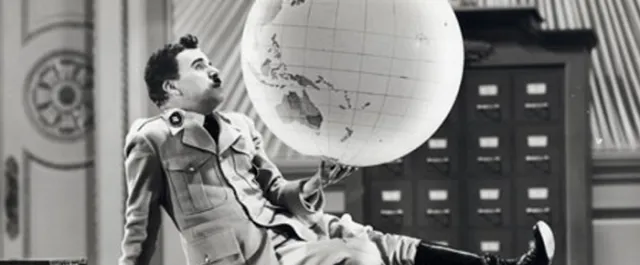
Charlie Chaplin's polynomial
Representing the motion of an object, such as a ball, in a film is now within everyone's reach thanks to new technology! Here is an example based on a famous scene from the silver screen, with the help of a graphing calculator...
No doubt about it | Tangente Magazine
We were used to highly faceted origami figures with clearly visible folds. Now a group of Austrian researchers has given these forms much smoother contours.

Malevitch: Geometry at the heart of Suprematism
A hundred years ago, the artist Kasimir Severinovitch Malevitch (1878–1935) was appointed commissioner for the preservation of buildings and the arts
The Earth in a ping-pong ball: Nash–Kuiper
Nothing is mathematically impossible! Although, back in the 1950s, the Dutch mathematician Nicolaas Kuiper and the American John Nash had already proved the existence of a vast class of paradoxical mathematical objects (flat tori in 3D, shrunken spheres…), they lacked the tools to visualize them