Mathematical information is conveyed through speech or writing. In most mathematics classes, it is spoken, since the aim is both to explain and to make oneself understood. Texts themselves consist of words and signs whose arrangement on the page or screen carries precise meanings. These are forms of notation. Words and some signs can be pronounced, but reading a text aloud is sometimes difficult because these arrangements are awkward to put into words. Sometimes it is easier simply to look. Viewing mathematics solely in terms of its "languages" therefore risks erasing some difficulties or introducing new ones. Mathematics can be spoken; it can also be seen.
The interplay between speech and sight
-----------------------------------
The respective roles of speech and sight have changed over the course of mathematical history, as has the way they work together. In other words, the interplay between speech and sight is part of mathematics itself. With this in mind, let's compare five historical texts to be read aloud and looked at.
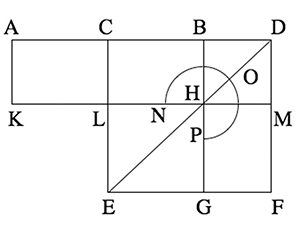
In Book II of Euclid's Elements (translated by Bernard Vitrac), Proposition 6 proceeds, like all the others, through a series of clearly defined stages. The first is a long sentence made up of words.