



Amazing Math
Surprising or counterintuitive mathematical results and proofs

2021 with a twist
As it does every year, Tangente's editorial team brings you a selection of ingenious calculations to celebrate the new year. The locked-down year of 2020 is gone; the year of games has begun. Welcome to 2021!
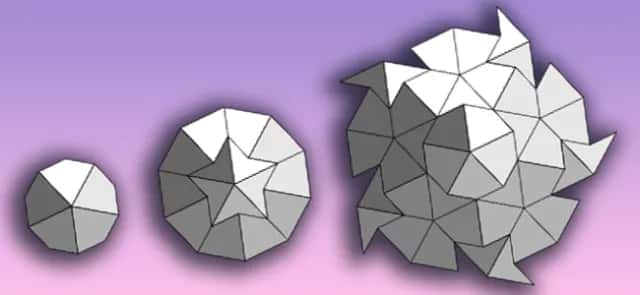
Dazzling Penrose tilings
Sir Roger Penrose is renowned for his remarkable and foundational work in geometry and cosmology, and for the applications of that work to black holes. It is puzzling, however, that he is famous to the general public for the tiling that bears his name, with its many remarkable properties.
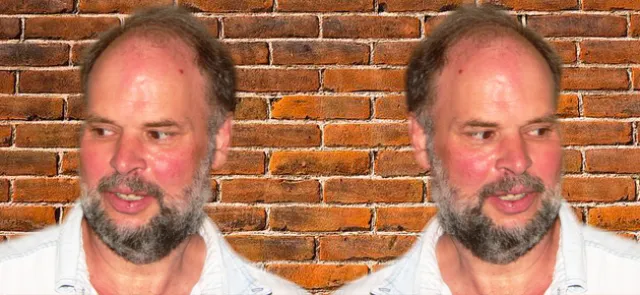
Vaughan Jones, the knot magician
The mathematician Vaughan Jones, who died on September 6, 2020, profoundly influenced several areas of mathematics, including topology and functional analysis, as well as physics, particularly quantum theory. His name remains associated with powerful invariants in knot theory.

Proof desperately wanted | Tangente
One hundred thousand results are stated worldwide each year—but how many of them are proved? In number theory, for example, many problems remain unsolved. Some are well known to enthusiasts, others less so...
A century of conjectures
Mathematics has always advanced through the curiosity of people seeking to answer new questions and pose new problems. Once solved, these give rise to others, creating an endless chain of advances in knowledge.
A sequence of ideas: Ulam and Recamán | Tangente
Algorithms for constructing integer sequences from a given number are diverse. Many were devised in the 20th century by well-known mathematicians (Ulam, Kaprekar, Sloane...) and sometimes produce surprising results, some of which remain conjectures.
When an error bears fruit
Many mathematicians have made mistakes, whether through inadvertence, a miscalculation, a flaw in a proof, or a temporarily mistaken belief.
The unreasonable effectiveness of mathematics
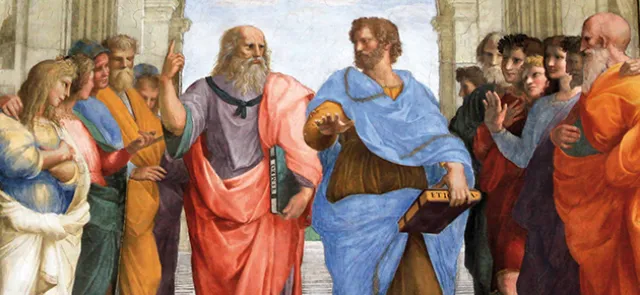
In the latest physical theories, mathematical models have achieved such descriptive and predictive power that the question inevitably arises: is this mysterious fit a miracle, or does it have a deeper meaning?

Little square puzzles | Tangente
Square-grid number puzzles appeal to enthusiasts of recreational mathematics. This selection comes from the "Affaire de logique" column in the newspaper Le Monde.
Marvelous logarithms
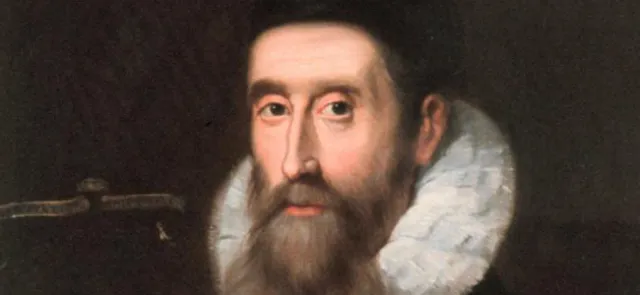
Logarithms emerged at the very beginning of the 17th century, thanks to the eccentric Scottish mathematician and theologian John Napier. By dramatically speeding up calculations, they paved the way for extraordinary scientific advances, particularly in astronomy.
196: a very curious number! | Tangente
A palindrome, or palindromic number, reads the same from right to left as from left to right, like 514,415. Here is a simple recipe for finding one.
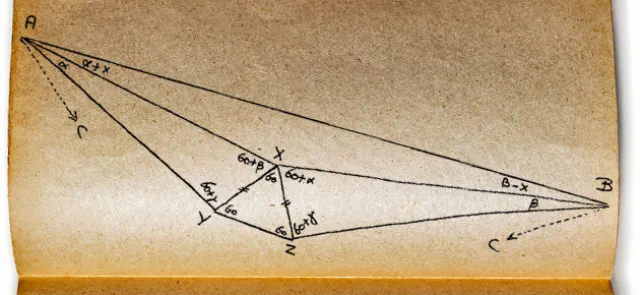
Morley's "miracle"
A symmetry appearing out of nowhere, an equilateral triangle emerging amid the trisectors of a completely arbitrary triangle: that is the whole "miracle" of Morley and his theorem. The many proofs of this beautiful property are marvels of geometry and trigonometry.
Otto Neugebauer Prize: Karine Chemla | Tangente
Awarded every four years by the European Mathematical Society (EMS), the Otto Neugebauer Prize recognizes outstanding research in the history of mathematics.
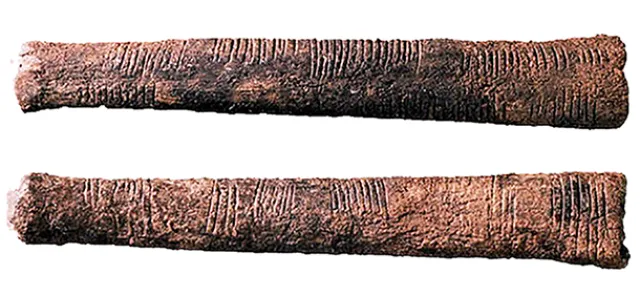
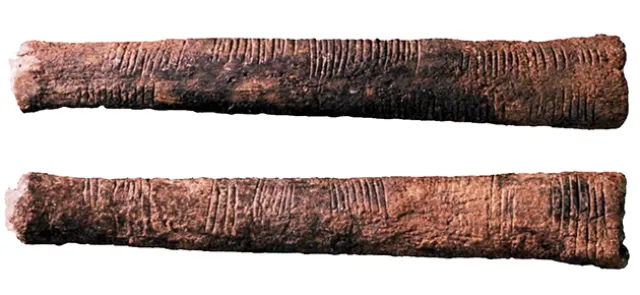
Ishango bones finally deciphered | Tangente
The earliest mathematical object is more than twenty thousand years old. It was discovered by chance in the heart of Africa by a Belgian geologist. Its interpretation remains a matter of debate to this day.
Mary Everest Boole, a surprising educator
Mary Everest did much to advance mathematics education. Among her innovations were the thread boards she used to make curves tangible.

In logic and combinatorics
In mathematical and logical puzzles, often inspired by observations of everyday life, polynomials can crop up in surprising ways. Geometry, binary logic and algorithms, peg games, combinatorics… no field is immune!

Polynomials that make a difference | Tangente
A polynomial can be evaluated without any multiplication, using addition alone. Charles Babbage based his famous "Difference Engine" on this remarkable property.
When numbers awoke to wonder
Ancient peoples used numbers for purely practical purposes: to count and enumerate. Five centuries before the Common Era, after travelling the world, a Greek scholar named Pythagoras returned certain that the original order of the World was Number, thereby turning it into a philosophical concept.
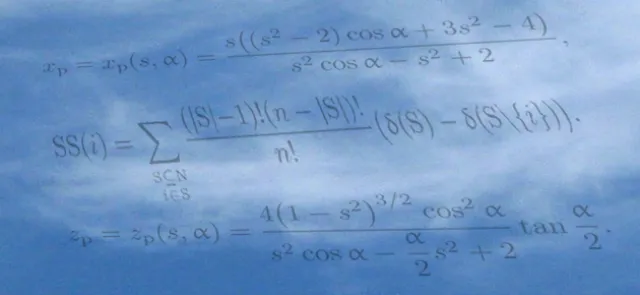
Words and mathematics | Tangente
Symbols and formulas emerged only gradually from mathematics that was initially expressed entirely in words. Ever since, the relationship between formalism and ordinary language has continued to fascinate.
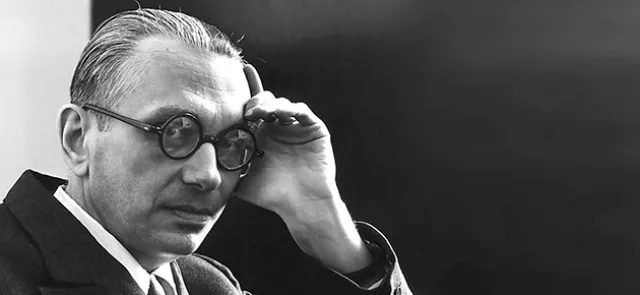
Gödel's incompleteness theorems
In mathematics, although there are many conjectures and hypotheses, it is generally assumed that any well-formed statement must have either a proof or a refutation. Kurt Gödel showed that this is not so. His proof uses self-reference.