



Amazing Math
Surprising or counterintuitive mathematical results and proofs
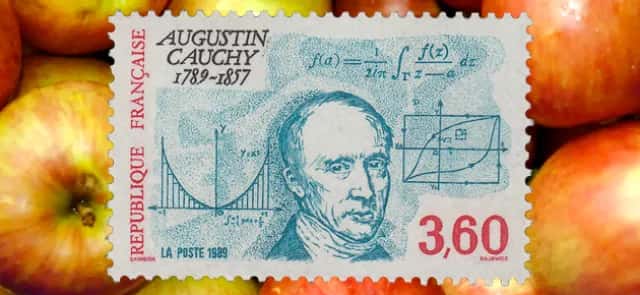
Cauchy, a forgotten pioneer
Because Augustin-Louis Cauchy did not take a direct interest in solving algebraic equations, he is an overlooked figure in the history of group theory. Yet his research on permutations provided valuable tools for those who worked on Galois theory.

Proving without saying a word
No drawing or diagram can ever replace a "proper" proof, but both can help make a proof self-evident. In this respect, proofs without words, so beloved of mathematicians, are a fine exercise in style. Some have become classics of the genre.

2022 from every angle
Once again this year, the Tangente team has shown ingenuity in uncovering hidden properties of 2022…

Workshop of potential tragicomedy | Tangente
The Workshop of Potential Tragicomedy (Outrapo) is to theater what Oulipo is to literature.

Surprising shapes in space
As in the plane, many balls associated with different norms can be defined in space. They include polyhedra, some regular and others more surprising. You can thus make a delightful festive collection of baubles to match your next Christmas tree!

Surprising distances: Manhattan and Chebyshev | Tangente
The Euclidean distance in the plane is the one everyone knows: it tells us that the shortest path between two points is a straight line. But there are many others, often rather unusual. Some are downright surprising…

So far, so near…
What is the distance between Paris and Rome? Faced with this question, one may legitimately wonder whether this means "as the crow flies," "by train," "by car," or "in the Euclidean sense." Ultrametric distances even reveal a world in which every triangle is isosceles.

Berlekamp problem: a strategy game | Tangente
The idea of distance has applications in some unexpected fields. A playful example is the Berlekamp problem, in which Hamming distance makes an appearance—and proves particularly effective!

Marc-Antoine Mathieu: comics and dimensions | Tangente
Julius Corentin Acquefacques, prisoner of dreams, is perhaps the comic-book hero most often drawn into the world of mathematical ideas. Let's venture into the extraordinary world of his creator, Marc-Antoine Mathieu.

Donald in Mathmagic Land: finally in comic-book form | Tangente
Donald in Mathmagic Land (Hamilton Luske, 1959) is a 27-minute short film produced by Walt Disney Studios.

The n-queens problem
Did you enjoy "The Queen's Gambit"? Then you should like this problem.

An architect's dream?
The golden ratio, as everyone knows, crops up everywhere in art... provided, that is, you are determined to find it and willing to overlook (!) a few approximations or anachronistic units of measurement. Let's trace the writings that linked it to architecture and brought it to public attention.
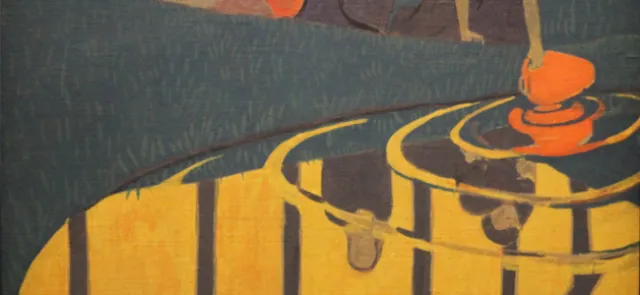
Golden ratio in art: between myths and realities | Tangente
However you look at the paintings, it is hard to substantiate the idea that the golden ratio's presence in art gives a work some decisive aesthetic quality. Let's see where φ really lurks...

When mathematics meets comics | Tangente
Mathematics may not be the first thing that springs to mind for comic-book enthusiasts. Yet the two fields are far from as separate as one might think; when they come together, the results can be real gems.
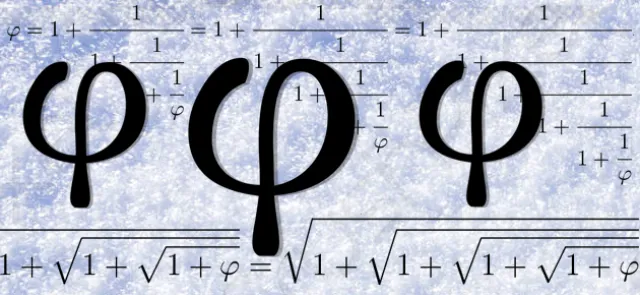
Remarkable mathematical properties
At first glance, the golden ratio, despite its mythical name, is nothing exceptional mathematically: it is simply the positive solution of a quadratic equation. Much ado about nothing? Let's see, then, what surprises it has in store.

Cryptology revisited
Groups were first used in cryptography in the 1920s and 1930s. The best-known example is the breaking of the Enigma machine. In the 1970s, groups opened the way to new encryption methods, including RSA and elliptic-curve cryptography.

The Klein group and its many guises
When we first start working with groups, we patiently draw up the tables for those with only a few elements. A one-element group consists solely of the identity element and is therefore unique. Similarly, groups with two or three elements are unambiguously determined. The surprises begin with four elements...
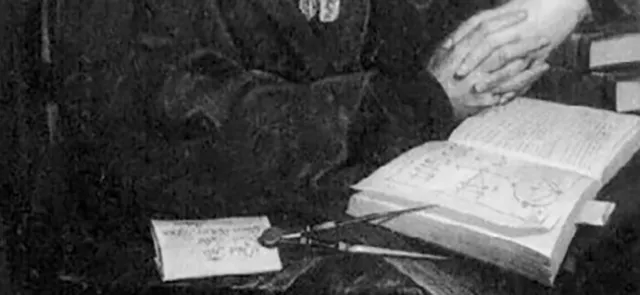
Early formalizations
Évariste Galois's tragic death lent an epic quality to the introduction of the group concept in mathematics. What followed is less familiar but fascinating, culminating in brilliant theorems that are still taught today. Sixty years later, the notion of a group was finally established.

The classification of finite simple groups
Are finite groups simple? Not so fast: although the classification of finite simple groups began more than a century ago, a complete proof is still being written! Work on this proof began in the late 1980s and should be completed in 2025. But the task is daunting…

Quotient structures
A detailed analysis of the internal structure of finite groups is a formidable challenge. What can be said about an arbitrary group? The idea is to look within G for subgroups from which the whole of G can be reconstructed. Quotient structures are an unfailingly effective tool for this purpose.