



Curiosity
Patterns, crafts, magic squares and fun mathematical content not part of the school curriculum

Gödel's incompleteness theorems
In mathematics, although there are many conjectures and hypotheses, it is generally assumed that any well-formed statement must have either a proof or a refutation. Kurt Gödel showed that this is not so. His proof uses self-reference.

Welcome to 2020! | Tangente
As usual, the new year inspired the Tangente team and their friends, who all vied with one another to tease out the number 2020's astonishing properties.
When works speak for themselves | Tangente
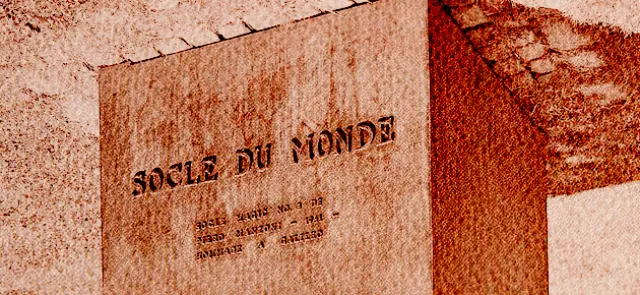
Advertising regularly makes use of it, as do graphic designers and artists. Self-reference has become a genre in its own right, appealing not only to our eyes but to all our senses! Let's take a wild tour of this seemingly limitless creativity.
Discontinuities and series of functions
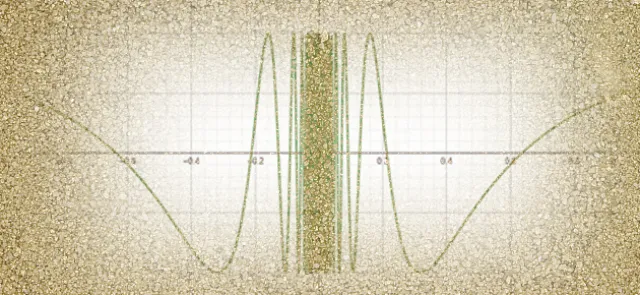
The introduction of series of functions, followed by theorems establishing when continuity or differentiability is preserved in the limit, made it possible to construct objects with unusual, counterintuitive properties. Some famous mathematicians had tremendous fun with them!

Discontinuities of all kinds
They have been called "pathological"; Henri Poincaré spoke of "monsters," accusing them of being "strange functions that strive to resemble as little as possible the respectable functions that serve some purpose." Yet some discontinuous functions have left their mark on history.

Blockchain in all its mathematical forms | Tangente
Blockchain technology is among the technologies to watch in the years ahead, as it could revolutionize several sectors of the economy. It draws on recent mathematical developments through increasingly sophisticated processes.
Mathematics: research–industry partnerships | Tangente
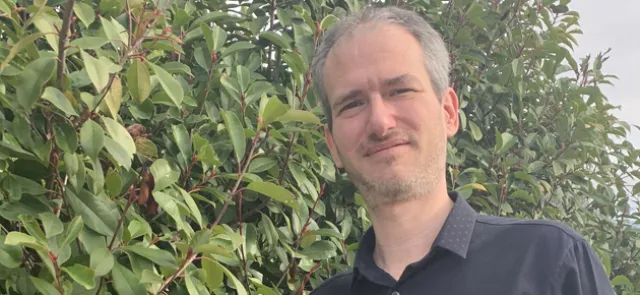
Since September 2019, Frédéric Bertrand has been a professor at the Université de Technologie de Troyes, specializing in modeling and statistical decision-making. Previously an associate professor at the Institut de recherche en mathématique avancée at the Université de Strasbourg, he is actively involved in research while forging close ties with businesses.

Year of Mathematics guide | Tangente
The Institut national des sciences mathématiques et de leurs interactions (INSMI) and the ministère de l'Éducation nationale joined forces to propose that 2020 be designated the Year of Mathematics.

A maths special issue for everyone | Tangente
When a general-interest weekly such as Le Point publishes a special issue devoted entirely to mathematics, the Tangente editorial team can only be pleased—particularly because it addresses issues and values close to our hearts, as the titles of its three sections show: "Maths for everyone", "Maths are everywhere" and "Practical maths".

Michel Serres: scientist and philosopher | Tangente
Did Michel Serres, who moved from mathematics to philosophy, truly leave the "queen of the sciences" behind? Throughout his career, at any rate, he never missed an opportunity to refer to the subject. Explore the mathematical landscape of this unconventional philosopher.

Is the Palais de la découverte in danger? | Tangente
When it opened in 1937, the Palais de la découverte aimed to "bring science out of the labs" and show "science in the making," with the aim of turning visitors into budding researchers.
Jeanne Calment: the mathematics of longevity | Tangente
Jeanne Calment of France, who died in 1997 at the exceptional age of 122, long held the title of the world's oldest person. In January, Nicolaï Zak, a Russian mathematician with an interest in genealogy, and gerontologist Valeri Novosselov claimed that Jeanne had in fact died back in 1934 and been "replaced" by her daughter Yvonne… because of an inheritance-tax matter.

Court and maths: an unprecedented ruling | Tangente
Readers of Tangente 189 (page 5) will no doubt remember Valentin Desgranges, the 19-year-old from Toulouse who submitted a sensible mathematical answer to an online competition run by a major retail chain (Auchan).
The audioactive sequence
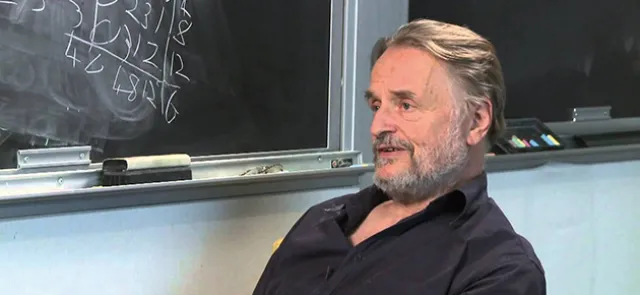
Self-describing sequences are fairly well known among mathematics enthusiasts, but their history often is not. Even less familiar, no doubt, is the work of the man who helped bring them into the mathematical mainstream: John Conway, who devoted his life to having fun with mathematics.

Self-referential word games | Tangente
Words, too, are fertile ground for self-referential curiosities. Here are a few.

Divide and conquer: divisibility tests in action | Tangente
Many arithmetic problems can be solved using standard methods, whether elementary or advanced. But some puzzles call for a basic concept—divisibility—and a little ingenuity.

Magical divisibility tests: maths and conjuring | Tangente
The mathemagician sometimes uses divisibility to dazzle the audience. Before turning to the solutions, try to work out for yourself the mathematics behind the tricks that follow. Amaze your friends with magic while doing mathematics!

Tangente Awards 2019 winners | Tangente
The 2019 Tangente Awards were presented on Saturday, November 30, at the Palais du Luxembourg. As usual, they honored outstanding books and projects involving mathematics.
Playing with self-referential numbers | Tangente
Can the digits of a number, or the terms of a number sequence, themselves tell readers about their positions or properties? With a few ingenious constructions, they can!

Become an Éditions PÔLE ambassador | Tangente
Founded 30 years ago, POLE publishes Tangente magazine, along with books on mathematical culture and intelligent games. Although it is financially sound, it must evolve to adapt to today's environment. What if you helped us achieve this goal by becoming one of our ambassadors?