



Curiosity
Patterns, crafts, magic squares and fun mathematical content not part of the school curriculum
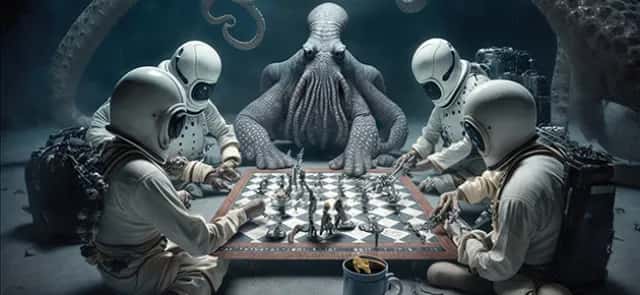
Wittgenstein and the philosophy of mathematics | Tangente
The relationship between language and reality lies at the heart of Wittgenstein's thought. The issue takes on its full significance when it comes to mathematical entities. What if philosophers speculating about the rigorous logical foundations of these abstractions were on the wrong track?
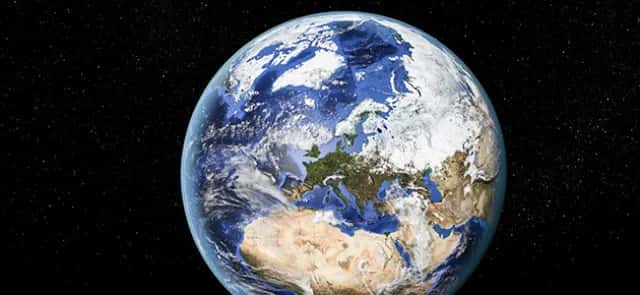
Stereographic projection
Since 2021, the Bourse de commerce in Paris has been open to the public, showcasing contemporary art from the Pinault Collection. Its superbly renovated interior offers mathematicians an opportunity to explore… stereographic projections!
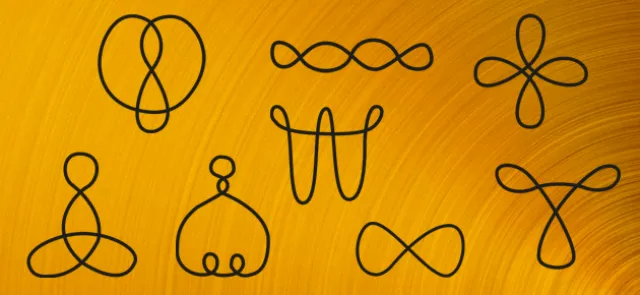
Identifying knots with Gauss codes | Tangente
A visual encoding introduced by Gauss to make knots easier to recognize and manipulate leads to surprising developments in combinatorics, algebra and topology. Armed with paper, pencil and a few pieces of string, let's explore this world.

Classifying knots: topology and invariants | Tangente
Knots can be combined to form new ones—or, conversely, simplified. We can borrow the vocabulary of number theory and classify them rather like the chemical elements. What varied and unexpected facets knot theory has!
Catalan's problem
In 1844, Franco-Belgian mathematician Eugène Catalan published his famous conjecture in Crelle's Journal.
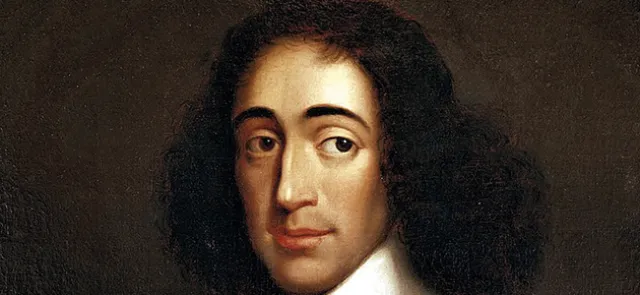
Spinoza and mathematical order in philosophy | Tangente
The Dutch philosopher Baruch Spinoza drew inspiration from mathematicians’ methods of inquiry and exposition in his "search for truth." Otherwise, he maintained, we prove nothing, merely supporting preconceived theses with plausible arguments.
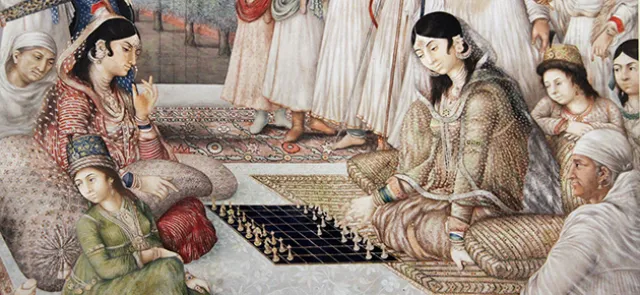
From Sissa to RSA
What use is there in raising numbers to powers, except for the fun of uncovering some arithmetical property of the natural numbers? Unexpectedly, this ancient computational art lies at the heart of modern cryptography and secure data transmission.
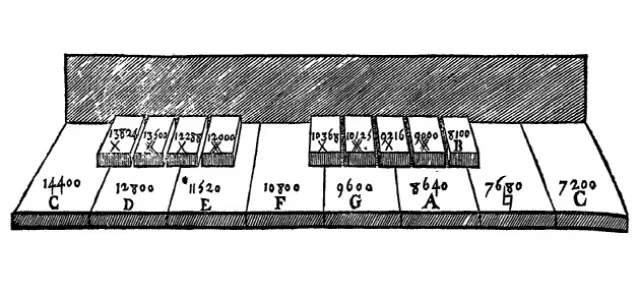
Writing a treatise on sound at the age of 11 | Tangente
The links between music and mathematics are well established. There was a time when it was not unusual for the most learned minds to pursue both with equal delight. Pascal, too, is said to have explored questions relating to sound, further evidence of his astonishing precocity.
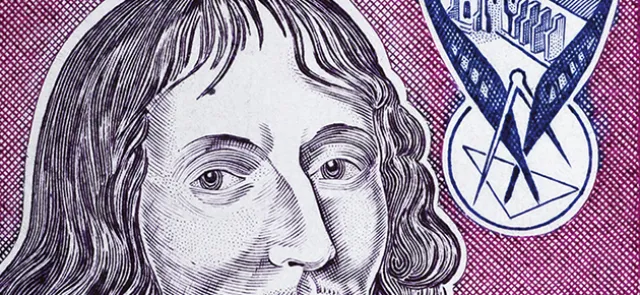
A master of mathematical induction
Mathematical induction is a major tool in mathematical proofs. On at least three occasions, Pascal explicitly uses reasoning that is "almost" mathematical induction, making him one of the method's inventors.
A prize for mathematics theses | Tangente
The prize awarded by Clermont Auvergne University's Blaise-Pascal Laboratory honors a thesis in pure or applied mathematics.
Sidon sets
Number theory is a branch of mathematics that still contains questions that are easy to state yet remain unsolved. Sidon sets, in which the differences between pairs of terms are all distinct, are a case in point.
Happy New Year! The properties of 2023
As is now customary, the Tangente team explores the properties of the year number in our Gregorian calendar. What can we say about 2023? We will examine it in particular through the Josephus sieve.
2022 Tangente Awards ceremony | Tangente
One of the events scheduled at the Musée des arts et métiers on 4 December was the 2022 Tangente Awards ceremony, held in the lecture hall from 4 to 6 p.m. Here is our report.

The barber was a woman
The barber paradox is said to be just the thing for dazzling people at parties. Although it serves an educational purpose by illustrating one of the most fundamental results in set theory, taken out of context it may well backfire on you!
A passion for Goldbach's conjecture | Tangente
In set theory, which Cantor founded, intuition has little place. Yet his approach to open mathematical problems relied more on intuition than on rigorous reasoning. His interest in Goldbach's conjecture is a case in point.
Cantor−Bernstein:
Georg Cantor left his mark on the history of mathematics through his study of infinite sets. The Cantor–Bernstein theorem shows how a few results that are obvious for finite sets generalize to infinite sets… provided one takes a serious look at the question.
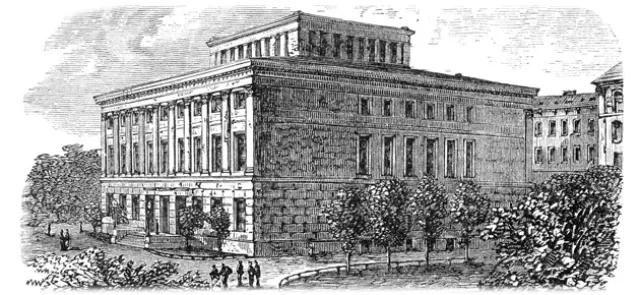
A journey into infinity | Tangente
While many mathematicians toiled in the footsteps of their predecessors, Cantor opened up an entirely new field that many of his colleagues refused to enter. This journey through the different infinities proved to be both fascinating and fruitful.
Yitang Zhang's long, solitary quest | Tangente
Born in China in 1955, Yitang Zhang developed an interest in mathematics at an early age: at the age of 10, he discovered prime numbers and the puzzle of Fermat's Last Theorem. But during the Cultural Revolution, he was sent to work in the countryside with his mother and was unable to continue his studies.
The factorization of large integers:
The most widespread cryptography system relies on the use of very large integers, whose factorization remains beyond the reach of our computers. As early as the 17th century, Mersenne and Fermat were investigating the prime factorization of very large numbers; their work inspired modern factorization algorithms.
Blackjack: fluctuating probabilities | Tangente
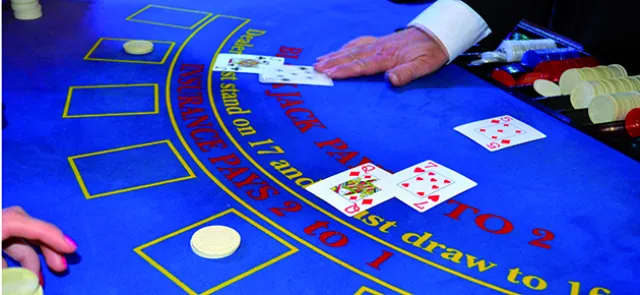
Mathematicians have been studying blackjack since the postwar years. They discovered ways to improve players’ performance by applying probabilities both statically (basic strategy) and dynamically (card counting). But casinos changed the rules to protect themselves.