



Curiosity
Patterns, crafts, magic squares and fun mathematical content not part of the school curriculum
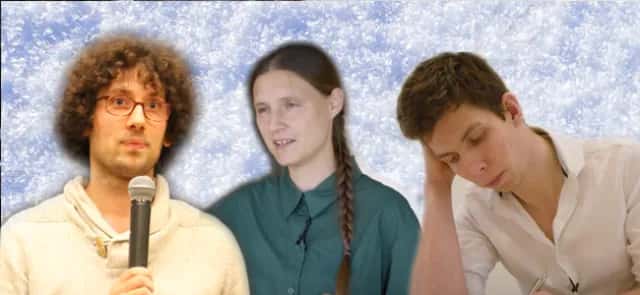
2022 Fields Medals: some lovely surprises
The Fields Medals, awarded every four years, were announced in early July! France can take pride in a new triumph with Hugo Duminil-Copin. For the second time, a woman, Maryna Viazovska, has been honored. British mathematician James Maynard and American–South Korean June Huh round out this year's medalists.
The projective geometry behind the Dobble game | Tangente
You would never guess it while playing Dobble: combinatorics, projective geometry and modular arithmetic can offer a new approach to constructing the game's various variants.

Tangente Awards 2022: take part | Tangente
As usual, the Club Tangente is delighted to invite you to take part in several awards. Whether or not you read Tangente, there is bound to be a category that sparks your interest.
A delightful conjecture by Paul Erdős…
The convergence of certain series is a classic topic in analysis (see Suites et Séries, Bibliothèque Tangente 41, 2011). For example, it is fairly easy to prove that the harmonic series—the sum of the reciprocals of the positive integers—diverges.
Why do clocks turn clockwise? | Tangente
Clock hands turn clockwise, rather than counterclockwise. Why?
The etymology and history of orientation | Tangente
Do you know where the words "orientation" and "orient" come from?
Tales of roots
The roots of unity form an abelian group. A quick refresher...
Two geniuses, two approaches
Two methods are known for proving that the general quintic equation cannot be solved: Abel's method, presented in 1824 and refined in 1826, and Galois's method from 1829–1830. Galois theory is fairly well known, whereas Abel's ideas are less often discussed.
“An iconic figure!”
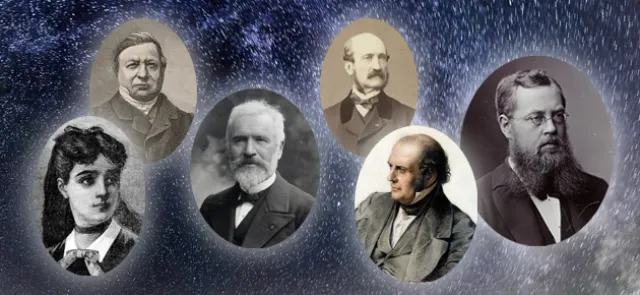
Historian of science Caroline Ehrhardt shares her expert perspective on the life of Évariste Galois with Tangente. She casts a keen eye over the legacy—both mathematical and symbolic—of this young prodigy, who became a true mathematical “icon” long after his death.
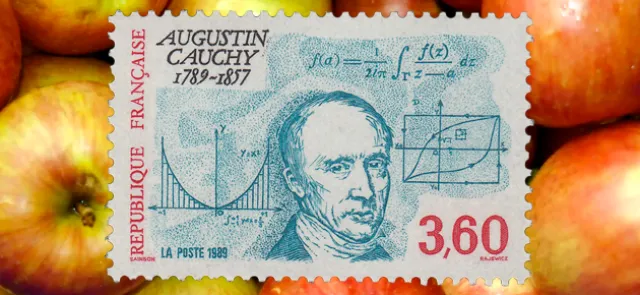
Cauchy, a forgotten pioneer
Because Augustin-Louis Cauchy did not take a direct interest in solving algebraic equations, he is an overlooked figure in the history of group theory. Yet his research on permutations provided valuable tools for those who worked on Galois theory.
Proving without saying a word
No drawing or diagram can ever replace a "proper" proof, but both can help make a proof self-evident. In this respect, proofs without words, so beloved of mathematicians, are a fine exercise in style. Some have become classics of the genre.
Voronoi cells | Tangente
How a London doctor used Voronoi diagrams to combat cholera.
Maths at home is good for the mind | Tangente
It is often assumed that differences in students’ academic success are explained by their parents’ level of education and ability to “help” them with their homework. New research supports other hypotheses.
2022 from every angle
Once again this year, the Tangente team has shown ingenuity in uncovering hidden properties of 2022…
A YouTube for maths | Tangente
Carmin.tv is the name of a brand-new, free online audiovisual platform devoted entirely to "mathematics and its interactions with other sciences".
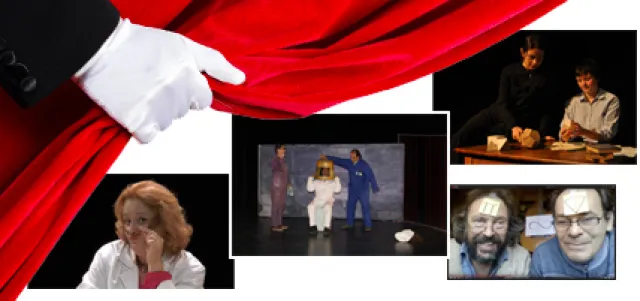
Dramatic twists! | Tangente
Mathematics and theatre—together? But to what end? What is at stake, what makes such a partnership work, and what does it require? The editors of Tangente put these questions to four enthusiasts who dared to take the plunge.
Workshop of potential tragicomedy | Tangente
The Workshop of Potential Tragicomedy (Outrapo) is to theater what Oulipo is to literature.
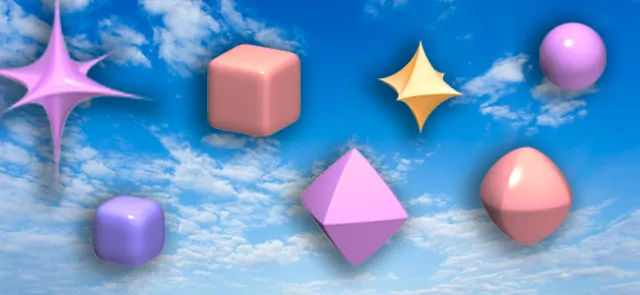
Surprising shapes in space
As in the plane, many balls associated with different norms can be defined in space. They include polyhedra, some regular and others more surprising. You can thus make a delightful festive collection of baubles to match your next Christmas tree!
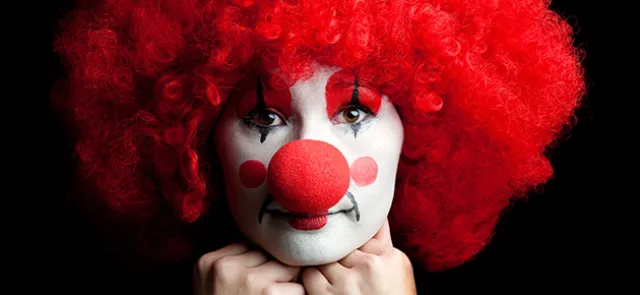
Maths on stage | Tangente
Over the past thirty years, forms of theatre have emerged that allow mathematics to be discussed, brought to life and shared. Artists and mathematicians, actors and directors alike have realised that there is a large and eager audience for such creations.
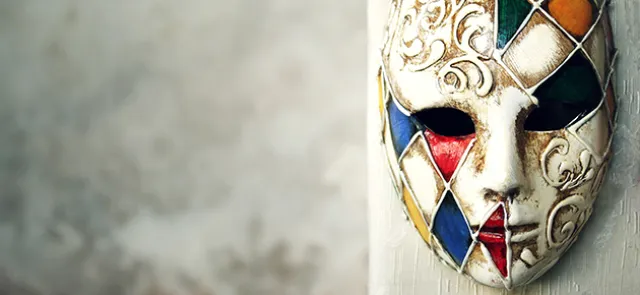
Revisiting the classics… | Tangente
Numerous shows with mathematical content are regularly created. But might there be mathematics in theatre itself? We can revisit the classics from a different perspective. Let's reread Molière, Marivaux and Ionesco.