



History and Culture
History of mathematics and cultural connections

The notion of paradox in mathematics | Tangente
The terms "paradox" and "paradoxical" are part of everyday language. In mathematics and logic, however, they have precise meanings that need to be clarified if we are to understand what we are talking about and what status to assign to so-called "paradoxical" results.
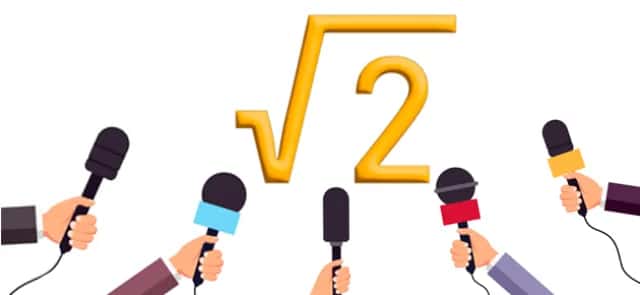
The first irrational numbers
The square root of 2 and the golden ratio are algebraic numbers that are relatively easy to define. Yet they have gone down in history as the first known irrational numbers, with perhaps, in the latter's case, a touch of the "divine."
The endless quest for decimal places
Visitors to the Palais de la découverte cannot help being fascinated by the sequence of π's decimal digits in the rotunda devoted to it. The digits seem to occur in no apparent order. Yet they are the result of a calculation!

By law, π = 3.2
Well, almost… because the bill did not pass!
New numbers with Richard Dedekind
The real numbers include the rational numbers—the quotients of two integers—and the irrational numbers, of which √2 and π are two well-known examples. This gives us one way of classifying the reals. But another classification is possible, based on numbers known as algebraic numbers.
Transcendental, you say? The history of a term | Tangente
In Latin, the verb transcendere combines trans, "beyond," with scandere, "to climb"; it therefore literally means "to climb beyond," "to cross" or "to surpass."
The story of e
At the beginning of the 17th century, Galileo's telescopes and Newton's theories sparked an explosion in observations of the heavens. New mathematical tools were devised to handle the associated calculations, which were astronomical in every sense. Euler's number emerged naturally from this work.
Liouville, Hermite and Lindemann: paving the way | Tangente
A tribute to the pioneers who blazed the trail for others to follow.

On the road to transcendence
Among irrational numbers, transcendental numbers are not roots of any polynomial equation with integer coefficients. They seem to transcend common sense, hence their name. Cantor showed that they make up the overwhelming majority of the real numbers, without identifying a single one!

It’s quite a story…
The constant π is everywhere in mathematics. It is undoubtedly the best-known irrational number—and even the best-known transcendental number. How is it defined geometrically, and why does it appear in every branch of mathematics?

Nash and penalty shootouts: maths article | Tangente
When a penalty is taken in football, the player wants to put the ball in the net; the goalkeeper has to stop him. Can mathematics help maximize the chances of scoring—or of saving that fateful shot? The affirmative answer illustrates the work of John Nash.

2024 Abel Prize awarded to French mathematician Michel Tal… | Tangente
The fifth French laureate to receive the Abel Prize, mathematics' equivalent of the Nobel Prize, Michel Talagrand was born in 1952 and spent his career at the CNRS, developing an early interest in random processes.
My thesis in Tangente
Geometric shapes can be associated with different pieces of music to shed light on their structure. This can be done by defining a distance between musical events using the discrete Fourier transform applied to the bars of a score.

Billiards and water-pouring problems
One facet of mathematical creativity is finding an original representation of a problem that makes it easy to solve. Thus, an elementary Diophantine equation can be solved by studying trajectories on a billiard table, turning billiards into an effective tool.
A historical example involving Fermat: article by m… | Tangente
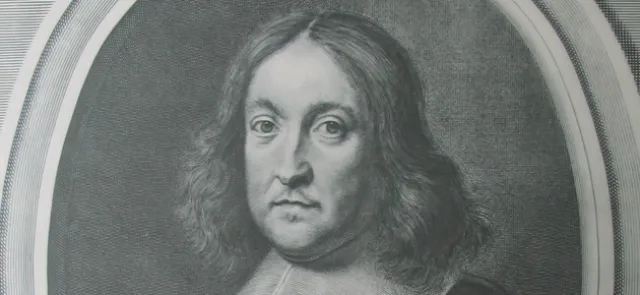
Through his marginal notes in Bachet's edition of Diophantus's books on arithmetic and through his correspondence, the mathematician Pierre de Fermat spurred the study of integers with new results and methods. He both transmitted ideas and drove the subject forward.
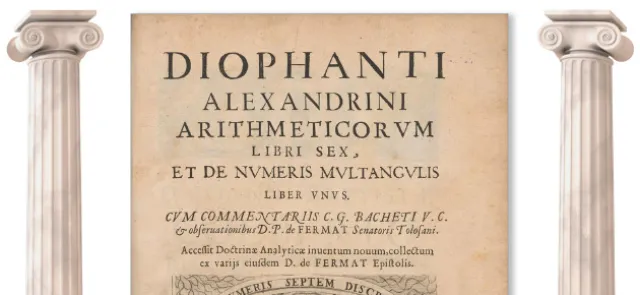
Diophantus of Alexandria, the unknown: article by… | Tangente
As noted on www.diophante.fr, which has just celebrated its 20th anniversary, the Greek mathematician Diophantus left us some remarkable works on arithmetic. A journey into history will reveal his extraordinary talent.
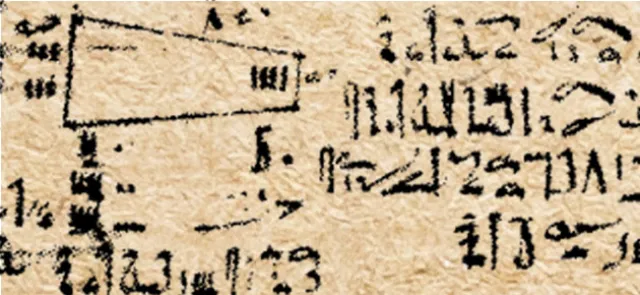
Integers: stars of equations: article by… | Tangente
In ancient Egypt, puzzles and problems were already being framed in terms of equations over the integers. Although the methods used to solve them have changed, the underlying question remains the same. These equations would go on to transform mathematics.

The weight of social inequalities in mathematics | Tangente
While gender inequalities in mathematics are now widely recognized, other forms of exclusion remain less studied: people from the working classes are also notably absent. This finding challenges the idea that mathematics is socially neutral and open to everyone, as it is often assumed to be.
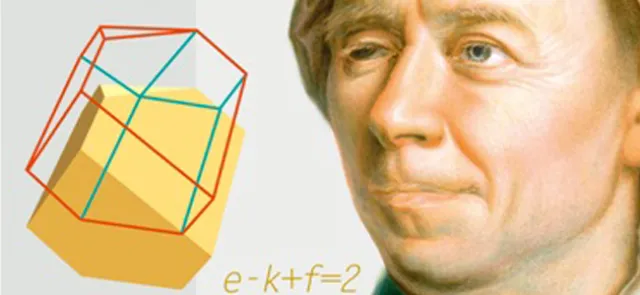
Geometric delights with Euler’s formula
Euler’s formula, a fundamental relation in mathematics, offers an opportunity to explore the properties of objects in three dimensions—and in higher dimensions as well. Along the way, we will encounter a classic of operations research: the simplex algorithm.
Geopolitics of fractions in 19th-century China | Tangente
Is mathematics really immune to human passions? The introduction of fractional notation in China shows that things can be more complicated, as national sentiment comes into conflict with the need for scientific development.