



History and Culture
History of mathematics and cultural connections

Fractions: word origins and history | Tangente
The word fraction seems to have appeared in its modern sense in 1549, in an arithmetic book published that year by the mathematician and Pléiade poet Jacques Peletier du Mans (1517–1582).
Descartes' way
How can fractions be handled geometrically? At the beginning of his most famous work, Descartes shows us how.

Old-time fraction puzzles to solve | Tangente
Thirds, quarters and other fractions have long provided the basis for puzzles in a wide range of settings. Here are three from centuries past.
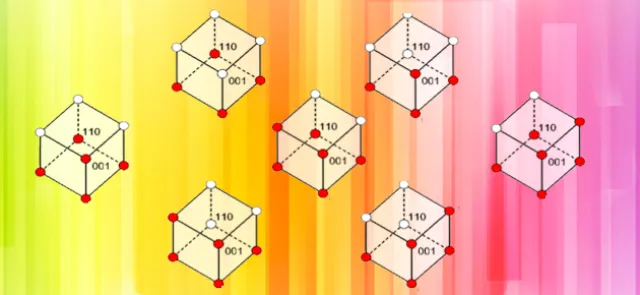
The ninth Dedekind number
Some well-known number sequences have thousands of terms, or even more, that can be calculated without the slightest difficulty. Others put up more resistance. Here is one whose ninth term mathematicians have only just managed to calculate!

Denominators without end
Continued fractions—stacks of fractions that never end—have been studied by some of the greatest mathematicians, including Euler and Lagrange, as well as Galois. Let's take a closer look at these fractions and their strange denominators.
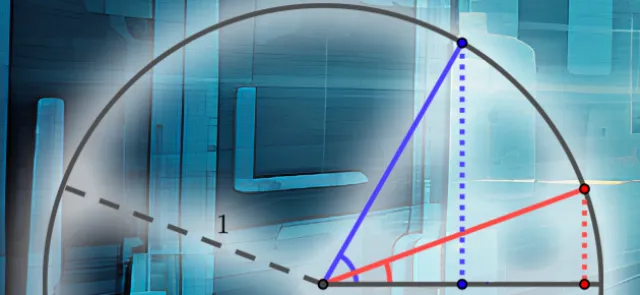
When fractions fail
Fractions cannot do everything! The existence of irrational numbers forces us to accept that the concept of number extends beyond quotients of two integers. The reward is a new world to explore, full of surprises.
The Egyptian way
Although the general concept of a fraction was absent from the mathematics of early antiquity, Egyptian scribes made extensive use of what we call unit fractions, or reciprocals of integers. Further developed by Fibonacci, this so-called "elementary" mathematics remains an active subject of research in number theory.

Gears
How can a ratio be approximated by a simpler one? Crucial to clockmakers and engineers, this problem can be solved with a healthy dose of arithmetic and algorithms dating back to antiquity.
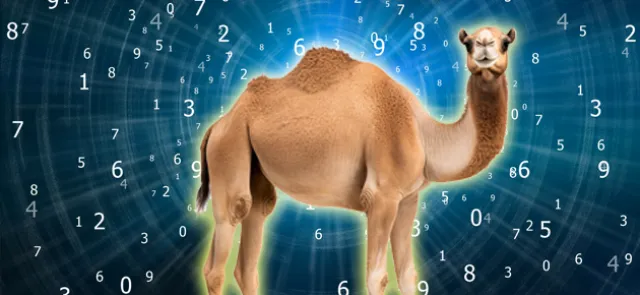
The case of the camels
Seventeen camels: an inheritance that seems impossible to divide? This slightly paradoxical Eastern puzzle has a mathematical answer.
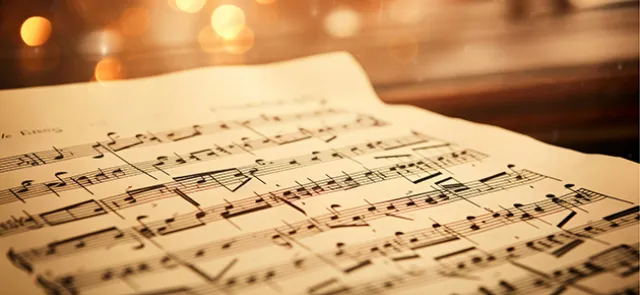
Fractions and music: when 3/4 is not equivalent to 6/8
Octaves, fifths, triplets… The rhythms and pitches of Western music were built on fractions.
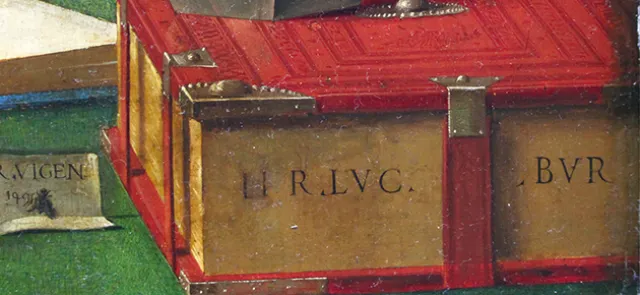
Multiplying with rods | Tangente
Before the advent of modern technology, techniques or tools had to be devised to perform the basic calculations required by craftspeople, engineers and everyone else! From John Napier to Édouard Lucas, mathematicians distinguished themselves in this pursuit.

2024: a new year with many properties
What spectacular mathematical advances, major scientific discoveries and gains in knowledge does the new year have in store for us? It is hard to say! What is certain is that the natural number 2024 abounds in wonderful arithmetic and combinatorial properties…
Tributes to a puzzle maker
This article brings together several puzzles, some created especially as a tribute to Gilles Cohen and his tireless work creating puzzles.
Mathematicians make progress on coloring
Coloring problems are often very simple to state and may appeal to many amateur mathematicians. Unfortunately—or perhaps fortunately?—they conceal deep difficulties that continue to tax the mathematical community. A new breakthrough was made recently.
A form of harmony between geometry and arithmetic
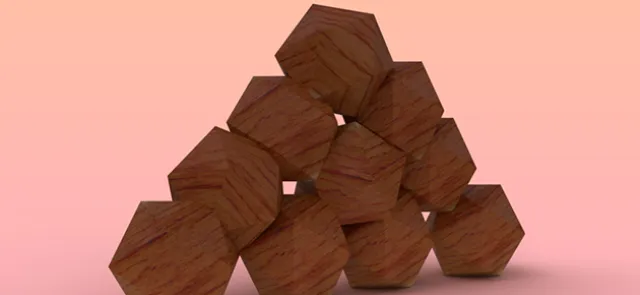
Many mathematicians have taken an interest in figurate numbers. But their concerns have not always been the same! In ancient times, people sought to construct and represent numbers using counters. The resulting shapes illustrate a host of arithmetic relationships.

An inventory of arithmetic puzzles | Tangente
Figurate numbers, which provide a visual representation of integers, form a wonderful bridge between geometry and arithmetic. Some properties in either field can be reformulated in the other, and vice versa! New questions naturally arise…
A new life for figurate numbers
Figurate numbers entered Arabic mathematics through Thabit ibn Qurra’s translation of the work of the mathematician and philosopher Nicomachus of Gerasa. Thabit’s name is associated with Thebit numbers (the "e" replacing the "a" in medieval Latin transcription).
2023 Tangente Awards winners | Tangente
Since 2010, the Tangente Club has used the Tangente Awards to honor creative works that showcase mathematics. The winners receive a work of art. The awards ceremony took place at the Musée des Arts et Métiers in Paris on December 3, 2023, during Tangente Day.

Gilles Cohen, Tangente founder and director, dies

Solar System stability: Laplace and Newton | Tangente
Laplace set out his model for the creation of the Solar System in his Exposition du système du monde, several successive editions of which appeared between 1796 and 1824.