



History and Culture
History of mathematics and cultural connections
 Podcast
Erdős's language: expressions and humor | Tangente
One of Erdős's quirks was his highly distinctive vocabulary, which offers a humorous glimpse of how he viewed those around him.
 Podcast
Editorial: Paul Erdős, catalyst of mathematics | Tangente
Paul Erdős posed or solved hundreds of problems in almost every field. He was nicknamed "the prince of problem solvers and the absolute monarch of problem posers" by Ernst Straus, one of his colleagues.
 Podcast
Mathemagical interview with Yves Meret | Tangente
Yves Meret teaches mathematics at Lycée Blaise Pascal in Rouen, but he is also a magician. Here he tells us how he lives out these two passions, which he has turned into his profession.
 Podcast
Elizebeth Smith Friedman, cryptanalyst | Tangente
In 2008, declassified archives revealed the crucial role of a figure who had long remained in the shadows: Elizebeth Smith Friedman. A talented cryptanalyst, she helped change the course of the world wars and dismantle a powerful criminal network.
 Podcast
Maths on France Musique: a podcast | Tangente
Many mathematicians enjoy or play music, and the two disciplines have long been far more closely connected than we might imagine today.
 Podcast
Yvonne Choquet-Bruhat and relativity | Tangente
Yvonne Choquet-Bruhat, who died on 11 February 2025, is known as the first woman to become a member of the Académie des sciences. Dwelling on this fact risks overshadowing the importance of her work. Her colleague Piotr Chruściel takes us through her research, which is little known to the general public.

A tribute to Jacqueline Ferrand | Tangente
In November 2023, a room named after Jacqueline Ferrand opened in the mathematics and computer science library at ENS Ulm.
 Podcast
Rediscovered manuscripts… or not! | Tangente
In early February, Türkiye Today announced the discovery of lost manuscripts by Apollonius: Books V and VII, hitherto unknown and now rediscovered in an Arabic translation.
 Podcast
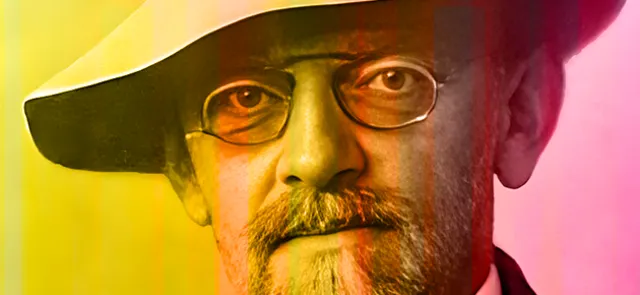
David Hilbert's overhaul of geometry | Tangente
Though Euclid's axiomatization remained in force for a long time, it was amid the ferment of the German academic world in the nineteenth century that mathematicians began to feel it needed to be rebuilt from the ground up. David Hilbert took on the task in 1899.
 Podcast
The origin of mathematical rationality | Tangente
Formalization originated in ancient Greece with the project of constructing a coherent mathematical edifice, of which Euclid is the foremost representative.
 Podcast
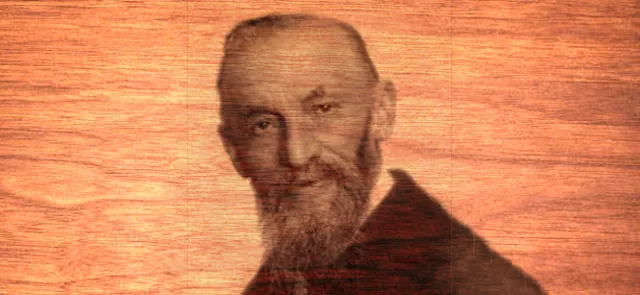
Giuseppe Peano and formalism | Tangente
The Italian mathematician Giuseppe Peano made major contributions to logical formalism by developing a symbolism for transcribing ordinary mathematical language. He also contributed to mathematical formalism by constructing systems of axioms for various fields.
 Podcast
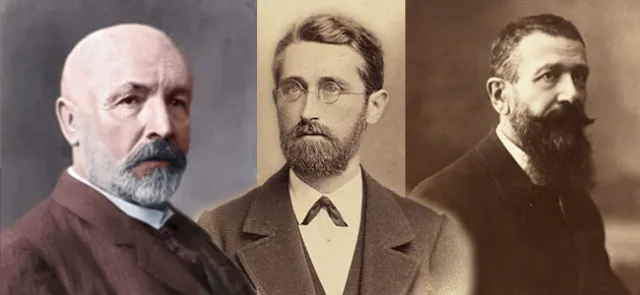
A panorama of set theory | Tangente
Work on the notion of infinity led to paradoxes. This forced mathematicians to formalize set theory. Progressive axiomatization led to the current ZFC system, which nonetheless remains subject to various shortcomings following the work of Kurt Gödel and Paul Cohen.
 Podcast
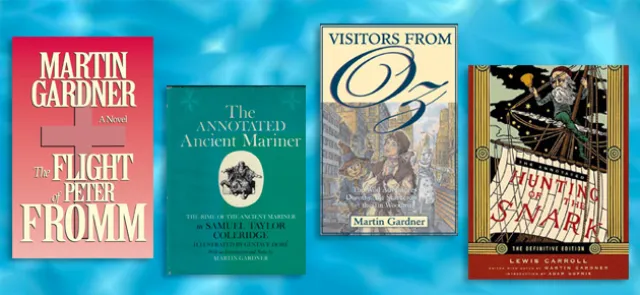
Martin Gardner's literary work | Tangente
Martin Gardner left behind, in literature and literary criticism, a rich, profoundly original body of work that, unfortunately, remains little known in its entirety. This article offers an overview.

Toward modern skepticism with Gardner | Tangente
Martin Gardner wrote extensively about science and its validity. He is thus recognized as one of the founders of modern skepticism, an important philosophy of science to bring to the fore in this age of post-truth.

Martin Gardner, mathematical influencer | Tangente
While it is true that Martin Gardner never took a mathematics course at university, he spent his life studying the subject through his work as a journalist, ultimately receiving numerous honors from the mathematical community.
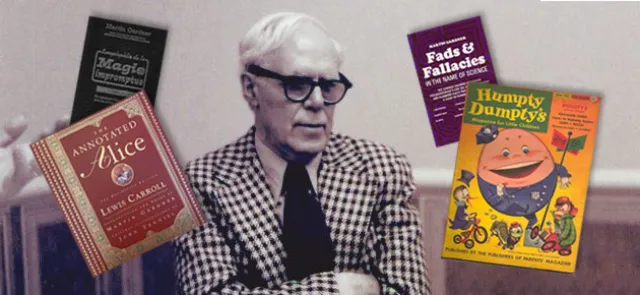
Martin Gardner: Itinerary of a genius | Tangente
Although he is known for his recreational mathematics and his work as a popularizer, Martin Gardner strangely never pursued a course of study in the discipline. Here are the surprising stages of his unusual path.

Al-Khwarizmi's lost manuscript | Tangente
Al-Khwārizmī is widely known as the father of algebra or as the scholar who introduced Indian numerals to the Arab world. Less well known is that the manuscript of his Livre de l’addition et de la soustraction d’après le calcul indien (Book of Addition and Subtraction According to Indian Arithmetic) is now lost.
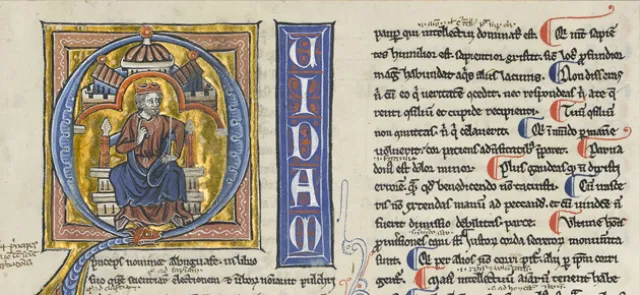
Gerard of Cremona, portrait of a translator | Tangente
The Latin translation movement of Arabic mathematical texts is marked by the towering figure of Gerard of Cremona. His monumental body of work brought a scientific revival to the Latin West.
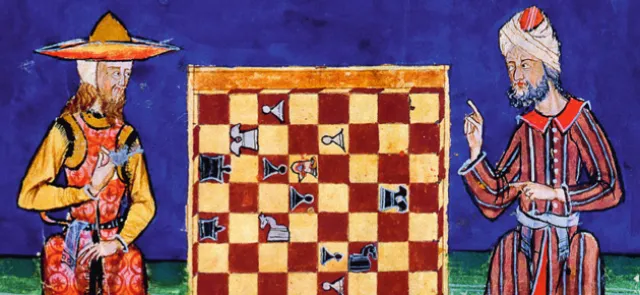
Arabic-Latin translations in the 12th century | Tangente
A movement that began in the twelfth century, the Latin translations and adaptations of Arabic mathematical texts were not merely a bridge between ancient Greek texts and the medieval West: they were also an opportunity to benefit from the formidable advances made by the Islamic world.
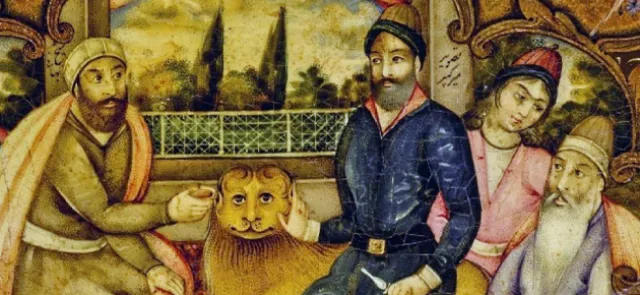
Arab mathematics after its golden age | Tangente
When we think of Arab mathematics, we think mainly of what was produced in the Middle Ages. Yet it continued to exist in later centuries. This sometimes meant the continuation of a tradition, but also translations into Arabic of texts written in European languages.