



History and Culture
History of mathematics and cultural connections

Thābit and the Pythagorean theorem
In Sur la preuve attribuée à Socrate au sujet du carré et de sa diagonale (On the Proof Attributed to Socrates Concerning the Square and Its Diagonal), Thābit ibn Qurra examines how squares can be dissected, taking as his starting point the famous example from Plato's Meno. This gives him an opportunity to present two proofs of the Pythagorean theorem and to generalize it.
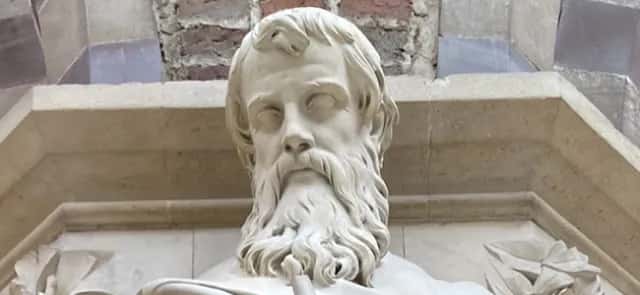
In search of Euclid's lost treatise On Divisions | Tangente
Several of Euclid's texts have been lost, including a treatise on the division of plane figures. Fortunately, the abundant commentaries and extensions written by Arab mathematicians have made it possible to investigate this lost manuscript.
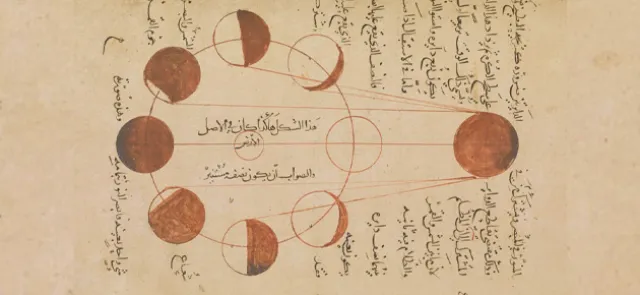
Al-Biruni reads Ptolemy: planetary distances | Tangente
Drawing on his extensive knowledge of the astronomy and mathematics of his time, al-Bīrūnī succeeded in making Ptolemy's highly complex method for calculating distances between the planets comprehensible. Devised in the 2nd century, it was a decisive step towards modern astronomy.
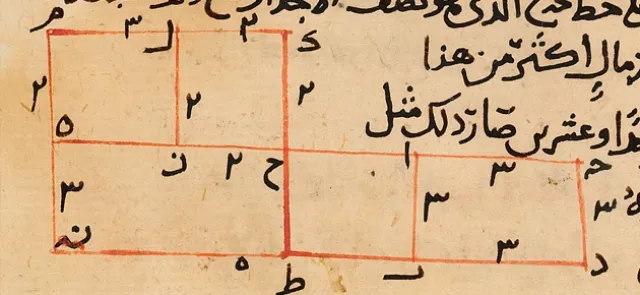
Al-Khwārizmī's geometry of equations
Quadratic equations have been solved by geometric methods, of varying degrees of sophistication, since Babylonian times. Similar methods appear in the works of Greek authors. But al-Khwārizmī was the first to set out a clear, general method.
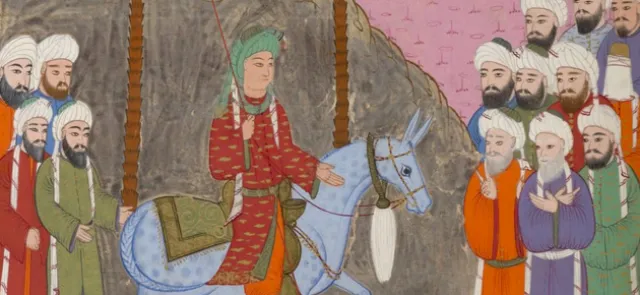
Recreational problems from the Arab-Islamic world
Mathematical recreations feature prominently in the Arab-Islamic tradition, yet they do not appear to have been collected in dedicated anthologies. Some examples, very well known in Europe, pose a real challenge to historians seeking to trace how they circulated.
Al-Zanjānī: teaching algebra in the 13th century
What we now group under the term "algebra" took time to develop into a discipline in its own right. Al-Zanjānī, the author of a 13th-century educational treatise, provides valuable evidence of the algebraic methods used in his day.
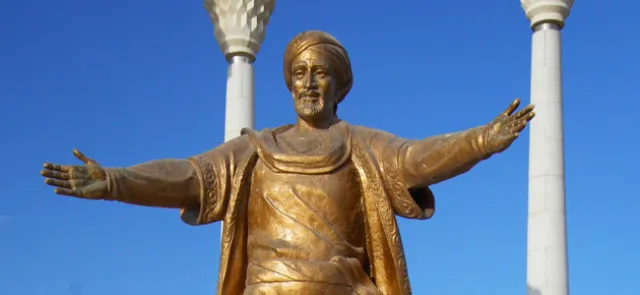
Dividing inheritances under Islamic law
Dividing an inheritance may seem like a mathematical question of little interest. Yet al-Khwarizm devoted a large part of his work to it because he saw it as an ideal playground for algebra.
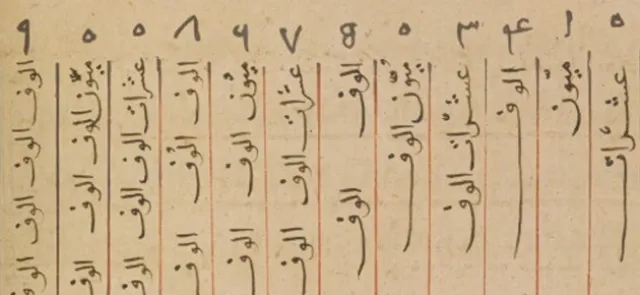
How Arabs wrote numbers in the Middle Ages | Tangente
Today, we use "Arabic numerals" to refer to what the Arabs themselves called "Indian numerals." Other numeral systems predated these numerals—the ancestors of our own—and even continued to coexist with them after their introduction.

Al-Khwarizmi's linguistic legacy: algebra and algorithm | Tangente
Al-Khwārizmī's works were translated into Latin and helped introduce the West to the Indian numeral system; more broadly, they contributed to the early development of algebra. Their legacy lives on in our vocabulary.

Far more than a link: The Arab legacy in Europe | Tangente
The Islamic world is often thought to have served merely as a repository for Greek manuscripts. In reality, many fundamental concepts in contemporary mathematics originated in works written from the ninth century onward in Arabic, then the language of scientific communication.
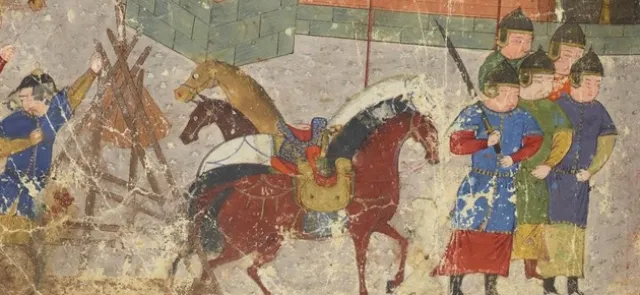
What is Arabic-Islamic mathematics? | Tangente
Arabic-Islamic mathematics developed against a fascinating historical and geopolitical backdrop, shaped in particular by the importance of the Abbasid dynasty, the role of the House of Wisdom, and diplomatic and intellectual ties with neighboring cultures.

Are numerals Arabic? Indian origin and spread | Tangente
What most people know of Arab-Islamic mathematics is, above all, the “Arabic numerals”… which are not Arabic at all!

Ahmed Djebbar, champion of the history of Arab science | Tangente
If the history of Arab science attracts interest today, it is largely thanks to Ahmed Djebbar, who not only made it his field of study but also did much to bring the subject to a wider audience.

The flat torus saga: a documentary | Tangente
Have you heard of smooth fractals? The story began in the early 1950s, when John Nash astonished everyone by proving that a square could be gently warped into a torus without folding, creasing, stretching or contracting it in ways that alter lengths.
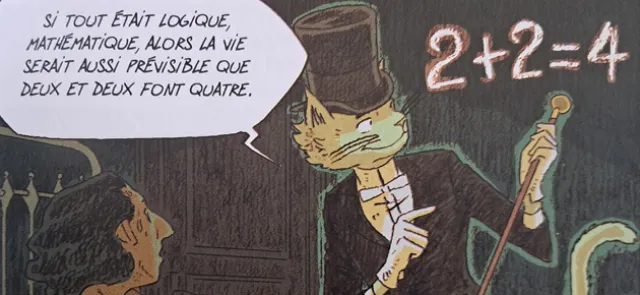
Cyril Bonin's universe: comics and mathematics | Tangente
Mathematics can hold a special place in an artist's thinking. Cyril Bonin explains how: he is the sole creator—writer, artist and colorist—of a distinctive body of graphic novels.
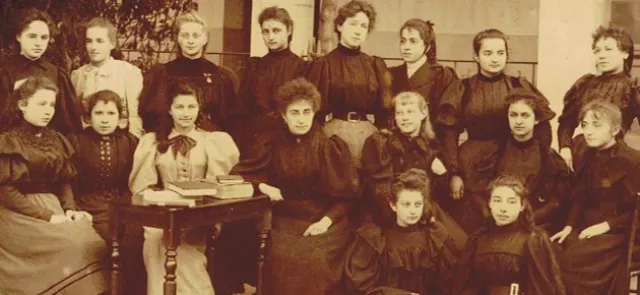
A century ago: equal access to the baccalauréat | Tangente
Exactly 100 years ago, girls' secondary schools were authorized to offer the same curriculum as boys' schools. Girls could now officially prepare for the baccalauréat there without having to take supplementary classes.

Maths-Vives: Mathematics takes on major challenges | Tangente
What role can mathematics play in tackling the societal challenges of today and tomorrow? The "Mathematics in Interaction" (Maths-Vives) research program aims to provide practical answers to this question.
Mathematics unleashed: passion and research | Tangente
As an amateur, where can you find topics to explore? How can you learn about a subject and keep abreast of the state of the art? Where can you meet people to exchange ideas with—or even find opportunities to publish? Here are a few pointers for anyone eager to take the plunge.

A centenarian devoted to magic squares | Tangente
After a busy career in public works engineering, during which he held various positions in Alsace, René Descombes (born in 1924!) has pursued his interest in magic squares since retiring.
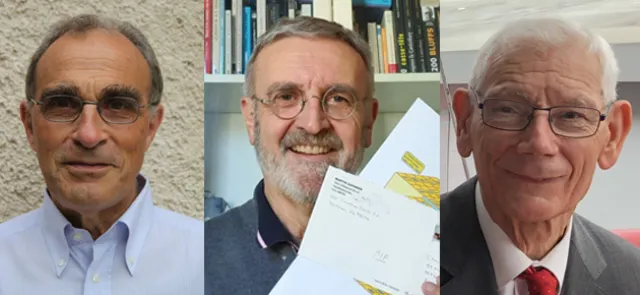
The joy of mathematical discovery: amateur mathematicians | Tangente
Christian Boyer, Vincent Thill, Jean Moreau de Saint-Martin and Philippe Fondanaiche—all passionate amateur mathematicians—agreed to answer our questions about how their interest in mathematics began and the activities they have developed in their favorite areas.