



Knowledge
In-depth articles on mathematical knowledge and theories

From derivatives to elasticity
It is often useful to study the relationships between different economic quantities. One such question is how the quantity demanded of a good depends on its unit price…

The poverty threshold
Most developed countries have policies to help the poorest members of society. This raises the question of what we mean by "poor." Should the definition be absolute or relative? Should it refer only to income, or should assets and place of residence also be taken into account?
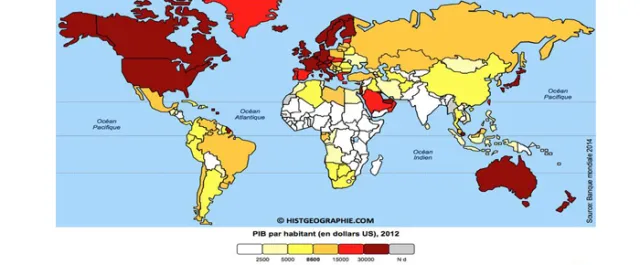
Understanding gross domestic product
There are many ways to measure a nation's wealth. Calculating gross domestic product is one of them, but other, complementary indicators are also used.

Optimization problems in mountainous terrain
Geometrically, optimizing a function of two variables means locating special points on its graph: the "highest" and "lowest" points. This search can be illustrated by exploring a… mountain landscape.
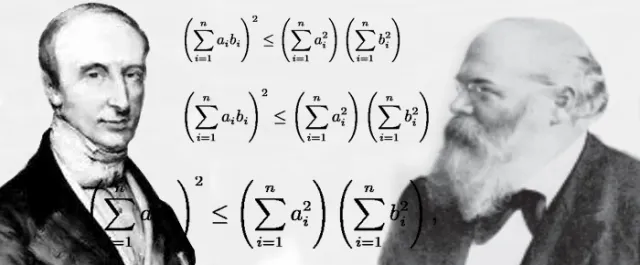
No derivatives required: optimization for everyone!
Optimization and differentiation are linked—but in both algebra and geometry, derivatives can sometimes be avoided. A few elementary algebraic examples will show us that quadratics are often subtler than they look…

An illustrious line of descendants
It all began with a football to which Euler's formula was applied. Why does the constant 2 appear on the right-hand side? To find out, we follow in the footsteps of Henri Poincaré, André Weil and… Alexander Grothendieck.
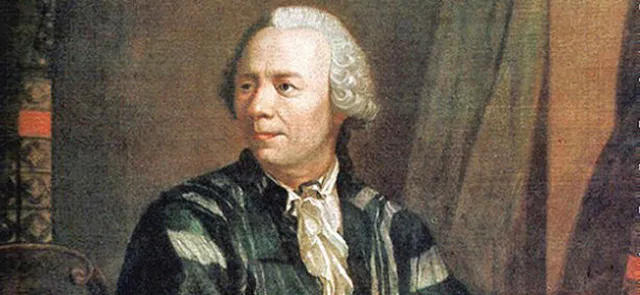
The pursuit of Euler's formula for polyhedra | Tangente
In a polyhedron, the number of vertices, S, plus the number of faces, F, equals the number of edges, A, plus 2. In other words, S + F = A + 2. For many mathematicians, Euler's formula is the most beautiful formula of all! Above all, it has had an eventful history, to say the least...

Formal languages and automata
What do a dictionary, a computer program and the DNA in our cells have in common? Language! A deterministic finite automaton is a useful practical tool for working with this concept. But the limitations of these abstract machines soon become apparent…
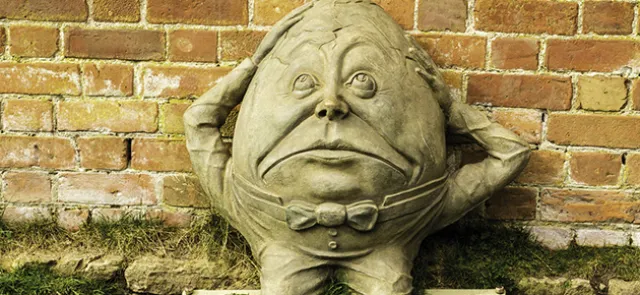
Meta-comprehension: an insidious effect in maths | Tangente
How do mathematicians choose names for new concepts? They draw inspiration from the world around them and from the mental images these new objects evoke. In the process, everyday words take on new meanings, sometimes causing confusion...
Speaking, seeing, comparing: Five historical texts
Mathematical writings contain words, but also signs, symbols and figures. Texts are therefore meant to be looked at as much as read, as works of geometry from antiquity to the present day attest.
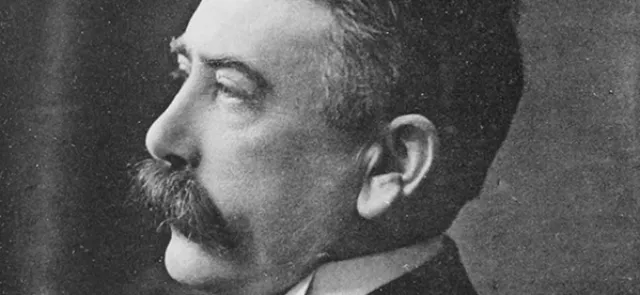
The structures of language
Inspired by formal logic, the study of language as a structure developed under the influence first of Saussure and then of Chomsky. Statistics, meanwhile, can be used to analyze texts and are an indispensable tool for machine translation.

A “little” theorem for major advances
Fermat's “little” theorem is surely one of the most fruitful results in arithmetic. Ever since it was first stated in 1640, mathematicians have made constant use of it. Euler even proposed a sweeping generalization. Let's take a closer look…
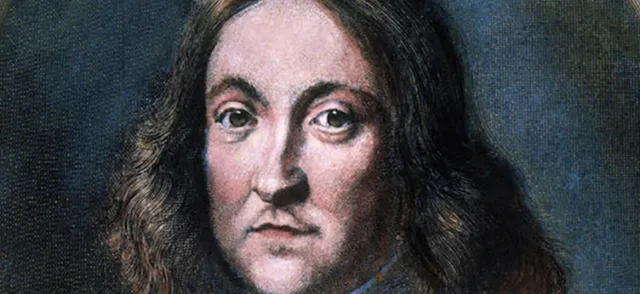
Fermat and his little theorem: history | Tangente
In the 17th century, Pierre de Fermat, though not a professional mathematician, was one of the pioneers of number theory. Less famous than his "last" theorem, whose proof has yielded more applications than the statement alone, his "little" theorem is immensely useful to us.
Recursion: to program is to prove!
Recursion may seem like an arcane method to the uninitiated, but it makes programs easier to prove correct, and therefore safer. The key principle is that, with recursion, to program is to prove! Sorting a deck of cards illustrates this perfectly…

RSA encryption explained by example | Tangente
RSA underpins the encryption of financial transactions.
Fermat's little theorem in practice | Tangente
Fermat's little theorem is used to test whether a number is prime. Here is how.
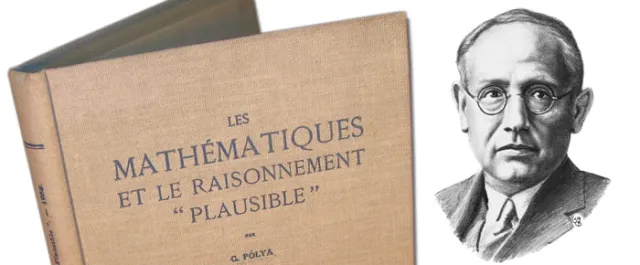
Psychological experiments in arithmetic
Like any other scientist, a mathematician makes use of experiments. But these do not necessarily resemble those conducted in other sciences: carried out mentally or on a sheet of paper, they are usually psychological in nature!
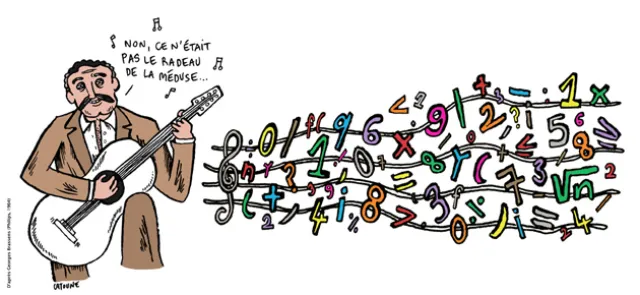
In search of friends
Integers never cease to fascinate us: divisibility raises some formidable questions, as several conjectures about perfect numbers attest. Here, experimenting with a computer is a valuable aid in the hunt for counterexamples.
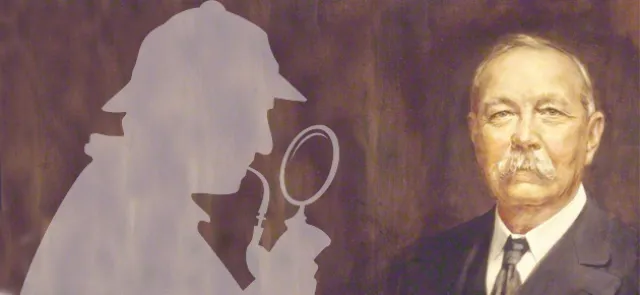
Deduction, induction, abduction: three forms of logic | Tangente
A host of tiny clues leads the detective Sherlock Holmes to formulate a theory, moving from the particular to the general. He is well aware that his method leads to the truth only if it is confirmed by the facts—that is, by observation!

Simulation and proof: two complementary approaches
Some problems involving chance are easier to solve by simulation... but a proof is always more convincing! Although simulation produces a result more quickly in practice, the value of a theoretical study lies in its generality.