



Math for everyone
Mathematical content accessible to everyone

Reasoning means solving
Reasoning means organizing your thoughts. Yes, but how? Are there methods for keeping our thoughts from descending into anarchy and confusion? Mathematics is, by its very nature, the discipline that has enabled us to answer these questions over the centuries. And it works!

Paris, the capital of mathematics competitions, 2018 | Tangente
Following the Kangaroo awards and the national Olympiad prize ceremony, and with the International Mathematical Games Championship final still to come in August, Paris hosted the International Tournament of Young Mathematicians in early July. This international mathematics research competition for high school students was first launched in the French capital in 2003.

Geometry of footballs: from icosahedron to cube | Tangente
Every World Cup has its own ball. But while the ball's colors and technical features take center stage, let's not forget the mathematics hidden within!

The withholding tax formula explained | Tangente
From 2019, French taxpayers will have tax withheld at source. Until then, taxes paid in any given year were based on income from the previous year.

Mickaël Launay wins D'Alembert Prize | Tangente
The awards are pouring in for Le Grand Roman des maths. The D'Alembert Prize, awarded by the French Mathematical Society, recognizes efforts to popularize mathematics.

Tim Gowers: Polymath, combinatorics, open science | Tangente
Sir William Timothy Gowers was born in England on 20 November 1963. A professor of mathematics at the University of Cambridge (Great Britain), he is one of today's leading mathematicians and has received several prestigious awards, including the Fields Medal in 1998.

Animals do math too! Polya and heuristics | Tangente
To solve mathematical problems, we can sometimes draw inspiration from the way certain animals solve theirs. You read that right! Chimpanzees and mice, for example, display remarkable ingenuity in reaching their favorite treat…

Elementary yet powerful: the pigeonhole principle
If your chest of drawers has two drawers and you put three items of clothing in them, at least two items—possibly all three—must end up in the same drawer. This seemingly trivial observation is actually the basis of a powerful reasoning tool!

Income tax and convex functions | Tangente
Tax due is a function of taxable income. What are its theoretical properties? Do the conclusions hold for the new property wealth tax? As it turns out, tax and derivatives make a fine pair!

A deep connection with determinism
Many physical and economic phenomena are described by differential equations. This implies, in particular, that the functions we seek are differentiable, but also that the phenomena concerned are locally deterministic.

Local to global: the carefree theorem | Tangente
When faced with an optimization problem, we seek an extremum of a function.

Differentiation in nonstandard analysis
In nonstandard analysis, the derivative is introduced without invoking the concept of a limit. The price is that we must use infinitesimals: nonzero numbers whose absolute value is less than every strictly positive real number!

The derivative in four stages: Fermat to Cauchy | Tangente
Mathematical concepts emerge gradually: they are often developed in several stages. The derivative is no exception. American historian Judith Victor Grabiner identifies four stages in its development.
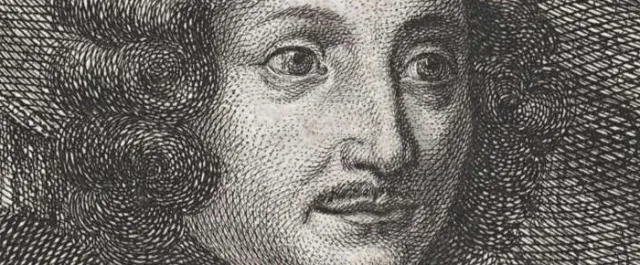
Sluse's algorithm: a forerunner of differential calculus | Tangente
Sluse, a 17th-century Belgian mathematician, devised an algorithm for systematically calculating the slope of the tangent to an implicitly defined algebraic curve. His work was a crucial step towards the discoveries of Newton and Leibniz.

Tangente Awards: Mathematical Literature Prizes | Tangente
As usual, summer brings mathematics and literature together—and computer science and games too—for the Tangente Awards. As Tangente readers, we hope you will get involved by taking part in these events, spreading the word and voting...
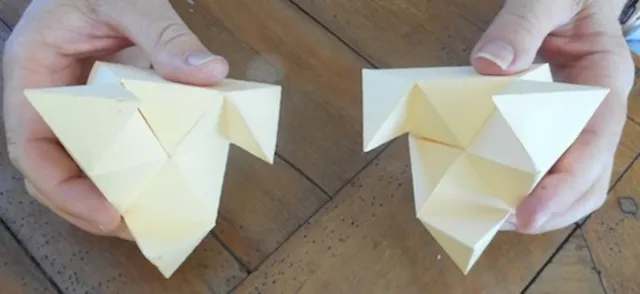
Build your mysterious crystal: patterns & assembly | Tangente
The Mysterious crystal—actually the first stellation of the rhombic dodecahedron—can be built from six identical pieces. Whether you use scissors, a cutting machine or a 3D printer, choose whichever method suits you. The hardest part is working out how to assemble them.
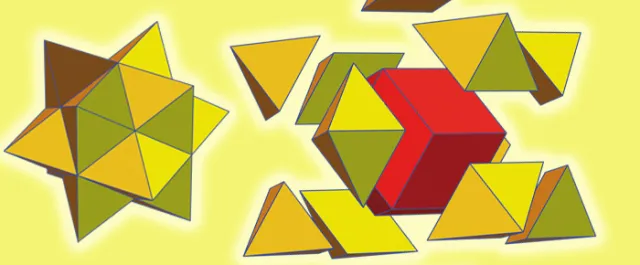
The mysterious crystal
For a change, beneath its polyhedral exterior, the subject of this instalment in our mathematical objects saga is a puzzle. You will find everything you need to build it on the Tangente website.

Forecasting the world's population | Tangente
There was much discussion in 2017 following a UN study: the world's population, currently at seven billion, will reach almost ten billion in 2050.

Pierre Samuel, the first scientifically minded environmentalist | Tangente
Pierre Samuel (1921–2009) was one of the greatest French mathematicians of the 20th century. He became deeply interested in environmental issues.

How SNCF fares are polluting France | Tangente
More and more travelers are wondering whether, in the end, driving might be cheaper.