



Math for everyone
Mathematical content accessible to everyone

Development, yes—but why...? | Tangente
The first criticisms of economic development based on the overexploitation of natural resources emerged in the late 1960s.
Sustainable development: an oxymoron? | Tangente
An oxymoron is a figure of speech that brings together two seemingly contradictory terms. Thus, in Le Cid (1637), Corneille coined the phrase “that dark radiance falling from the stars”
Mental arithmetic: tips, games and educational challenges
A mass-circulation weekly takes a look at mental arithmetic!
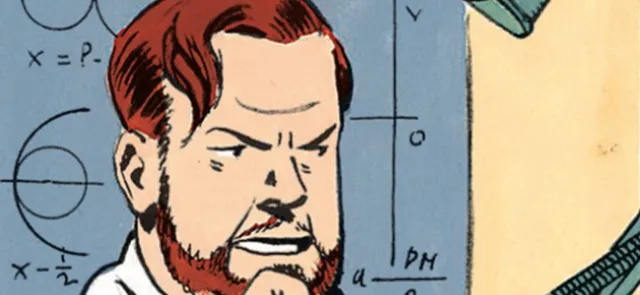
Blake and Mortimer: mathematics in the comics
Scientists are rare among comic-book heroes. Mathematicians are rarer still! One of the most famous scientists among them is Professor Philip Mortimer, from the "Blake and Mortimer" series. Let's examine his relationship with the queen of the sciences.
Joseph Bertrand's probability paradoxes
Joseph Louis François Bertrand (1822–1900) is known for his research in analysis. Less well known is the remarkable book on probability that he published in 1889 (see

Breaking the ADFGVX cipher in 1914–18
For the second phase of the German spring offensives of 1918, the Germans added the letter V to the ADFGX cipher. But Georges Painvin broke the new cipher within hours… paving the way for final victory. The new system, though apparently more sophisticated, was actually weaker!
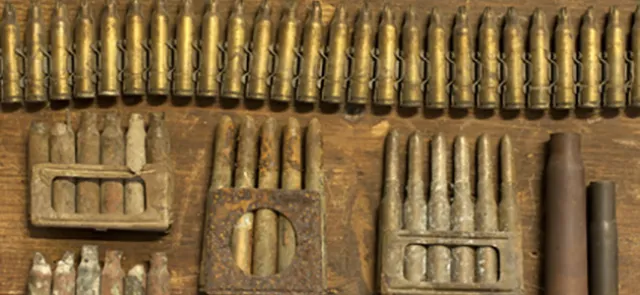
Artillery detection: trigonometry in World War I
During the Great War, artillery caused two-thirds of all casualties. Locating enemy batteries was therefore important so that counter-battery fire could silence them. Surprisingly, the search leads to an old geometry problem!
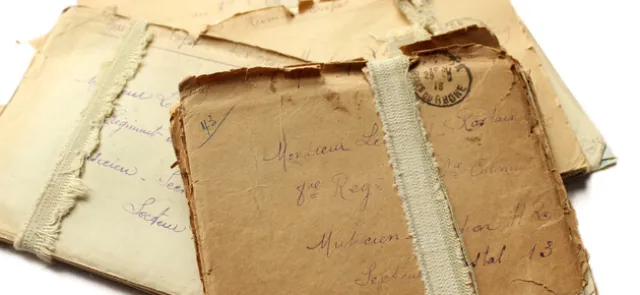
Mathematicians killed at the front: Gâteaux, Levi and others
Mathematicians, too, paid a heavy price in the Great War, leaving the scientific world with irreparable losses.
The Great War and European mathematics
The deadly conflict of the First World War shattered international academic cooperation. It also took a devastating human toll, killing many scientists who had seemed destined for brilliant careers. Finally, it profoundly altered the place of mathematics in France.
The Archimedean hairspring at the heart of watchmaking
Once again, we turn to a "spiral"—not in a field or on a canvas, but… inside a watch.
Crop circles and mathematics: Fibonacci in the fields
Another form of optical art is found in the famous crop circles, or "crop formations" (technically known as agroglyphs). These geometric patterns, most often created in cereal fields, range in size from a few square metres to several hectares. They are made by cutting, twisting or bending stalks of grain, usually at night and in record time.
Kinetic art and geometry: Vasarely, Le Parc, Morellet
The last time Argentine sculptor and painter Julio Le Parc exhibited in New York was in 1973. The artist has just brought a successful exhibition in Paris to a close at the Perrotin gallery in the 3rd arrondissement. In the meantime, kinetic art had faded from view.
The tippe top: a mystery of mechanics
In playgrounds, the tippe top is often called a "magic top" because it flips itself over, turning upside down. Its counterintuitive behavior is subtle...

The ever-surprising curiosities of the harmonic series
The harmonic series is one of the few divergent series that frequently arises in science. In mathematics, naturally, but not only there: it also turns up in a theater, in the guise of an absent-minded spectator who has forgotten his seat number, and in problems involving stacks of sugar cubes.
Au fil des maths: APMEP's new journal
At last, the new journal of the Association des professeurs de mathématiques de l'enseignement public (APMEP) has arrived!
Houria Lafrance honored for promoting mathematics
A tireless mathematics popularizer has just been honored. Houria Lafrance, president of the association "Les maths en scène," has been appointed a Knight of the National Order of Merit.
Emmanuel Houdard: Walloon of the Year for mathematics
The 2017 Walloon of the Year Award has just been presented to mathematics teacher Emmanuel Houdart, director of the Maison des maths in Quaregnon, Hainaut, Belgium, near the French border.
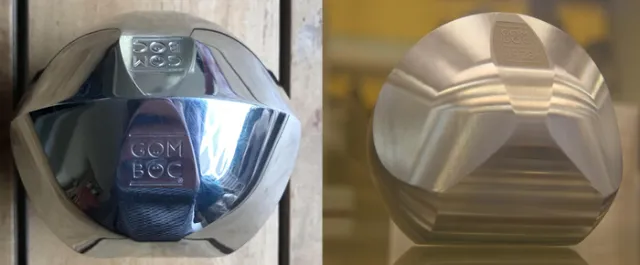
The Gömböc, that obscure object of geometrical desire
An okiagari-koboshi, or Japanese roly-poly toy, is designed always to return to an upright position. This traditional lucky doll symbolizes perseverance—a quality that two Hungarians displayed in abundance when proving the existence of a homogeneous body with the same property.
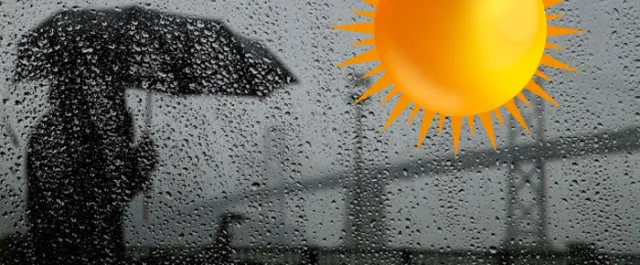
Correlation gone too far
The thermometer does not cause the temperature! Obvious, isn't it? And yet, how many people still confuse correlation with causation, or interpret two events coinciding as one causing the other... Let's unpack these mechanisms.
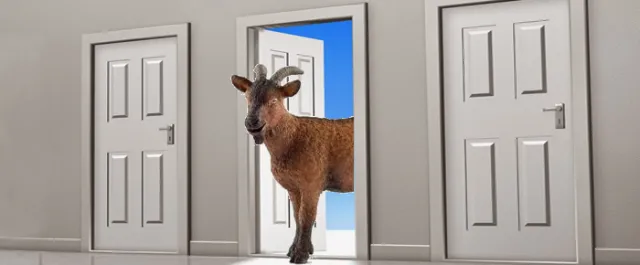
The Monty Hall paradox
Who has never dreamed of hitting the jackpot, of beating the odds? Games of chance such as roulette and Loto leave considerable uncertainty over whether you will win. Probability helps us understand these games and make the best decision as they unfold.