



Math for everyone
Mathematical content accessible to everyone

Expected value and its surprising paradoxes
Expected payoff is essential to rational decision-making, but tricky to use. Many paradoxes arise from misinterpreting what it represents. Casinos—and the unscrupulous people who encourage you to wager your money—understand this only too well...

Bayes' theorem: the star of web algorithms
If the Internet can now suggest books or holiday plans to you with remarkable accuracy, it is thanks to yesterday's researchers, who envisioned computing when computers barely existed. One remarkable figure stood out, though he remains far too little known: Thomas Bayes.
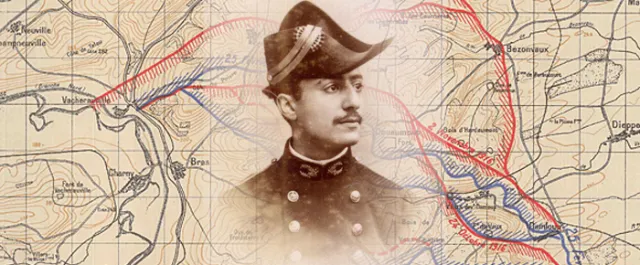
André-Louis Cholesky: soldier-scholar and algebraist
In numerical analysis, the Cholesky method is a celebrated example of a scientific discovery made in one field—military geodesy—that went on to find applications in an ever-growing number of others.

The very delicate principle of indifference
The principle of indifference invites us to reflect on the subtle blend of knowledge and ignorance. The probabilities it generates are sometimes surprising, but always consistent. By analyzing a problem's data, it dictates the probabilities that should rationally be assigned.
The weight of maths: the economic impact of mathematics | Tangente
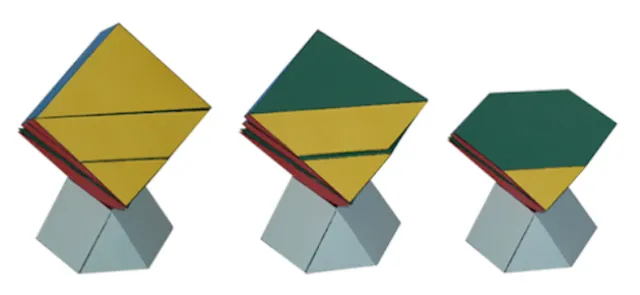
Making a sliced cube: net and assembly
Theory done—now for the hands-on part! Build your own sliced cube. A photo sequence illustrates each stage of the process step by step. Grab some glue and scissors, download and print the pieces to cut out, and... have fun!

The cube’s geometric tricks: cross-sections and symmetries
The cube is such a familiar object that few people know its formal name: the regular hexahedron. Yet that familiarity is deceptive... To see why, let’s slice a cube into sections: this old familiar shape still has a few surprises in store!
Statistical fluctuations: beware small samples
Extracting knowledge from a mass of homogeneous data is the province of statistics. Yet it is quite an art: the conclusions must be treated with care! Small fluctuations around the mean can invalidate an entire line of reasoning. Let us learn how to spot them.
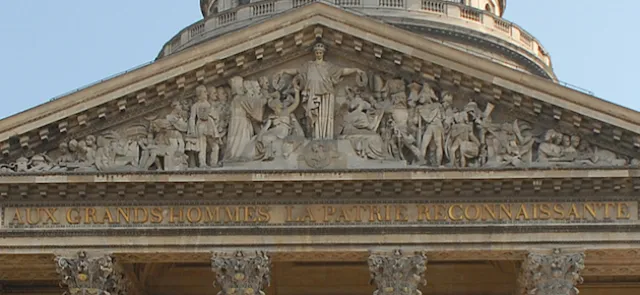
A guided tour of the Panthéon of mathematics
Visiting Paris with your family or a school group, you may be looking for mathematically themed attractions. The Panthéon is unlikely to spring to mind… Yet this monument celebrating the nation's great figures is full of surprises! Follow the guide.
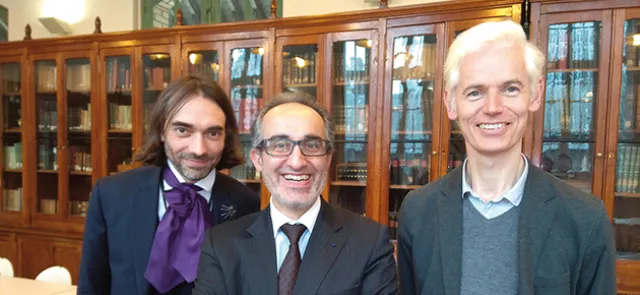
Villani–Torossian report: 21 measures for mathematics
The press has covered it extensively: a report has just been submitted to the Minister of National Education, recommending 21 measures to improve mathematics teaching in France. We take a closer look.

High school reform: what future for mathematics?
What does the high school reform intended to overhaul the baccalauréat entail? Announced as the Villani–Torossian report was released, it appears to contradict the report's proposals.
The ruler: history of a measuring instrument
Let's rediscover this object we think we know...

Objects that embody knowledge
A mathematical object is a concept arising from... mathematics. The objects featured in this saga are physical ones, of interest not only mathematically but also historically, educationally and aesthetically. They illustrate concepts and make them easier to understand.
And you find that funny? Humor and mathematics
Sexist stereotypes die hard, even in mathematics, which one might have thought immune to such irrational fears and baseless preconceptions. Let's turn them on their heads with a little humor!
Inclusive writing: a linguistic and mathematical issue
What is inclusive writing, one of the initiatives aimed at combating sexism?
Taking action against gender stereotypes
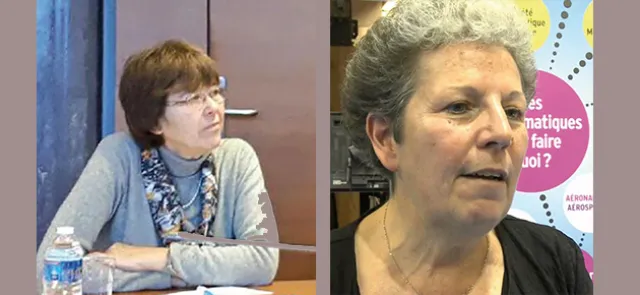
We met Véronique Slovacek-Chauveau and Annick Boisseau, the vice-president and secretary, respectively, of Femmes et mathématiques, who kindly agreed to answer our questions.

Gender balance in mathematics: an urgent priority
Although progress has been made in recent years, women remain underrepresented among those who use mathematics, from high school through to highly skilled scientific jobs. What lies behind this imbalance?
Health and Big Data: AI in the fight against cancer
Big Data has many applications in medicine, from clinical practice and research to epidemiological surveillance

Big Data and insurance: the value of massive datasets
The press sometimes claims that insurers' access to ever-larger databases will soon enable them to assess each customer's risk perfectly and set a perfectly tailored premium. This new paradigm might even spell the end of insurance itself! But is that really so?

Interpreting Big Data statistics correctly
Big Data's vast resources are exploited using algorithms based on statistics and probability. This explains both the successes and failures of this technology.