



Maths and philosophy
Links between mathematics and philosophical thought, epistemological questions
 Podcast
Émilie du Châtelet, learned philosopher | Tangente
Émilie du Châtelet is often presented as the translator of Newton and the woman who introduced Leibniz's and Wolff's thought to France. On that view, she would be no more than a translator and a popularizer. In reality, she is far more than that: she is above all a scholar and a philosopher.
 Podcast
Order according to Ramsey
Ramsey theory is another field in which Erdős played a crucial role without being its originator. His use of the probabilistic method was essential to this theory, whose aim is to find the size of a set that guarantees the existence of a substructure possessing a given property.
 Podcast
Probabilities where you wouldn't expect them! | Tangente
The probabilistic method, which Paul Erdős introduced and used, makes it possible to prove the existence of a mathematical object. Despite the use of probability, what is remarkable — and all the more surprising — is that the result obtained is certain!
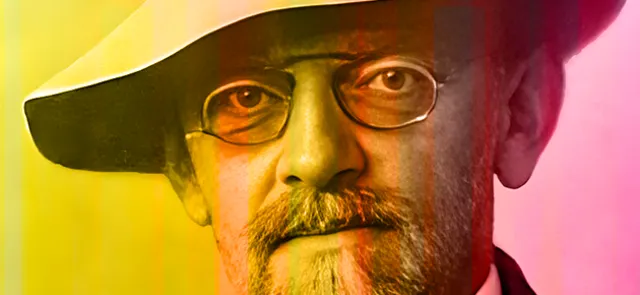
Paul Erdős by George Csicsery — Documentaries | Tangente
 Podcast
David Hilbert's overhaul of geometry | Tangente
Though Euclid's axiomatization remained in force for a long time, it was amid the ferment of the German academic world in the nineteenth century that mathematicians began to feel it needed to be rebuilt from the ground up. David Hilbert took on the task in 1899.
 Podcast
The origin of mathematical rationality | Tangente
Formalization originated in ancient Greece with the project of constructing a coherent mathematical edifice, of which Euclid is the foremost representative.
 Podcast
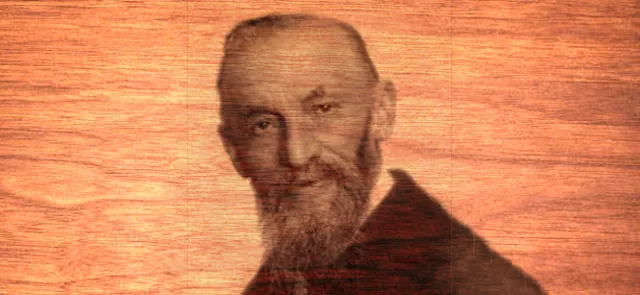
Giuseppe Peano and formalism | Tangente
The Italian mathematician Giuseppe Peano made major contributions to logical formalism by developing a symbolism for transcribing ordinary mathematical language. He also contributed to mathematical formalism by constructing systems of axioms for various fields.
 Podcast
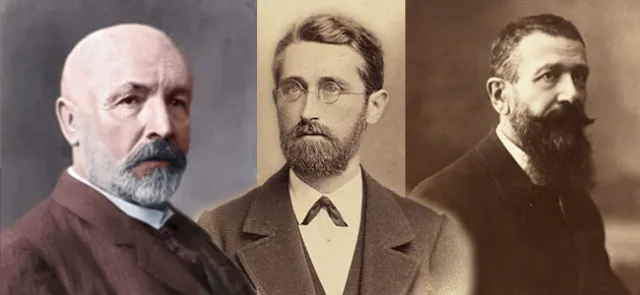
A panorama of set theory | Tangente
Work on the notion of infinity led to paradoxes. This forced mathematicians to formalize set theory. Progressive axiomatization led to the current ZFC system, which nonetheless remains subject to various shortcomings following the work of Kurt Gödel and Paul Cohen.

Toward modern skepticism with Gardner | Tangente
Martin Gardner wrote extensively about science and its validity. He is thus recognized as one of the founders of modern skepticism, an important philosophy of science to bring to the fore in this age of post-truth.
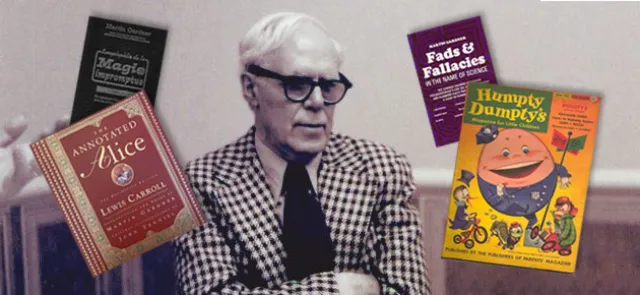
Martin Gardner: Itinerary of a genius | Tangente
Although he is known for his recreational mathematics and his work as a popularizer, Martin Gardner strangely never pursued a course of study in the discipline. Here are the surprising stages of his unusual path.
Editorial
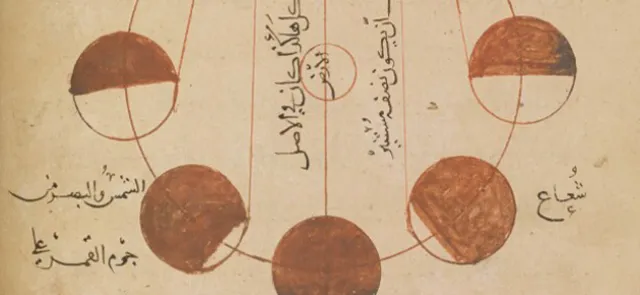
The history of mathematics is a fascinating field that allows us to rediscover the discipline as a whole, moving beyond hearsay and urban legends that reduce the complex development of human thought to grossly oversimplified accounts.
Condorcet's paradox explained | Tangente
From Lewis Carroll to Kenneth Arrow, the famous Condorcet paradox has generated a great deal of discussion.
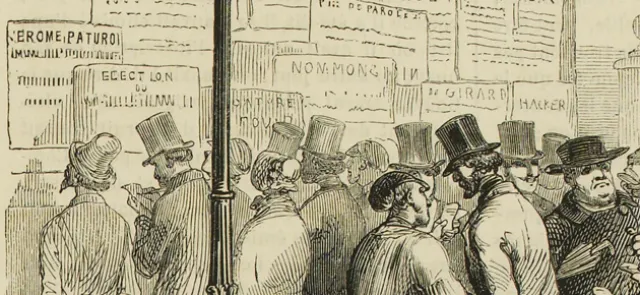
Condorcet, theorist of electoral procedures | Tangente
Condorcet is recognized as one of the pioneers in the theory of electoral systems, alongside his contemporary, the Chevalier de Borda. Both thinkers brought a fundamental idea to light: the method used to elect a candidate has a decisive influence on the outcome.

From political arithmetic to social mathematics | Tangente
Condorcet is not the first to seek to apply mathematics to public life. Yet he sets himself radically apart from his predecessors—and lays claim to that distinction—by coining the phrase "social mathematics."
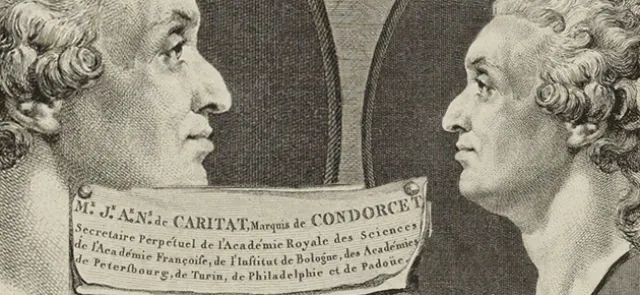
Condorcet judged by his peers | Tangente
Condorcet always took an interest in analysis, but accounts and assessments of his mathematical work varied widely. Although he bounced back after the Académie’s unfavorable judgment of his first paper, the 19th century proved much harsher.
Condorcet: mathematics for citizenship | Tangente
Condorcet embraced the ideals of the French Revolution and played an active part in the educational reforms set in motion by the Revolution.
Condorcet and the transmission of knowledge | Tangente
At the end of the preface to his Essais d’Analyse, Condorcet includes the Latin quotation "vice fungar cotis, acutem reddere quae ferrum valet, exsors ipsa secandi," from Horace’s Ars Poetica (line 305).
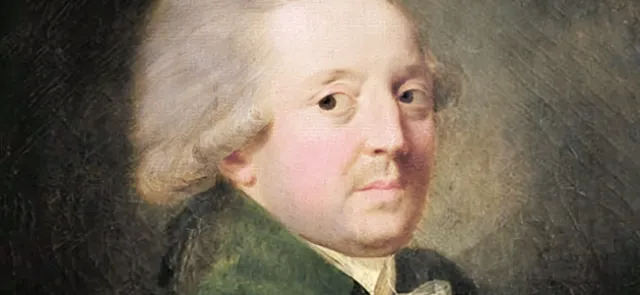
Condorcet: a true Enlightenment mathematician | Tangente
Although Condorcet is best known today as a philosopher, he began his career as a mathematician. A precocious polymath, mathematics also led him to politics and philosophy.
Quadrilateral types and names | Tangente
For the familiar convex quadrilaterals, the classification criteria are, first, whether the sides are parallel, then whether their lengths are equal, and finally whether there are any right angles.

The battle over infinity: Cauchy and limits | Tangente
For more than two centuries, scholars and mathematicians debated infinitesimals: could they be handled safely, or were the paradoxes they generated insoluble? Amid this debate, Cauchy ushered analysis into the modern era while maintaining a nuanced position.