



Maths and philosophy
Links between mathematics and philosophical thought, epistemological questions

Penney's paradox explained | Tangente
Does tossing a coin strike you as simplistic and dull? Be careful, though: it has some baffling surprises in store!
Allais and the limits of utilitarianism | Tangente
The paradox formulated by the French economist Maurice Allais exposes a contradiction in an earlier theory of decision-making. But the paradox is only apparent and, above all, illustrates a major limitation of rational choice theory.

The two-envelope paradox | Tangente
A paradox can sometimes resemble an urban legend. First, its precise origins may be difficult to pin down; second, over time it may become distorted, change form, and proliferate. Such is the case with the two-envelope paradox.
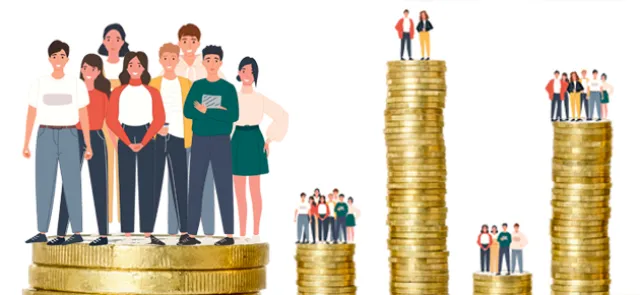
Simpson's paradox and appearances | Tangente
Could something that is true in every subgroup of a population become false when the population is considered as a whole? How is that possible? This is exactly what Simpson's paradox—the best-known paradox in statistics—shows.

The notion of paradox in mathematics | Tangente
The terms "paradox" and "paradoxical" are part of everyday language. In mathematics and logic, however, they have precise meanings that need to be clarified if we are to understand what we are talking about and what status to assign to so-called "paradoxical" results.
Transcendental, you say? The history of a term | Tangente
In Latin, the verb transcendere combines trans, "beyond," with scandere, "to climb"; it therefore literally means "to climb beyond," "to cross" or "to surpass."
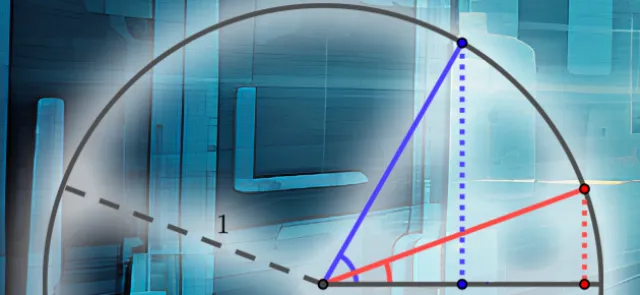
When fractions fail
Fractions cannot do everything! The existence of irrational numbers forces us to accept that the concept of number extends beyond quotients of two integers. The reward is a new world to explore, full of surprises.
Before black holes: Laplace's hidden stars | Tangente
In astronomy, a "black hole" is neither a hole nor black. The existence of these celestial objects was predicted by Einstein's theory of general relativity in the early twentieth century. It was demonstrated several decades later through the detection of gravitational waves produced by the coalescence of objects that came to be called black holes. What exactly are they?
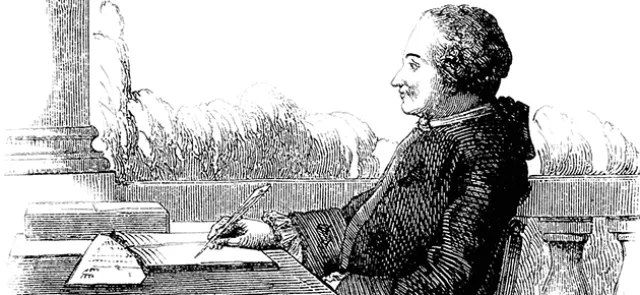
A pedagogical interest in transmitting knowledge
An exceptional scientist, Laplace was also a driving force behind the development of education at the highest level, helping to devise curricula and concerned that mathematics teaching should not be detached from philosophical reflection.
Laplace: philosopher of chance and determinism | Tangente
The chief architect of determinism, Laplace marked a crucial milestone in the transformation of probability theory into a fully fledged branch of mathematics. Is that a paradox, or a coherent intellectual approach? Let's return to his writings to find out!
Three laws of error
Observations of celestial bodies are invariably subject to error. How can we choose the "most relevant" value from several measurements? Laplace, along with Legendre and Gauss, developed theories that ultimately led to the celebrated normal distribution.

Laplace on probability and metaphysics | Tangente
When Laplace took up a seat in the Senate, he thought his active involvement in science was effectively over. Yet he went on to state a fundamental law of probability theory, before exploring the philosophical implications of his findings in this emerging new science.
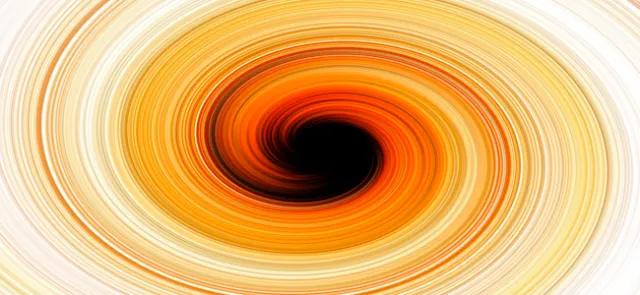
Laplace's brilliant insight into black holes | Tangente
The finite speed of light and its particle nature led Laplace, through a bold line of reasoning, to contemplate the existence of black holes—before changing his mind. Although he could not have conceived of light's dual nature at the time, he was right!

The birth of thermodynamics and Clausius | Tangente
The study of heat transformed our view of the world by prompting us to consider whether a physical "arrow of time" exists. It all comes down to one remarkably simple relation: the Clausius inequality.
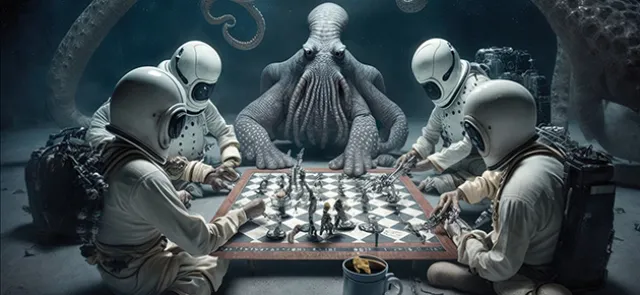
Wittgenstein and the philosophy of mathematics | Tangente
The relationship between language and reality lies at the heart of Wittgenstein's thought. The issue takes on its full significance when it comes to mathematical entities. What if philosophers speculating about the rigorous logical foundations of these abstractions were on the wrong track?
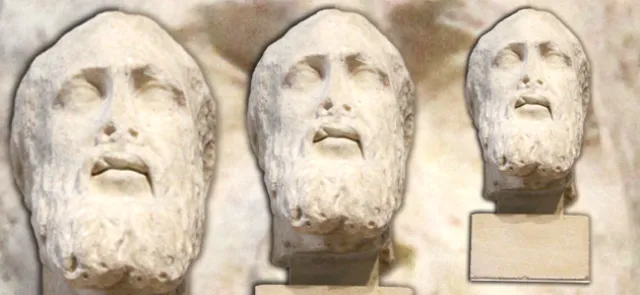
Infinite sums: a matter of convention
Equality between two numbers poses no difficulty when both are defined by "finitary"* methods. But as soon as infinity enters the picture—represented by ellipses in formulas—the door opens to all manner of paradoxes. (* Finitism is an approach to mathematics that considers only finite objects.)
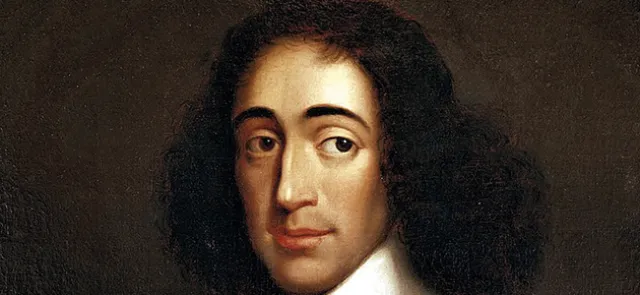
Spinoza and mathematical order in philosophy | Tangente
The Dutch philosopher Baruch Spinoza drew inspiration from mathematicians’ methods of inquiry and exposition in his "search for truth." Otherwise, he maintained, we prove nothing, merely supporting preconceived theses with plausible arguments.
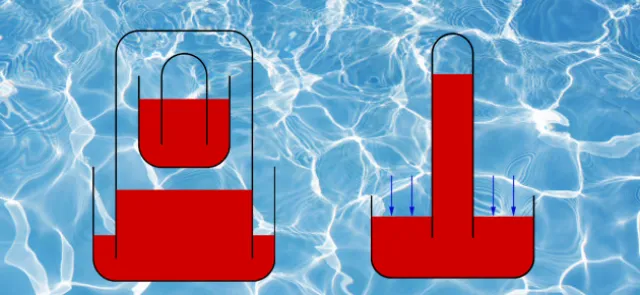
Pascal: The man who wasn't afraid of the void | Tangente
In the 17th century, following the Ancients, it was held that "nature abhors a vacuum." By restoring physical experimentation to the heart of scientific inquiry, French scholars of the period would thoroughly reassess this claim. Pascal would devise an ingenious apparatus for "creating a vacuum."
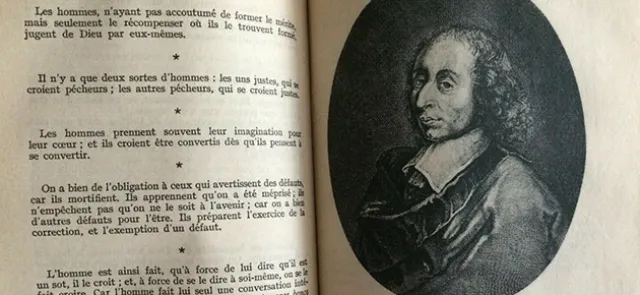
Pascal's rhetoric of chiaroscuro | Tangente
Pascal's dialectic consists in identifying the paradoxes and contradictions in another person's discourse. He thus unsettles his readers, making them realize that where they thought they had knowledge, they know nothing. Antithesis is one of his favorite weapons.
Betting on God's existence—Pascal's Pensées | Tangente
Pascal's Pensées abounds in arguments and reflections that assess the probability of a supreme being's existence. A careful, unabridged reading of the various fragments reveals a philosopher steeped in doubt and possessed of extraordinary subtlety.