



Famous figures
Portraits of famous mathematicians, historical and contemporary
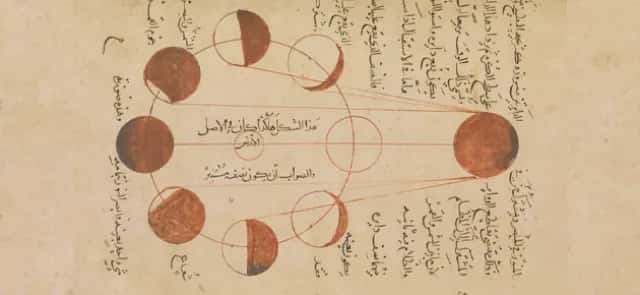
Al-Biruni reads Ptolemy: planetary distances | Tangente
Drawing on his extensive knowledge of the astronomy and mathematics of his time, al-Bīrūnī succeeded in making Ptolemy's highly complex method for calculating distances between the planets comprehensible. Devised in the 2nd century, it was a decisive step towards modern astronomy.
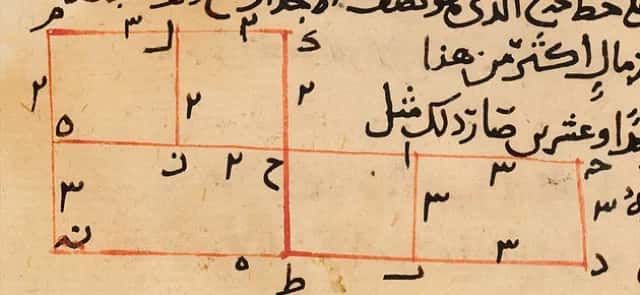
Al-Khwārizmī's geometry of equations
Quadratic equations have been solved by geometric methods, of varying degrees of sophistication, since Babylonian times. Similar methods appear in the works of Greek authors. But al-Khwārizmī was the first to set out a clear, general method.
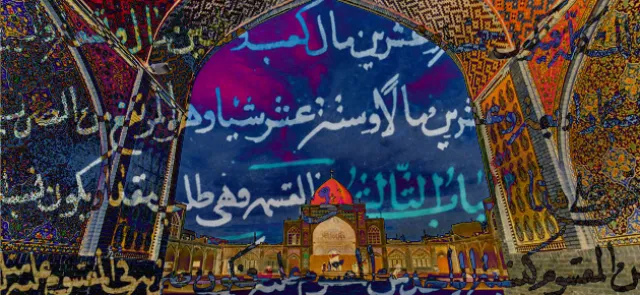
Al-Zanjānī: teaching algebra in the 13th century
What we now group under the term "algebra" took time to develop into a discipline in its own right. Al-Zanjānī, the author of a 13th-century educational treatise, provides valuable evidence of the algebraic methods used in his day.
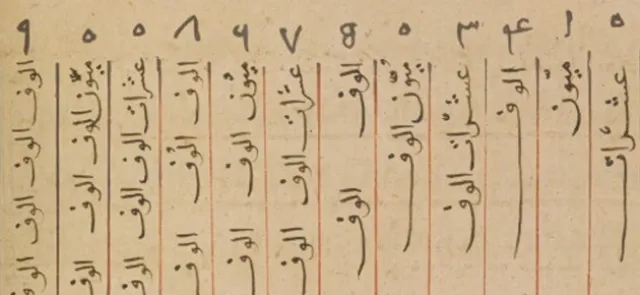
How Arabs wrote numbers in the Middle Ages | Tangente
Today, we use "Arabic numerals" to refer to what the Arabs themselves called "Indian numerals." Other numeral systems predated these numerals—the ancestors of our own—and even continued to coexist with them after their introduction.

Al-Khwarizmi's linguistic legacy: algebra and algorithm | Tangente
Al-Khwārizmī's works were translated into Latin and helped introduce the West to the Indian numeral system; more broadly, they contributed to the early development of algebra. Their legacy lives on in our vocabulary.
Far more than a link: The Arab legacy in Europe | Tangente
The Islamic world is often thought to have served merely as a repository for Greek manuscripts. In reality, many fundamental concepts in contemporary mathematics originated in works written from the ninth century onward in Arabic, then the language of scientific communication.
What is Arabic-Islamic mathematics? | Tangente
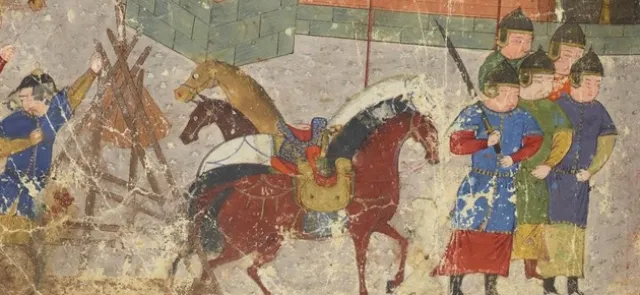
Arabic-Islamic mathematics developed against a fascinating historical and geopolitical backdrop, shaped in particular by the importance of the Abbasid dynasty, the role of the House of Wisdom, and diplomatic and intellectual ties with neighboring cultures.

Ahmed Djebbar, champion of the history of Arab science | Tangente
If the history of Arab science attracts interest today, it is largely thanks to Ahmed Djebbar, who not only made it his field of study but also did much to bring the subject to a wider audience.
Cyril Bonin's universe: comics and mathematics | Tangente
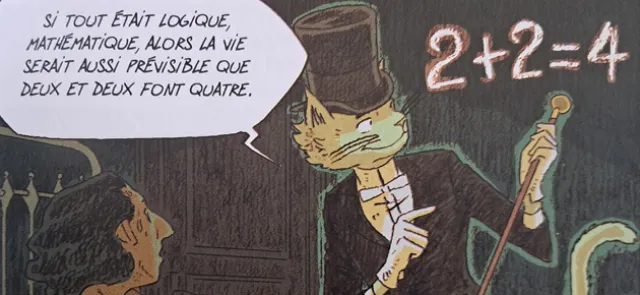
Mathematics can hold a special place in an artist's thinking. Cyril Bonin explains how: he is the sole creator—writer, artist and colorist—of a distinctive body of graphic novels.
A century ago: equal access to the baccalauréat | Tangente
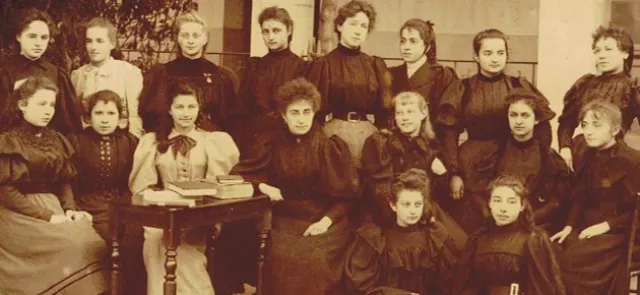
Exactly 100 years ago, girls' secondary schools were authorized to offer the same curriculum as boys' schools. Girls could now officially prepare for the baccalauréat there without having to take supplementary classes.

Mathematics unleashed: passion and research | Tangente
As an amateur, where can you find topics to explore? How can you learn about a subject and keep abreast of the state of the art? Where can you meet people to exchange ideas with—or even find opportunities to publish? Here are a few pointers for anyone eager to take the plunge.

A centenarian devoted to magic squares | Tangente
After a busy career in public works engineering, during which he held various positions in Alsace, René Descombes (born in 1924!) has pursued his interest in magic squares since retiring.
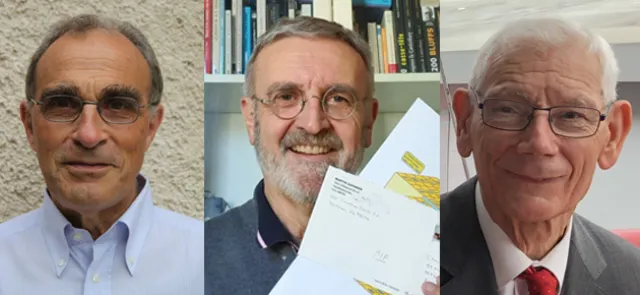
The joy of mathematical discovery: amateur mathematicians | Tangente
Christian Boyer, Vincent Thill, Jean Moreau de Saint-Martin and Philippe Fondanaiche—all passionate amateur mathematicians—agreed to answer our questions about how their interest in mathematics began and the activities they have developed in their favorite areas.

They found it
Here are a few amateur mathematicians whose names are associated with recent results.
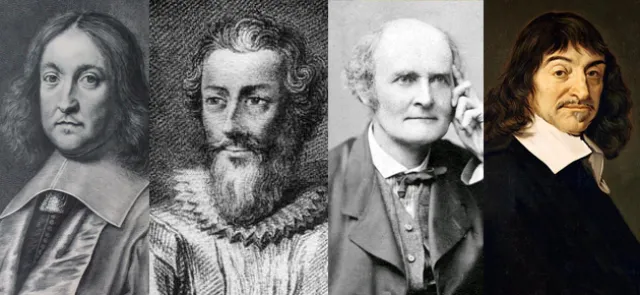
Recognized amateurs
What is an amateur mathematician? Defining one is no easy task, especially since the concept has undoubtedly evolved over time. Nevertheless, we will look at a few examples, both past and present.
Clairaut's pedagogical Éléments d'algèbre | Tangente
Clairaut's Élemens d'algèbre (Elements of Algebra) was long a standard reference for teaching algebra.

Clairaut.com: a complete online biography | Tangente
As its name suggests, clairaut.com is devoted entirely to Alexis Clairaut. It provides a comprehensive inventory of his works, with links to them, along with his correspondence, academic reports, and the principal tributes and portraits devoted to him by his contemporaries.

Clairaut: a mathematical child prodigy | Tangente
The engraving by Delafosse below was made from a portrait drawn by L. C. de Carmontelle in 1763.
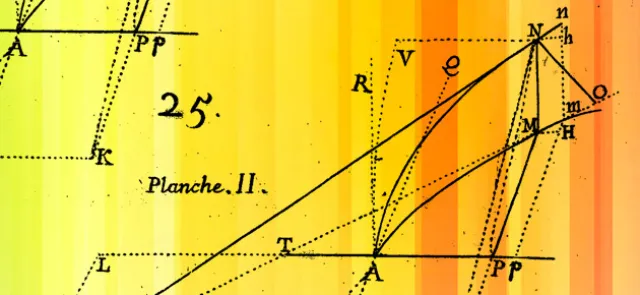
The geometry of curves
Alexis Claude Clairaut first came to the attention of learned circles through his book on curves of double curvature, presented to the Académie in 1729. He was only 16 at the time. The book was published in 1731, earning him election to the Académie des sciences at the age of 18.
In Clairaut’s footsteps
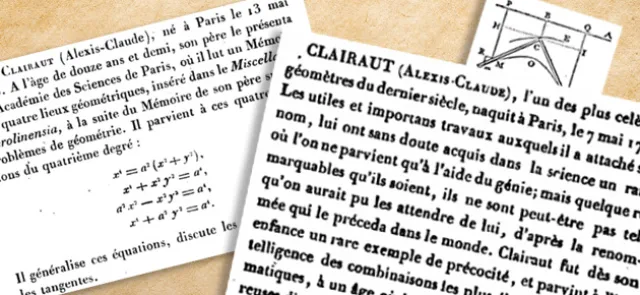
Alexis Clairaut is probably little known today. Yet his writings inspired many scientists. A compilation of 19th-century publications reveals a fame that has since faded.