



Famous figures
Portraits of famous mathematicians, historical and contemporary
 Podcast
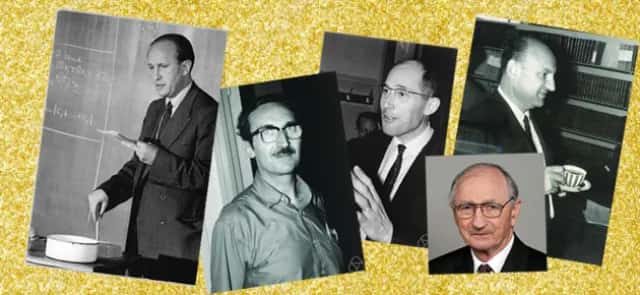
The weaver mathematician — the Erdős number | Tangente
Fostering mathematical collaboration like no one else at a time when doing so was not as easy as it is today, Paul Erdős prompted a new way of looking at publications: first as a marker of ties to him, then as a subject of study in its own right.
 Podcast
Erdős and old age — humor and self-mockery | Tangente
A few years before turning sixty, Erdős began adding strange initials to his signature as a reminder of the passage of time.

Paul Erdős: Biographies and a film | Tangente
Two books in particular, both published in 1998, offer a glimpse into Erdős's life through anecdotes and accounts by other mathematicians.
 Podcast
To exist is to do mathematics — Erdős | Tangente
Pál Erdős (1913-1996) is renowned for his eccentric behavior, but above all for the brilliance of his ideas. His ingenious methods, off the beaten track, his countless publications, and his constant wandering built the image of a legendary scholar.
 Podcast
More than 600 problems still open
Throughout his life, in papers written either alone or with collaborators, Erdős posed a great many problems. He solved some of them—but far from all.

An iconic photograph
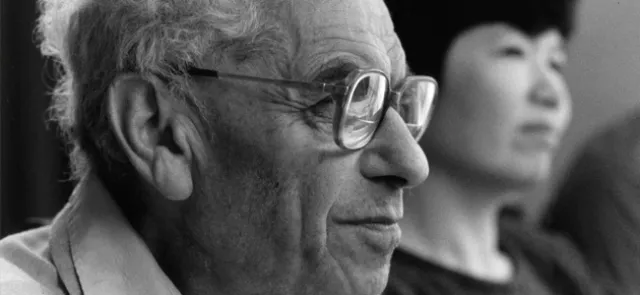
The famous photograph of Paul Erdős and Terence Tao deep in thought has become an iconic image in the recent history of mathematics. But what were these two extraordinary minds thinking about at that moment?
 Podcast
Erdős's language: expressions and humor | Tangente
One of Erdős's quirks was his highly distinctive vocabulary, which offers a humorous glimpse of how he viewed those around him.
 Podcast
Editorial: Paul Erdős, catalyst of mathematics | Tangente
Paul Erdős posed or solved hundreds of problems in almost every field. He was nicknamed "the prince of problem solvers and the absolute monarch of problem posers" by Ernst Straus, one of his colleagues.
 Podcast
Elizebeth Smith Friedman, cryptanalyst | Tangente
In 2008, declassified archives revealed the crucial role of a figure who had long remained in the shadows: Elizebeth Smith Friedman. A talented cryptanalyst, she helped change the course of the world wars and dismantle a powerful criminal network.
 Podcast
Maths on France Musique: a podcast | Tangente
Many mathematicians enjoy or play music, and the two disciplines have long been far more closely connected than we might imagine today.
 Podcast
Yvonne Choquet-Bruhat and relativity | Tangente
Yvonne Choquet-Bruhat, who died on 11 February 2025, is known as the first woman to become a member of the Académie des sciences. Dwelling on this fact risks overshadowing the importance of her work. Her colleague Piotr Chruściel takes us through her research, which is little known to the general public.

A tribute to Jacqueline Ferrand | Tangente
In November 2023, a room named after Jacqueline Ferrand opened in the mathematics and computer science library at ENS Ulm.
 Podcast
Rediscovered manuscripts… or not! | Tangente
In early February, Türkiye Today announced the discovery of lost manuscripts by Apollonius: Books V and VII, hitherto unknown and now rediscovered in an Arabic translation.
 Podcast
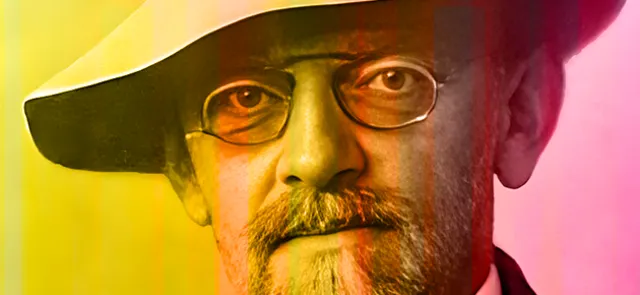
David Hilbert's overhaul of geometry | Tangente
Though Euclid's axiomatization remained in force for a long time, it was amid the ferment of the German academic world in the nineteenth century that mathematicians began to feel it needed to be rebuilt from the ground up. David Hilbert took on the task in 1899.
 Podcast
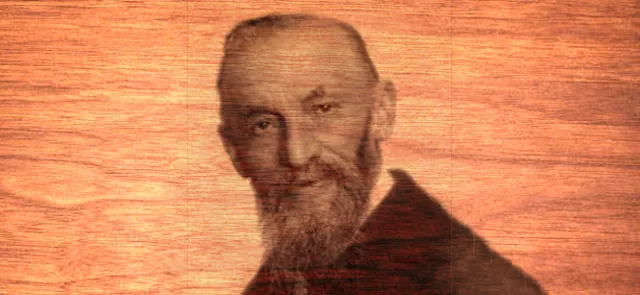
Giuseppe Peano and formalism | Tangente
The Italian mathematician Giuseppe Peano made major contributions to logical formalism by developing a symbolism for transcribing ordinary mathematical language. He also contributed to mathematical formalism by constructing systems of axioms for various fields.
 Podcast
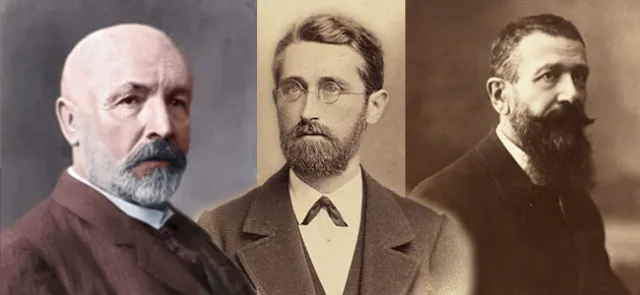
A panorama of set theory | Tangente
Work on the notion of infinity led to paradoxes. This forced mathematicians to formalize set theory. Progressive axiomatization led to the current ZFC system, which nonetheless remains subject to various shortcomings following the work of Kurt Gödel and Paul Cohen.

Martin Gardner, mathematical influencer | Tangente
While it is true that Martin Gardner never took a mathematics course at university, he spent his life studying the subject through his work as a journalist, ultimately receiving numerous honors from the mathematical community.
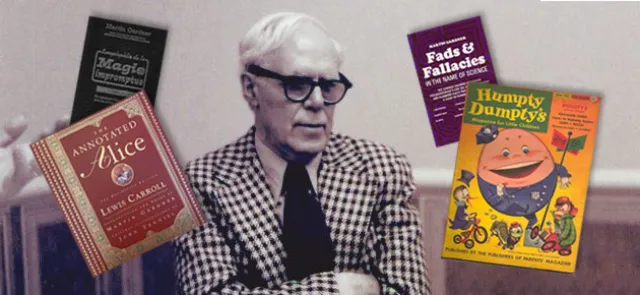
Martin Gardner: Itinerary of a genius | Tangente
Although he is known for his recreational mathematics and his work as a popularizer, Martin Gardner strangely never pursued a course of study in the discipline. Here are the surprising stages of his unusual path.

Thābit and the Pythagorean theorem
In Sur la preuve attribuée à Socrate au sujet du carré et de sa diagonale (On the Proof Attributed to Socrates Concerning the Square and Its Diagonal), Thābit ibn Qurra examines how squares can be dissected, taking as his starting point the famous example from Plato's Meno. This gives him an opportunity to present two proofs of the Pythagorean theorem and to generalize it.
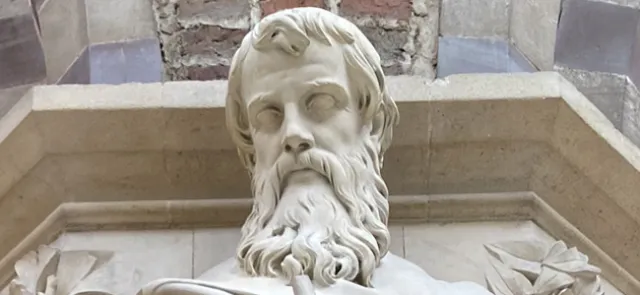
In search of Euclid's lost treatise On Divisions | Tangente
Several of Euclid's texts have been lost, including a treatise on the division of plane figures. Fortunately, the abundant commentaries and extensions written by Arab mathematicians have made it possible to investigate this lost manuscript.